Geometric animals
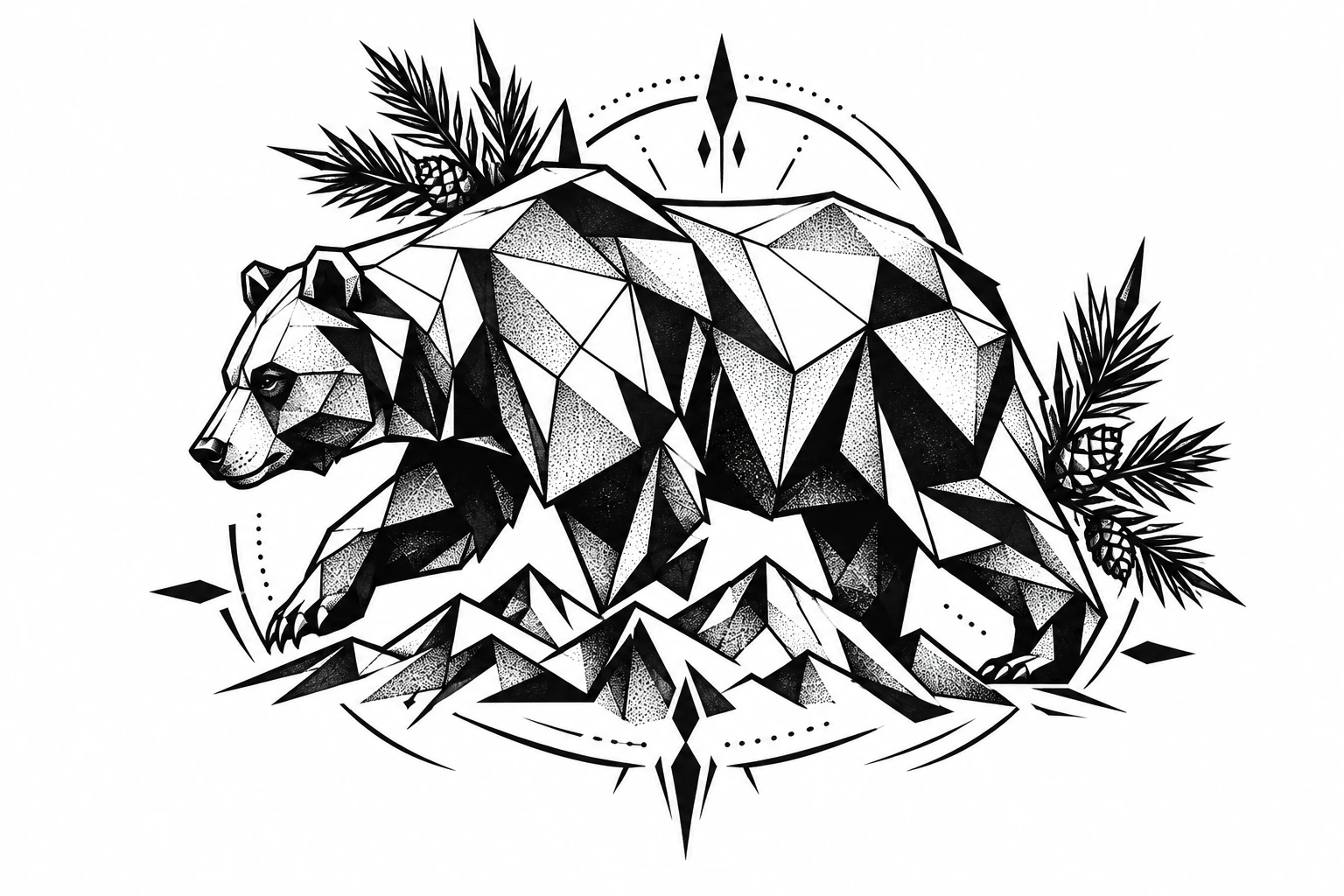
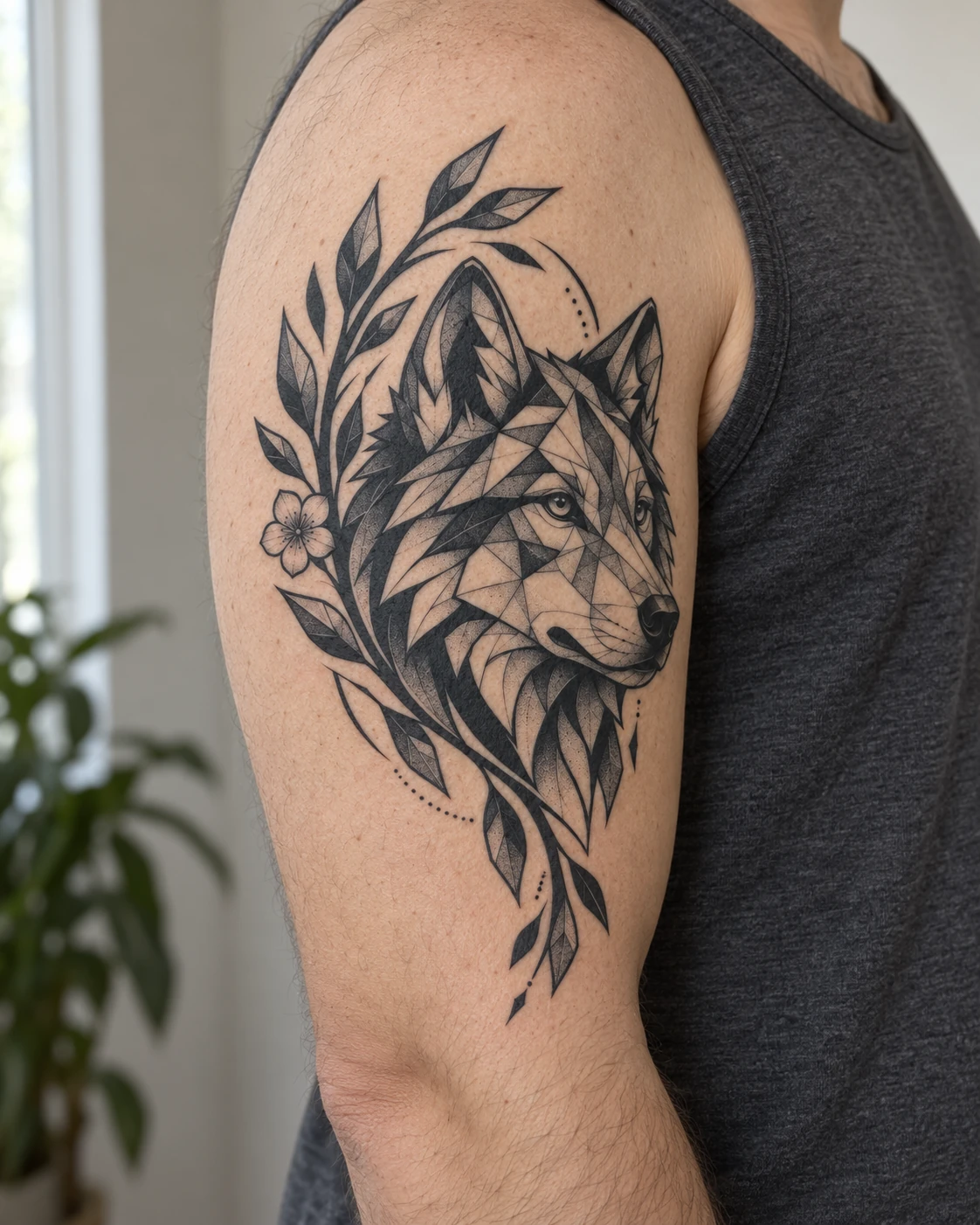
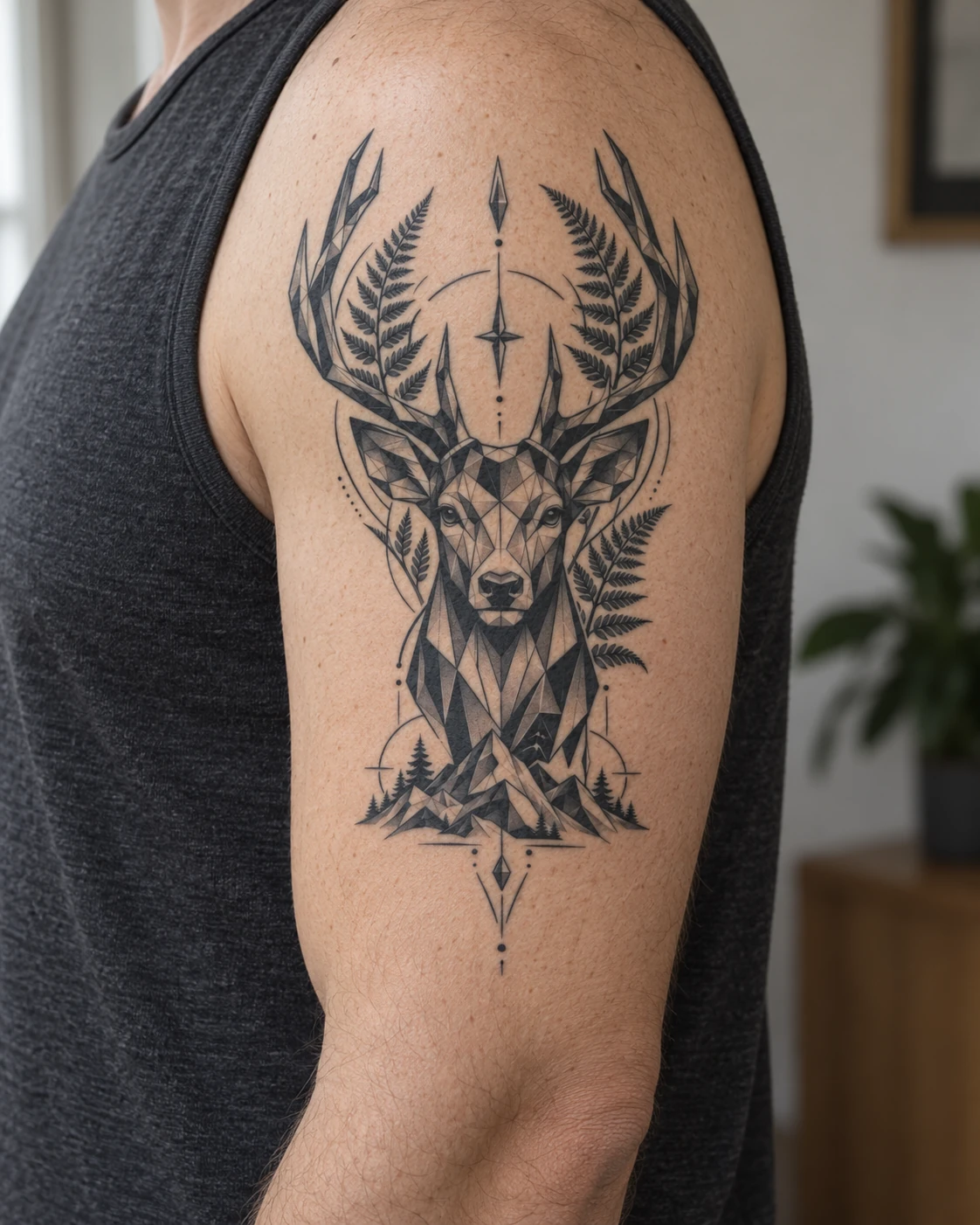
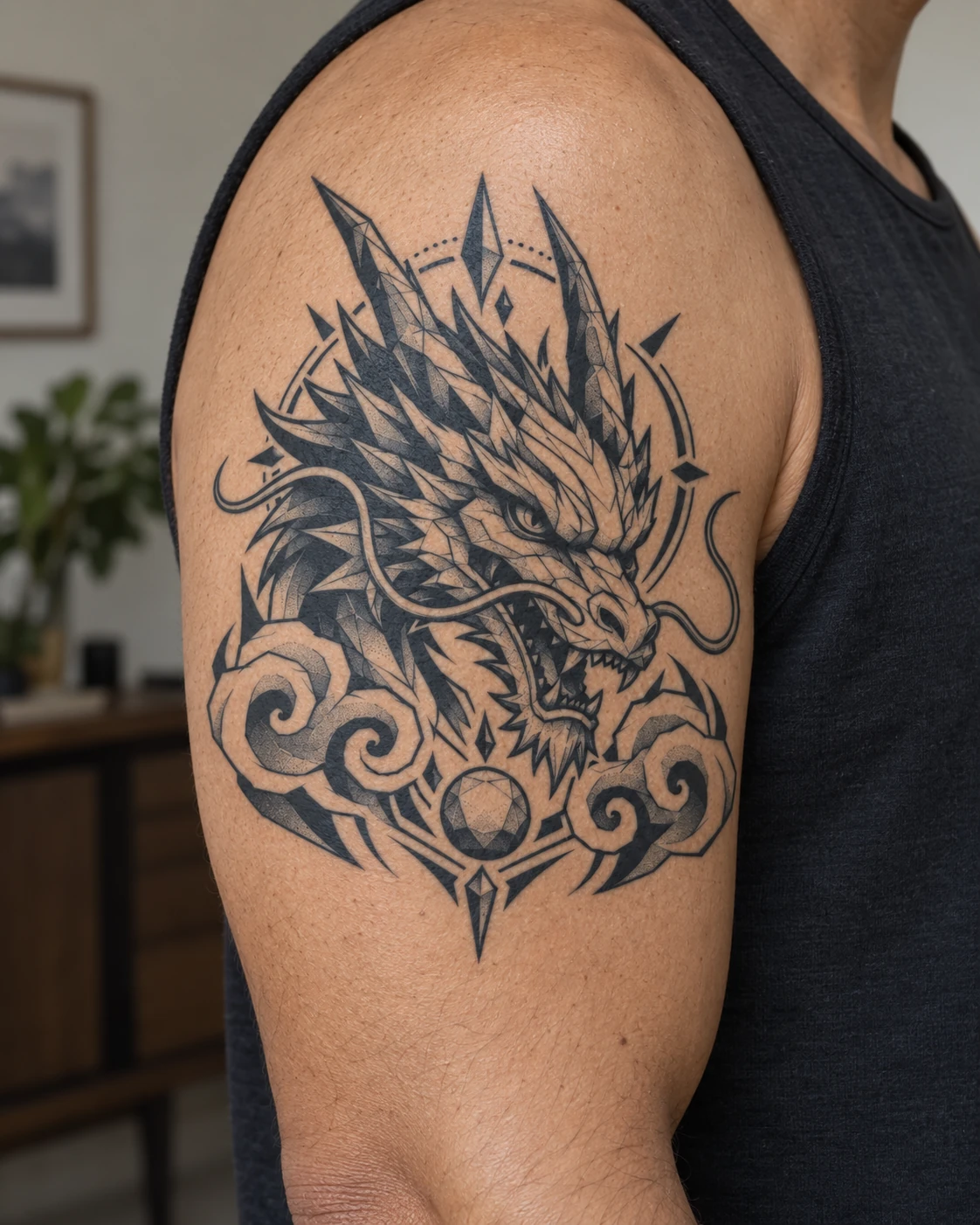
A real subject, such as a wolf, bear or whale, rendered through faceted planes and clean lines instead of realistic detail. The animal stays recognizable; the geometry gives it structure.
Geometric tattoos turn subjects and patterns into clean lines, facets and symmetry. Browse 25 designs, each with a matching on-skin preview, then create your own.
All designs and on-skin previews are AI-generated concepts, not photos of healed tattoos.
Geometric tattoos are built from precise lines, shapes, symmetry and repeating patterns. Most are done in black ink for contrast, though some artists work in color.
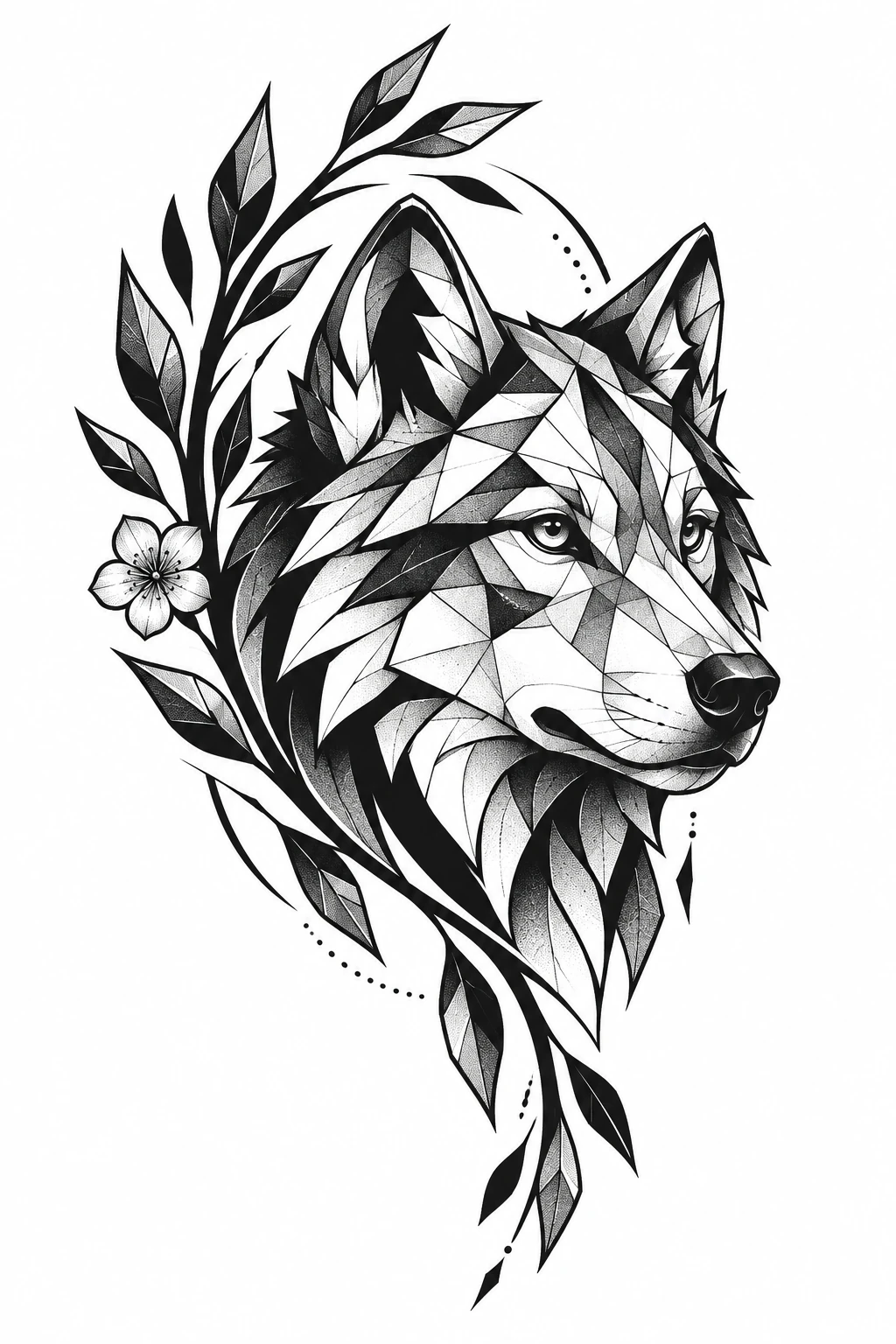
The subject is broken into angular planes that share edges, so even a wolf reads as a structure of shapes.
A firm outline holds the silhouette while narrower lines divide the planes inside.
Some planes are filled solid black and others are left bare, which gives the design its contrast.
Light dot shading in recessed planes adds depth without softening the structure.
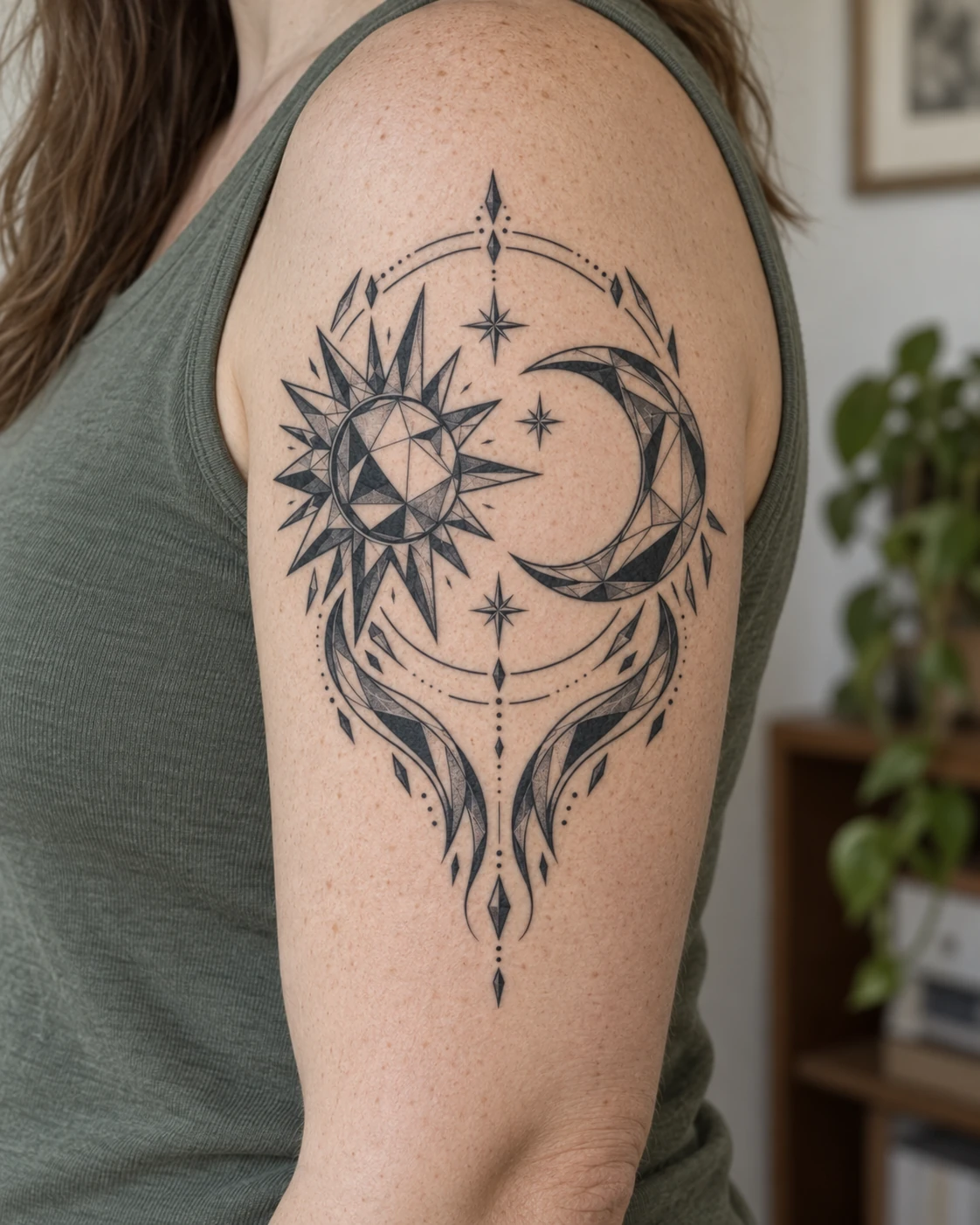
Leaves, arcs and dotted lines continue the geometry around the subject instead of floating beside it.
Geometric tattoos fall into a few broad directions, and many designs mix more than one.
A real subject, such as a wolf, bear or whale, rendered through faceted planes and clean lines instead of realistic detail. The animal stays recognizable; the geometry gives it structure.
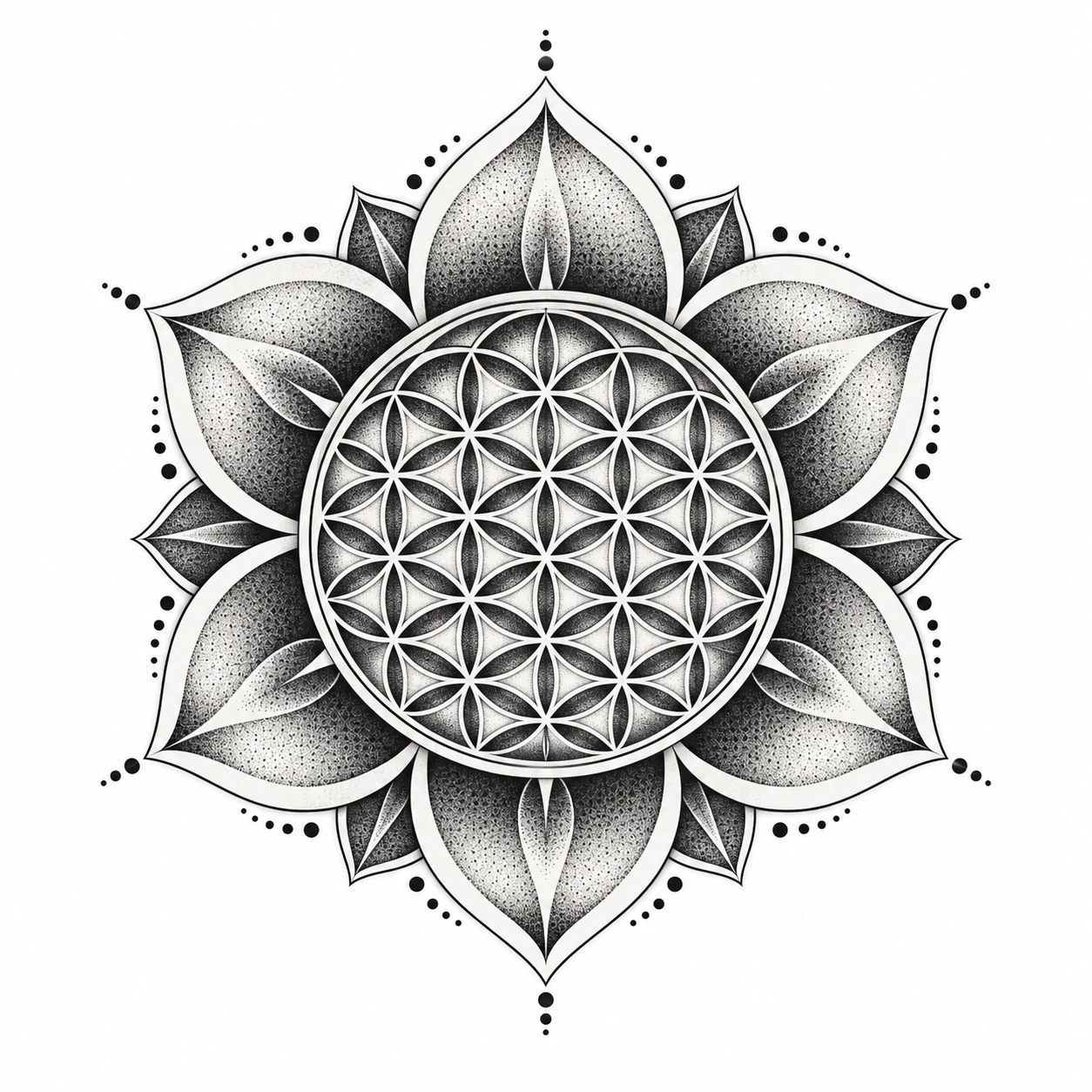
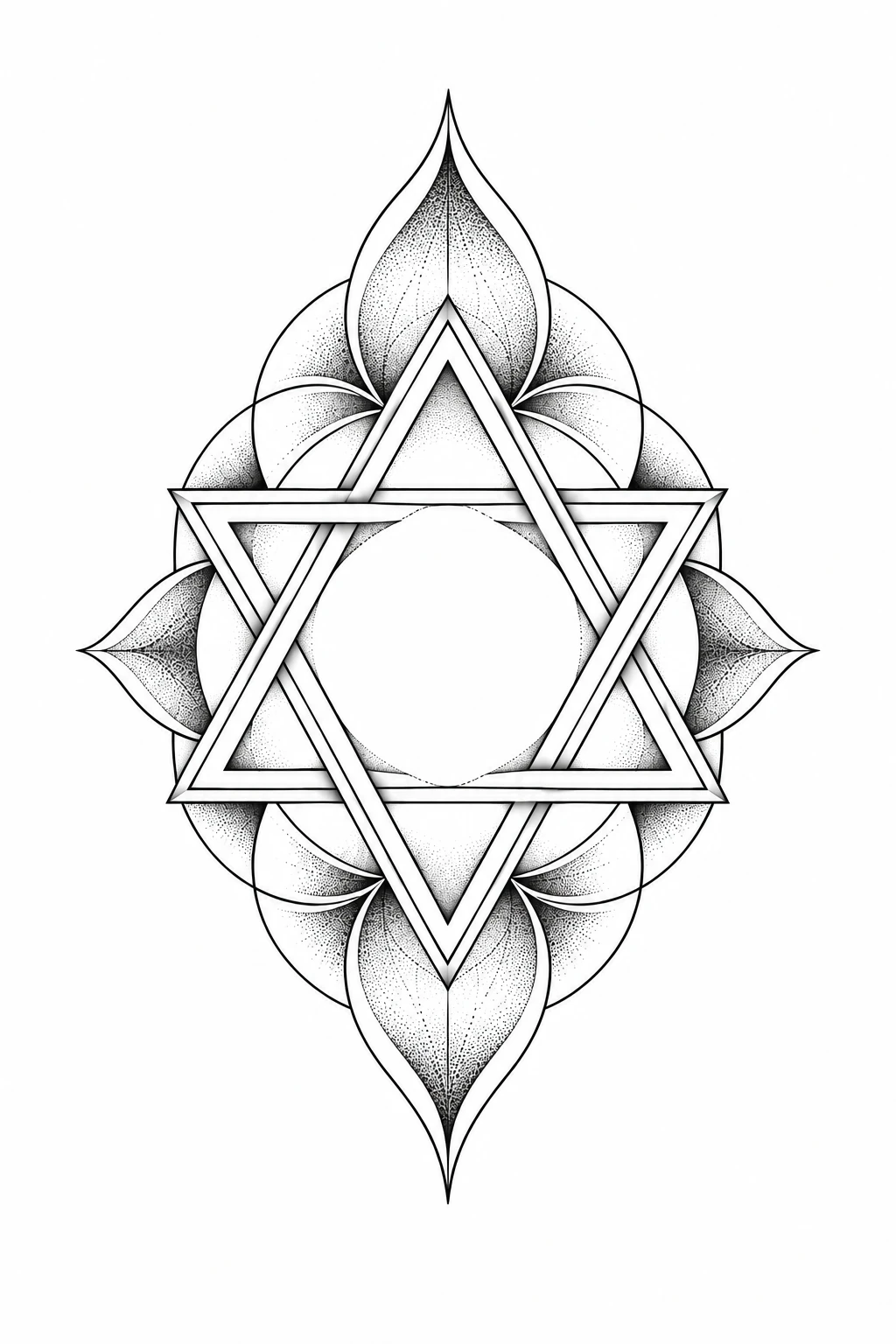
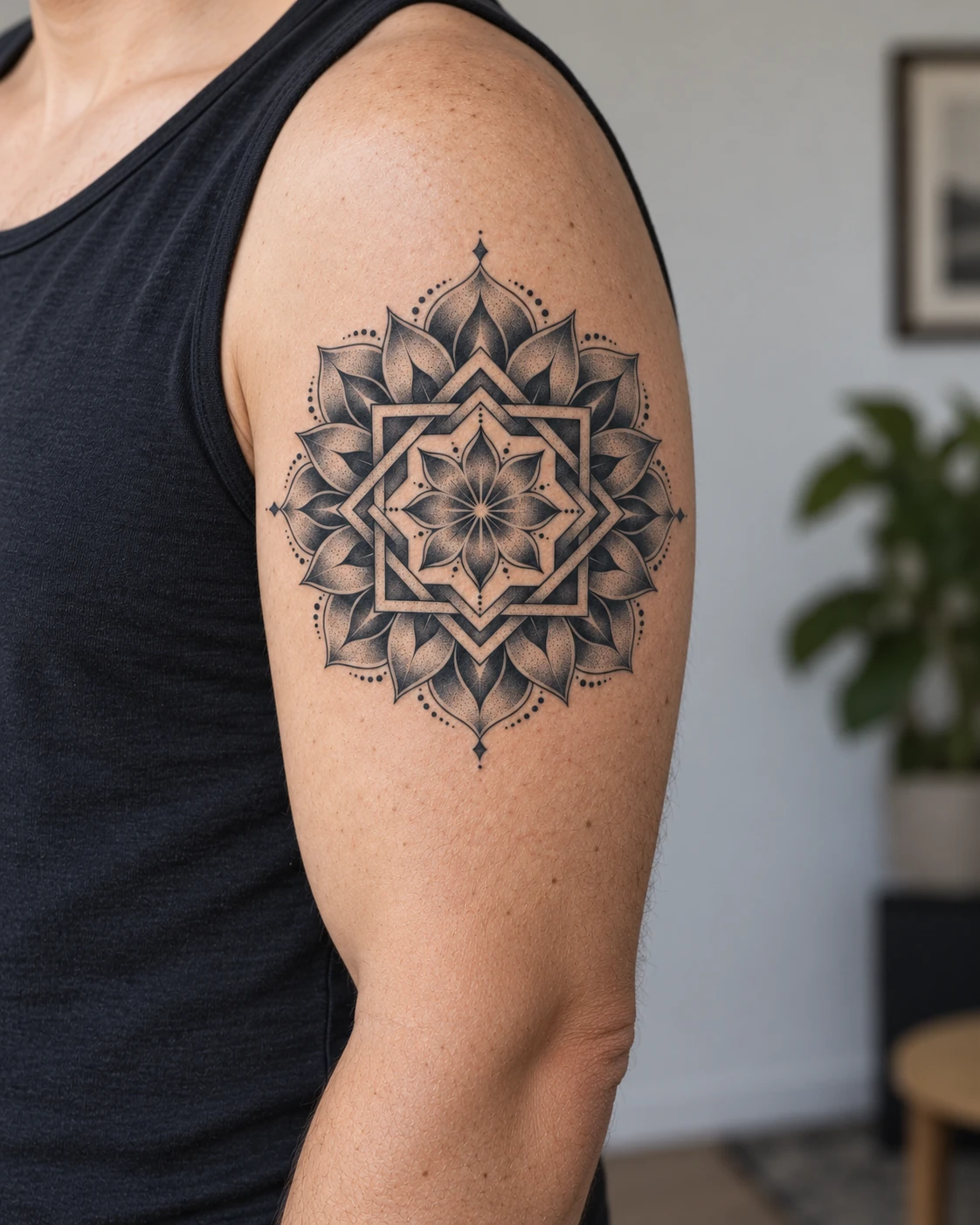
Patterns built from circles, triangles and hexagrams, such as the Flower of Life, Metatron's Cube and the Sri Yantra. They are usually symmetrical and centered.
A single shape or a few fine lines: a triangle, a circle, a small grid. Minimalist geometric tattoos can be small, as long as the lines have room.
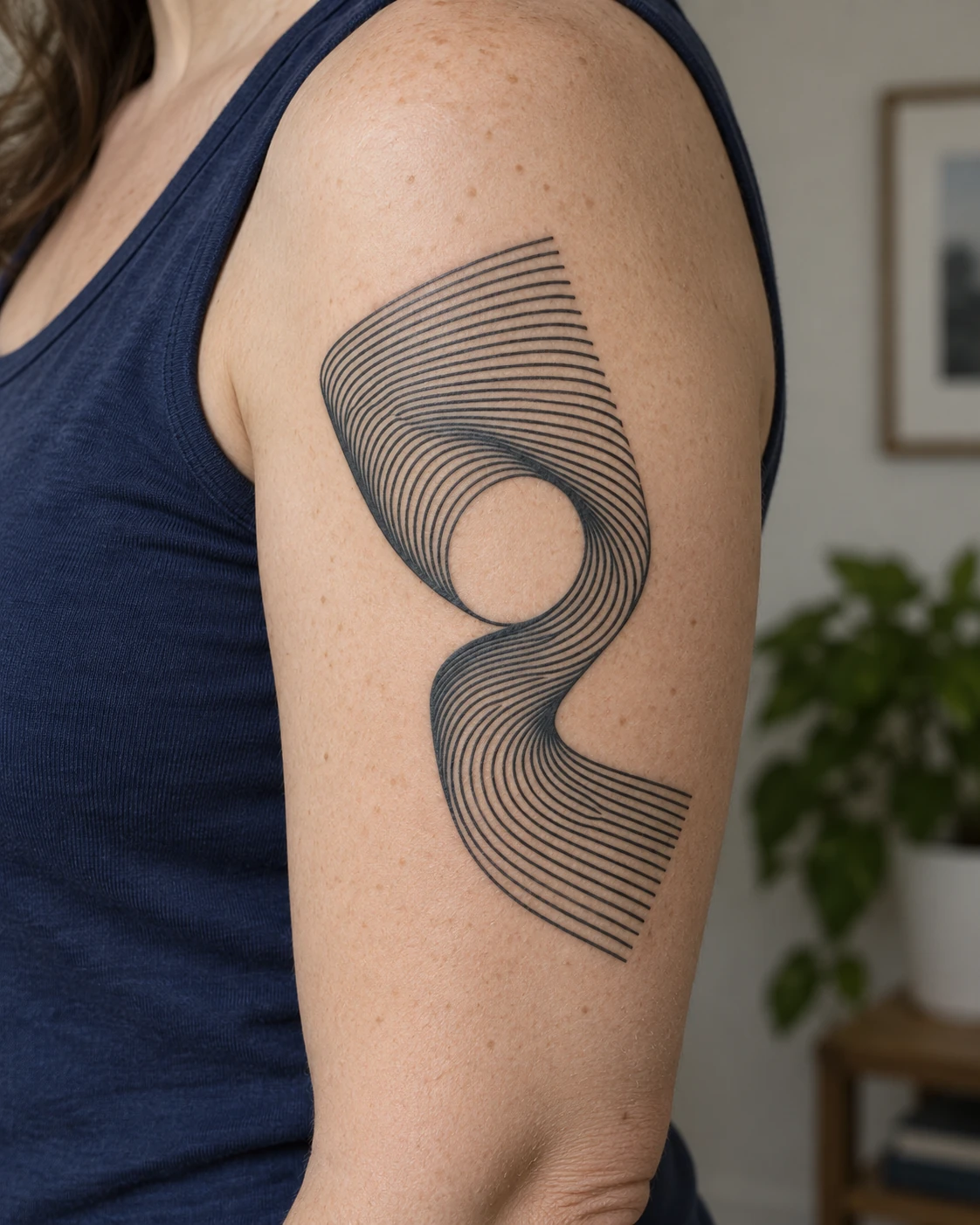
A sleeve combines several geometric elements into one composition that wraps the arm from shoulder to wrist, often mixing patterns, animals and dotwork shading.
A sleeve combines multiple elements. Shown here: a single upper-arm design.
Meanings vary by tradition and by person. These are common associations, not fixed rules.
| Shape | Commonly associated with |
|---|---|
| Circle | Wholeness, eternity |
| Triangle | Strength, balance |
| Hexagon | Harmony, balance |
| Flower of Life | Interconnection |
| Metatron's Cube | Balance, protection |
Sacred geometry tattoos use symmetrical patterns that religious traditions or modern spiritual writing have given meaning. Three well-known patterns are explained below.
A grid of equal, evenly overlapping circles that forms six-petal rosettes. Similar circle patterns appear on artifacts from the 7th century BCE onward; the name Flower of Life is modern.
Thirteen equal circles with straight lines joining every center. Outlines of the five Platonic solids can be traced in the web of lines. It takes its name from Metatron, an angel in Jewish tradition.
Nine interlocking triangles around a central point, ringed by lotus petals and a square frame. It is a sacred diagram in the Shri Vidya school of Hinduism, so learn what it means before choosing it.
Geometric and dotwork tattoos often appear together, but they are separate styles. Geometric work is defined by its structure of lines and shapes; dotwork by shading built from dots.
Each pair below starts from the same written description, generated once in our Geometric style and once in Dotwork.
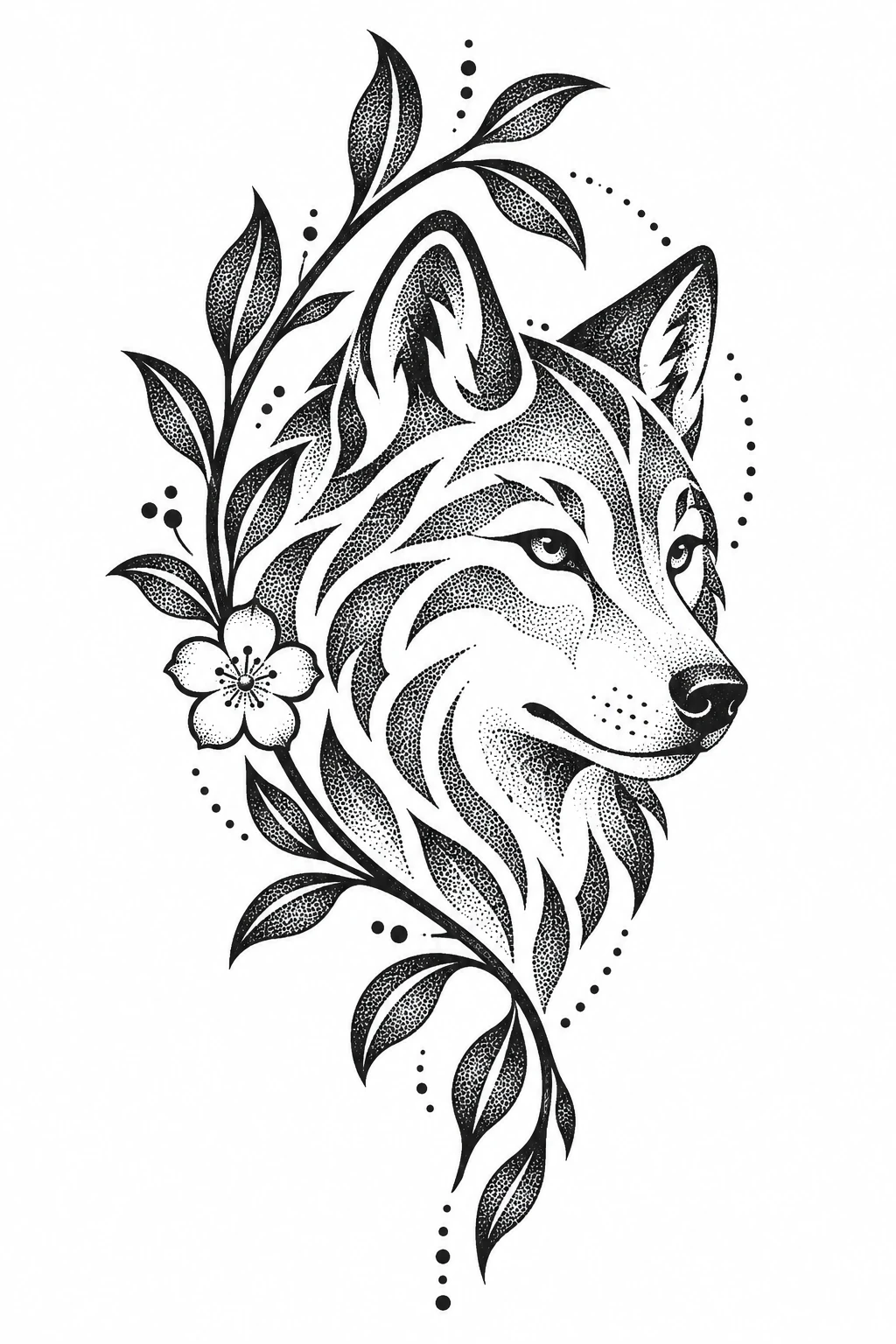
Geometric cuts the head into sharp planes with solid black accents; dotwork shades the same head with soft stippled bands.
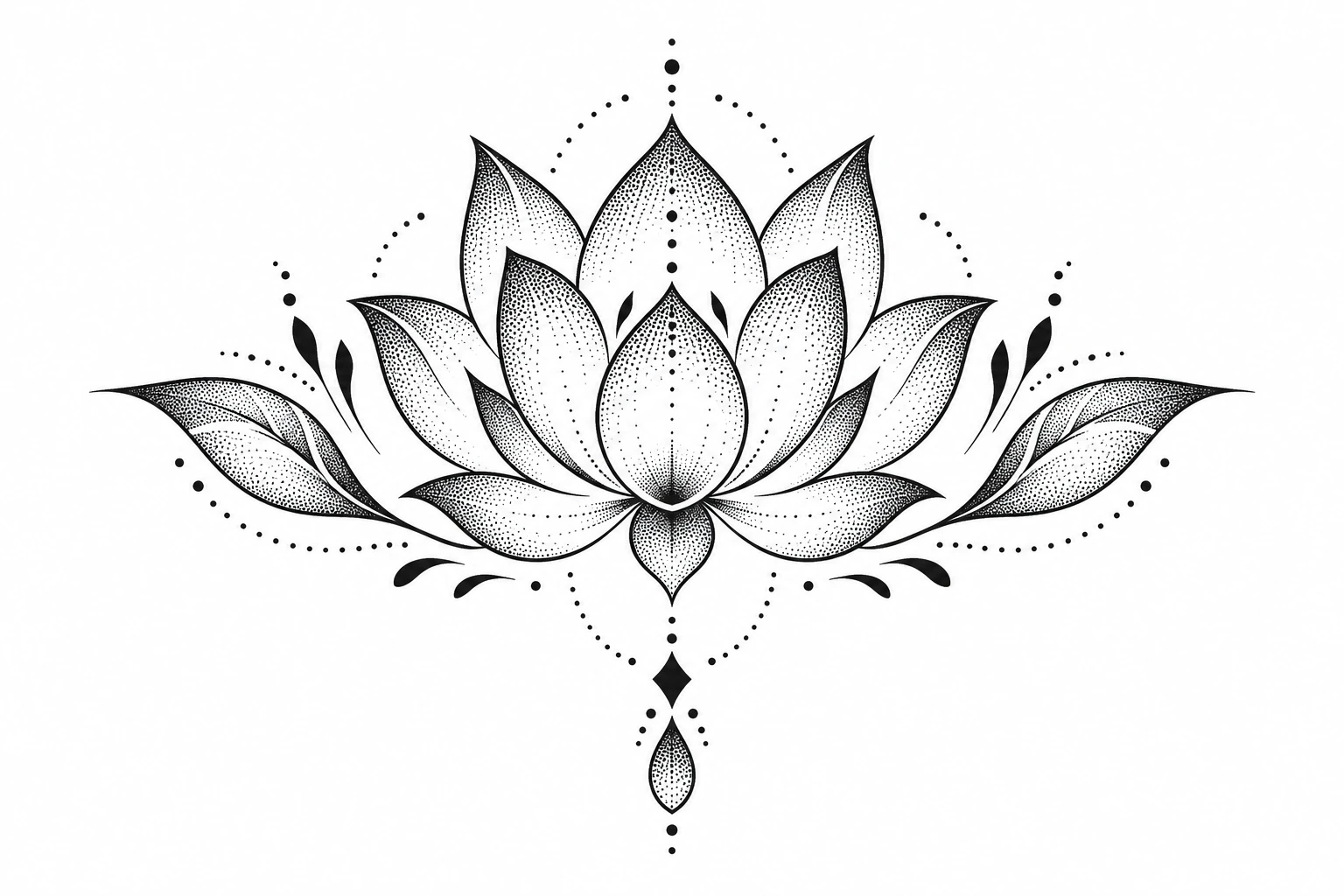
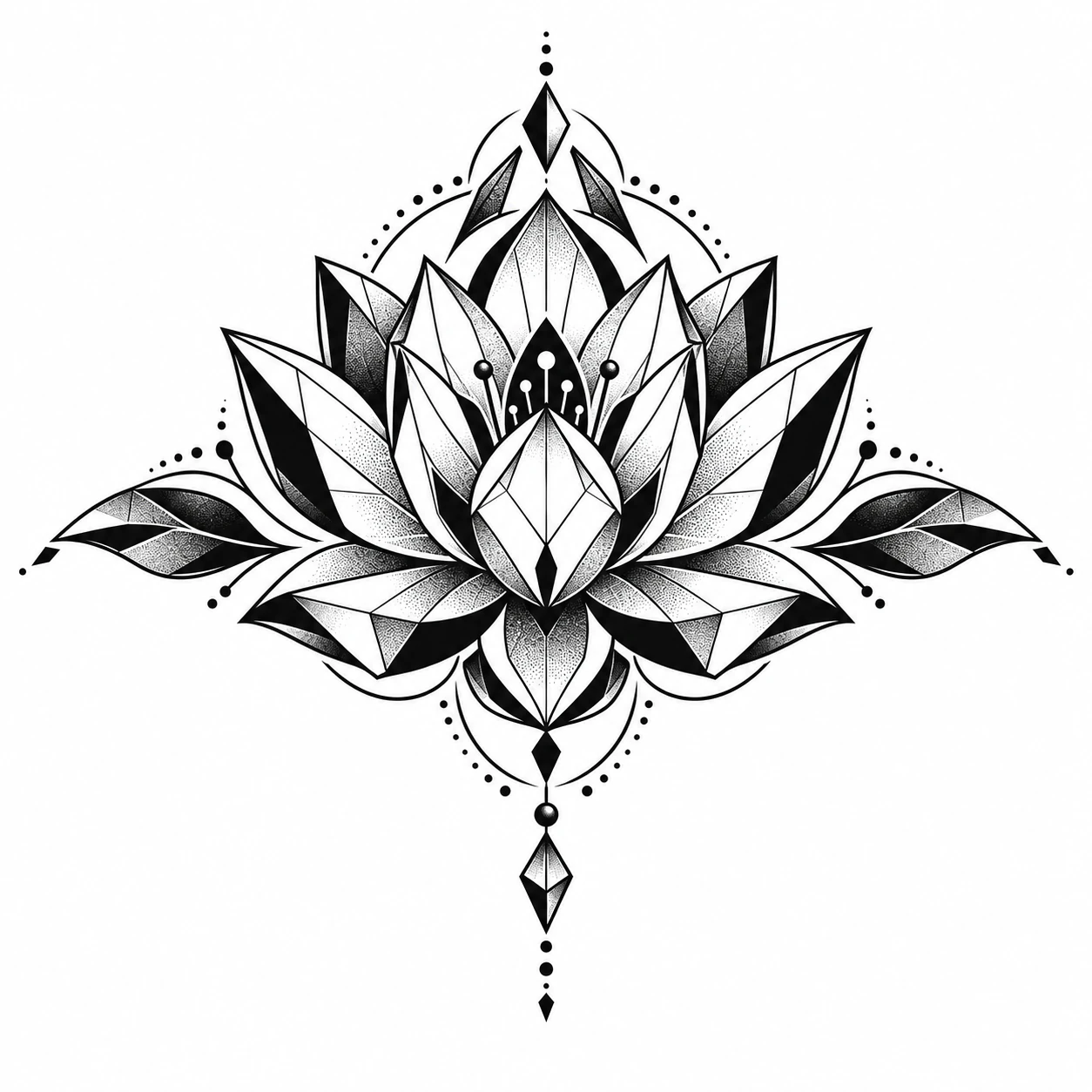
Geometric builds each petal from pointed, faceted shapes; dotwork keeps the petals rounded and pale, shaded with dots.
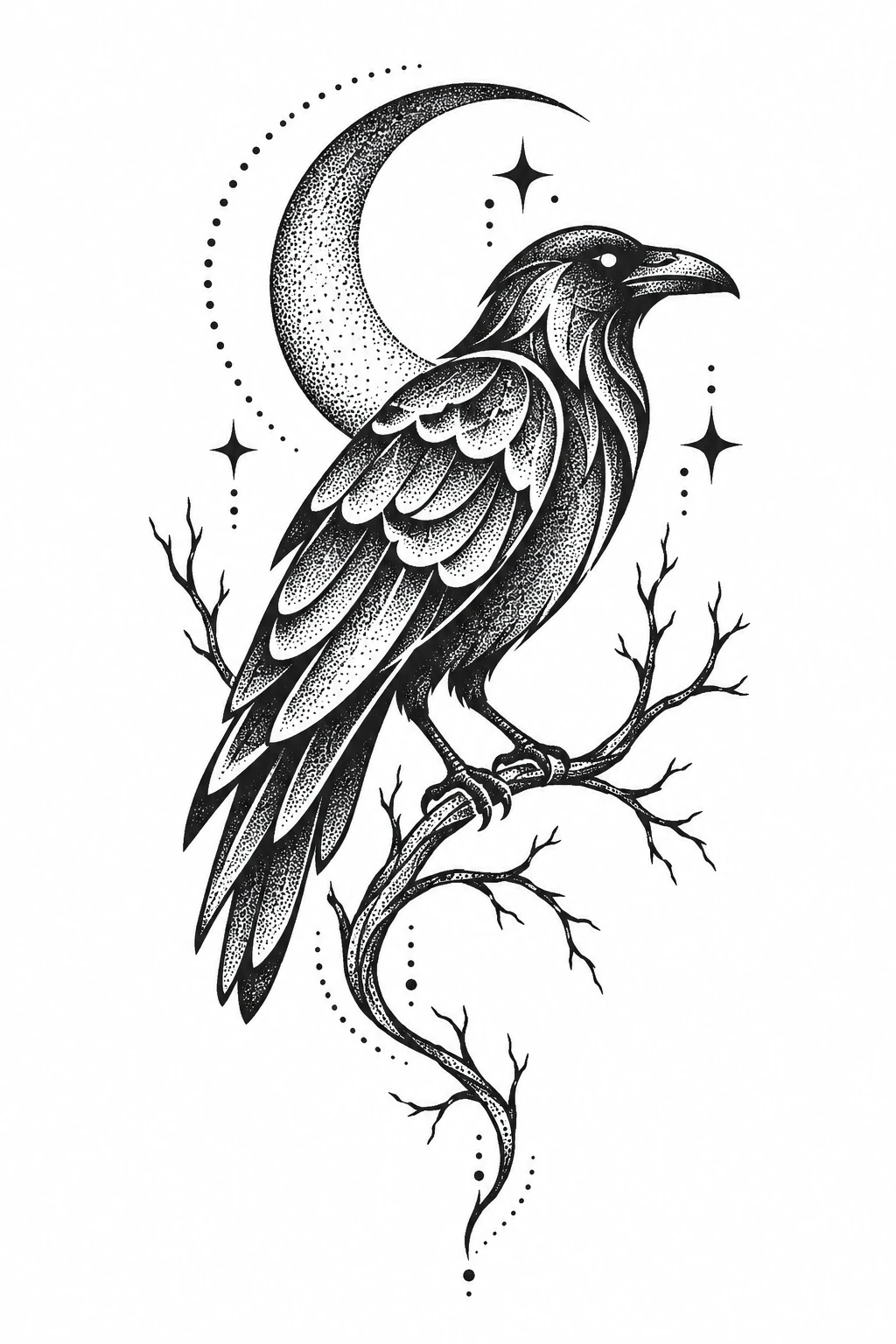
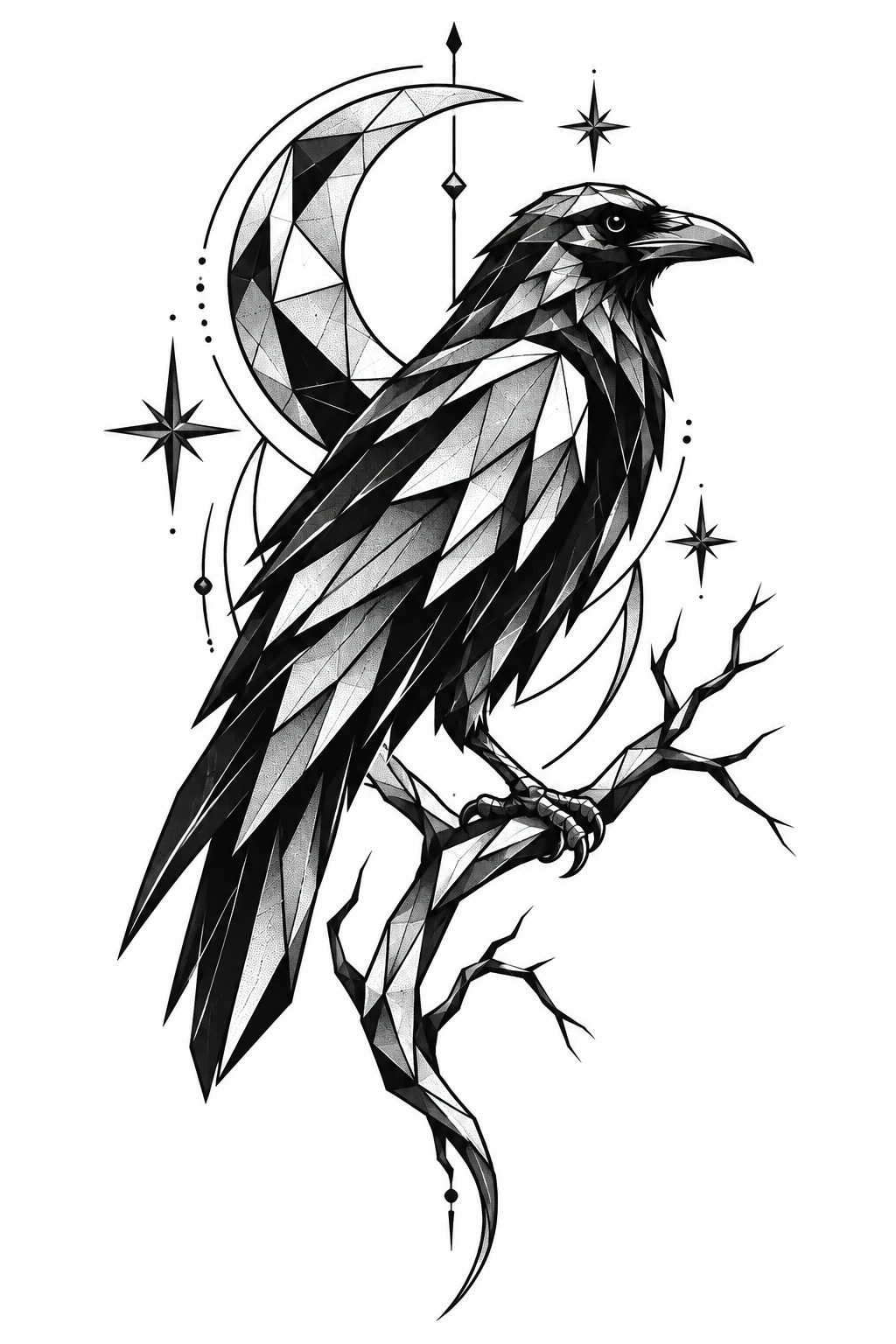
The geometric raven is assembled from angular black and white planes; the dotwork raven is graded with dots beneath a stippled moon.
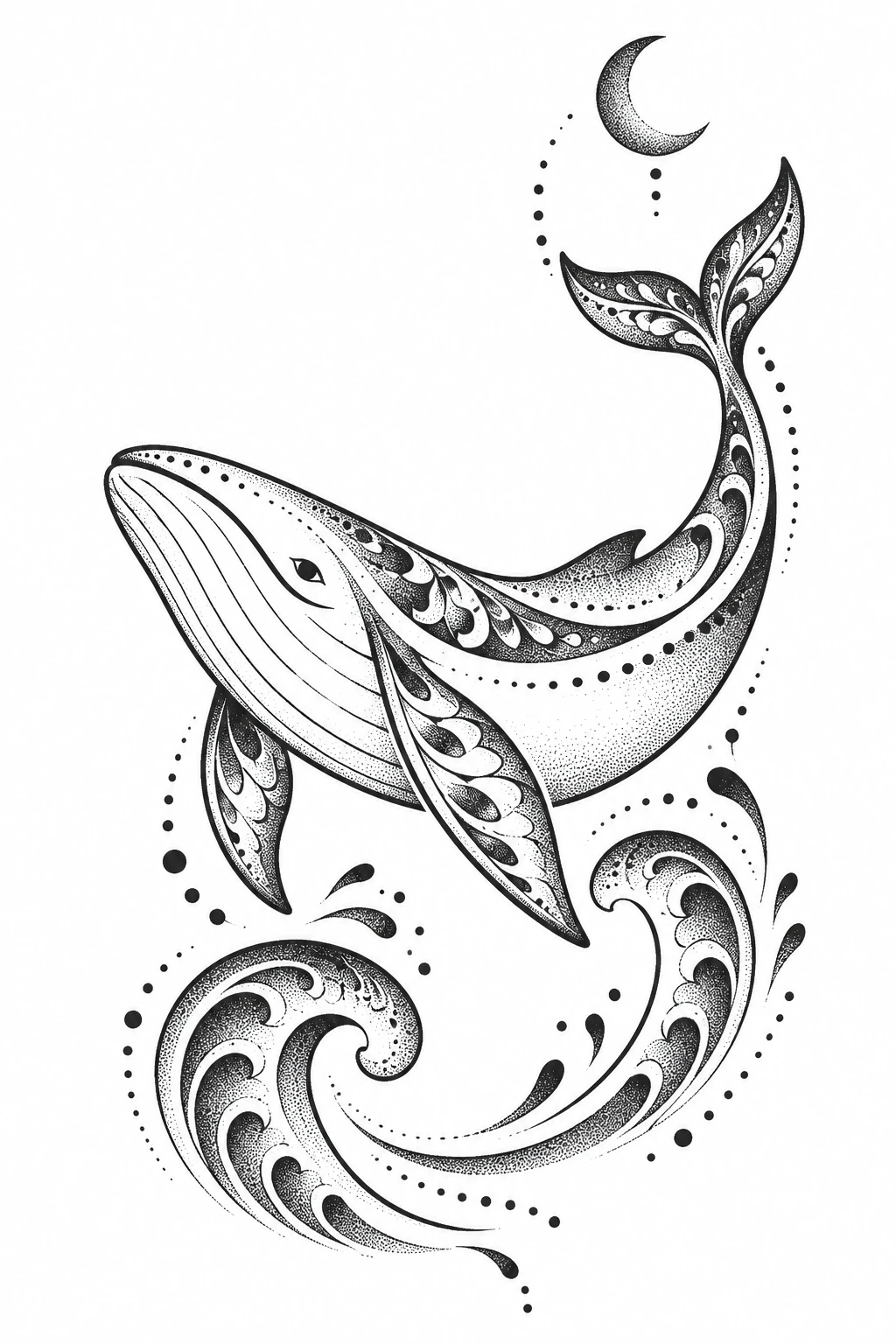
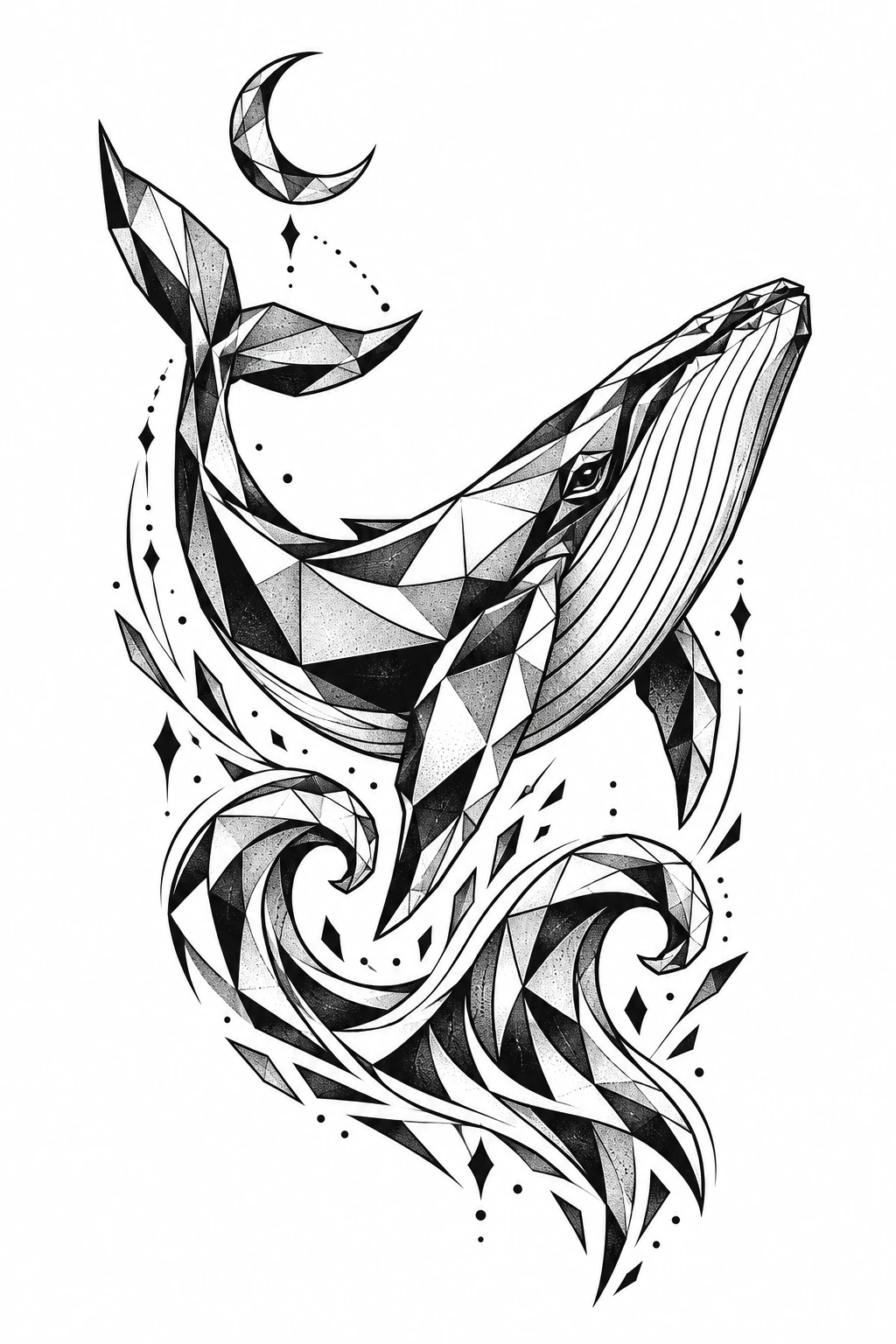
Geometric breaks the whale and waves into facets; dotwork turns them into curling ornamental bands filled with dots.
| Dotwork | Geometric | |
|---|---|---|
| What defines it | Shading built from individual dots | A structure of lines, shapes and symmetry |
| Shading | Dot density creates tone | Solid black planes, open skin and limited stippling |
| Typical look | Soft, grainy gradients | Crisp edges and angular or symmetrical forms |
| Often combined | Used to shade geometric patterns | Often shaded with dotwork |
Three choices shape most geometric designs. Settle them before you describe your idea.
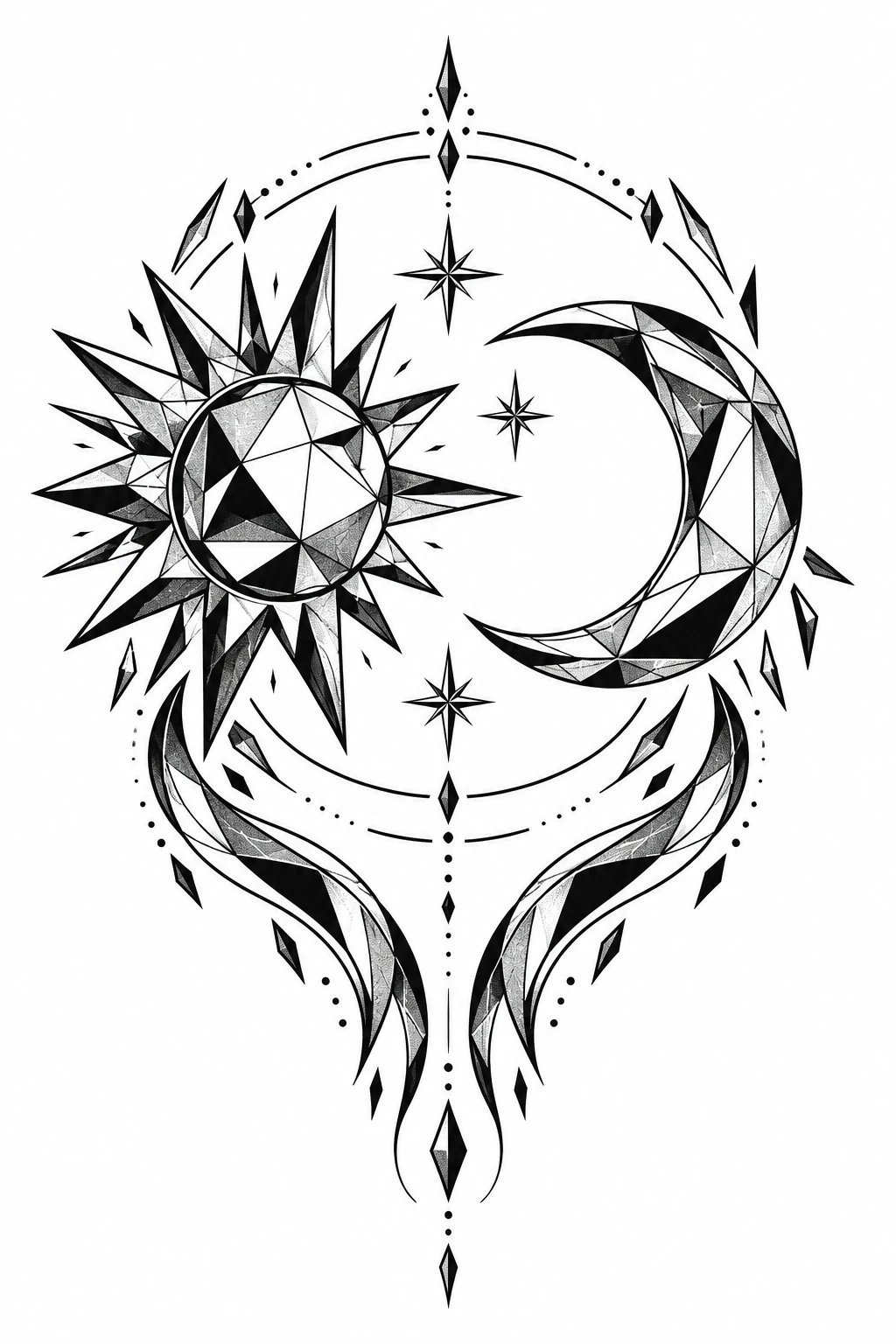
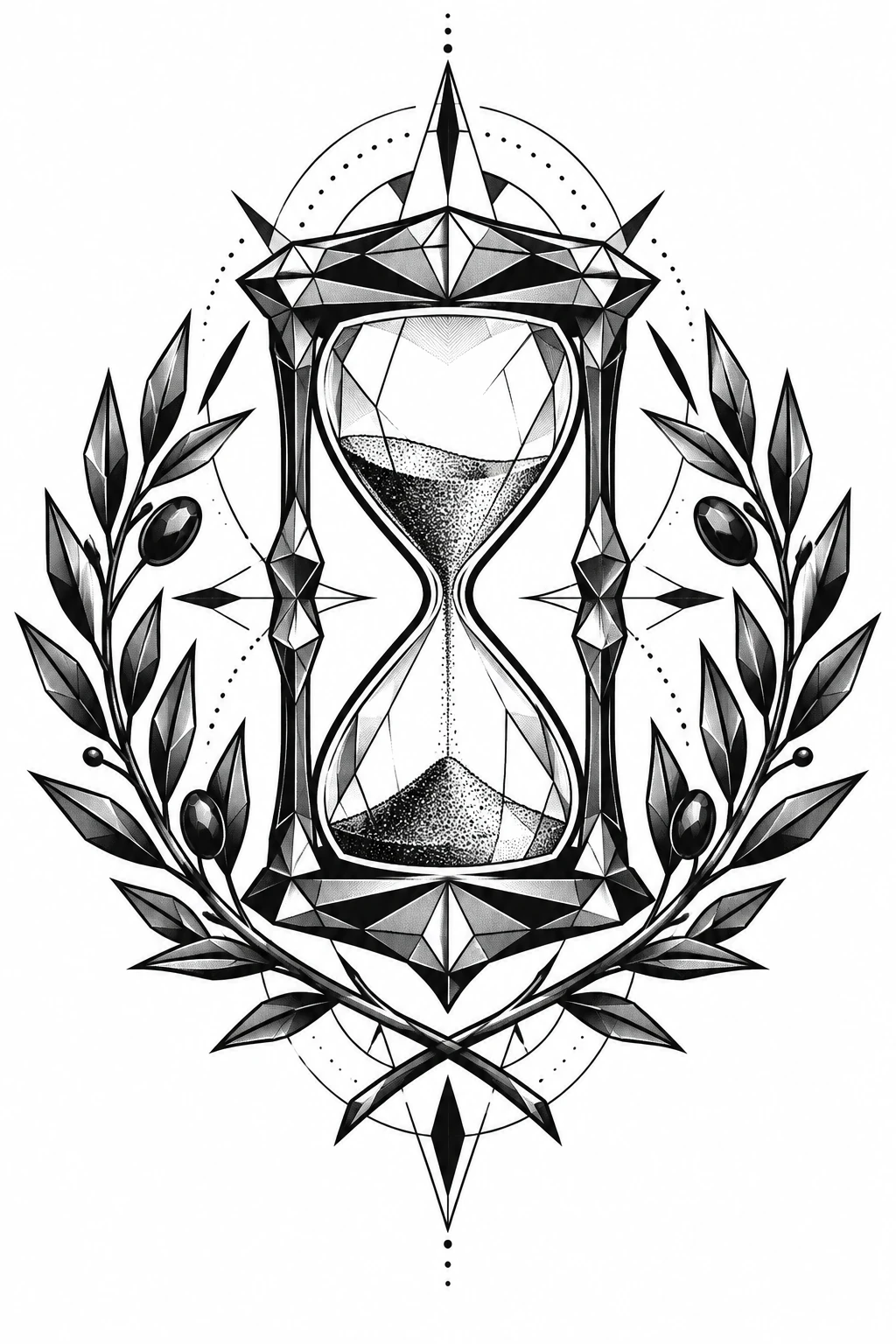
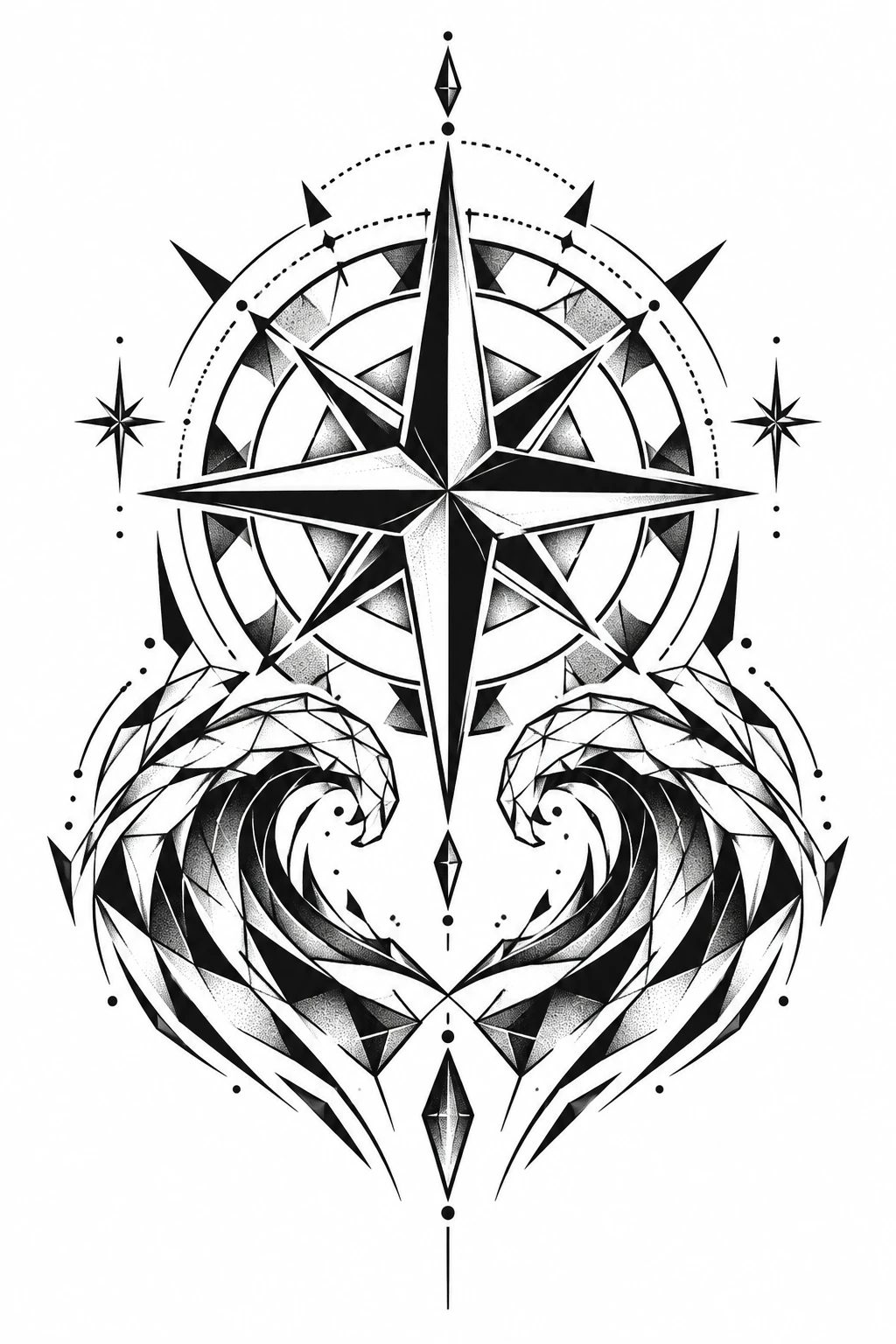
Straight lines and true circles are hard to keep accurate on a curved body. Flatter areas keep geometry true; on curved or moving areas, an artist may need to adjust the design.
Room for a framed animal or a compact symbol.
Shape: Vertical designs that follow the arm; a sleeve often starts here.
Detailed linework needs enough size and spacing to stay legible, while a simple minimalist shape can work small. Clean lines leave little room for error, so choose an artist with a strong geometric portfolio.
It depends on the shapes and on you. Circles are commonly associated with wholeness, triangles with strength or balance, and patterns such as the Flower of Life with interconnection. Many people choose geometric designs simply for how they look.
All tattoos soften with age. Very fine or tightly packed lines tend to blur sooner, while bolder lines and open spacing hold up better.
Straight lines and symmetry leave little room for error, so a wobble or an uneven angle is easy to see. Look for an artist with a strong geometric portfolio.
Yes, if the design is simple. A single shape or a few fine lines can work small, but detailed patterns need enough size to stay legible.
Geometric work is defined by its lines, shapes and symmetry; dotwork by shading built from dots. They are often combined, as the examples above show.
Use it as the starting point. TatSketch designs are concept images, not ready-to-use stencils, so the usual next step is to take the design to your tattoo artist. They redraw the linework at the right size for your placement, then transfer that stencil to your skin.
No. Every design and on-skin preview on this page is an AI-generated concept. Bring a design you like to a tattoo artist, who can adapt it to your body.
Describe your subject, choose the Geometric style and generate a design built from facets, lines and shapes.