Illustrative blackwork
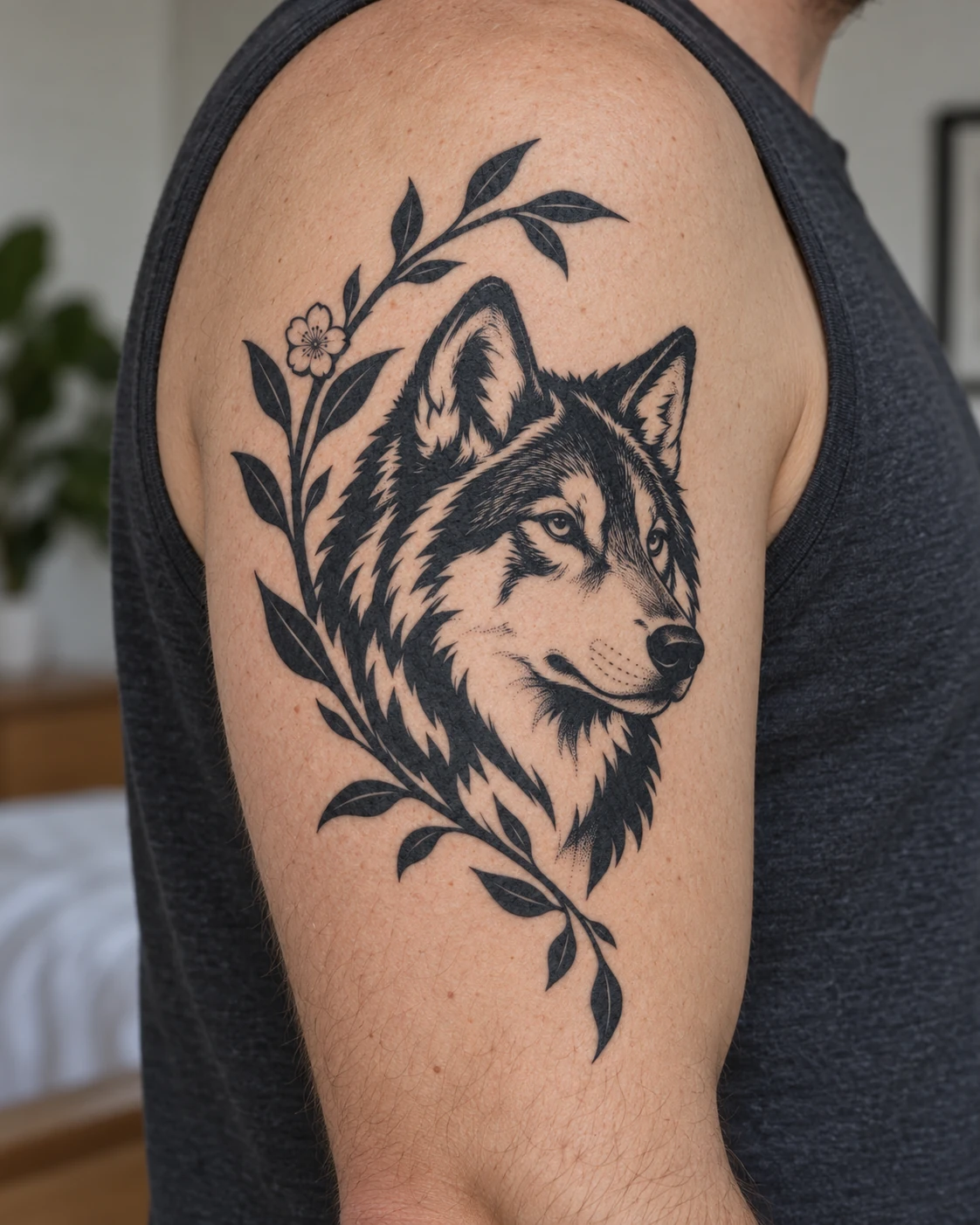
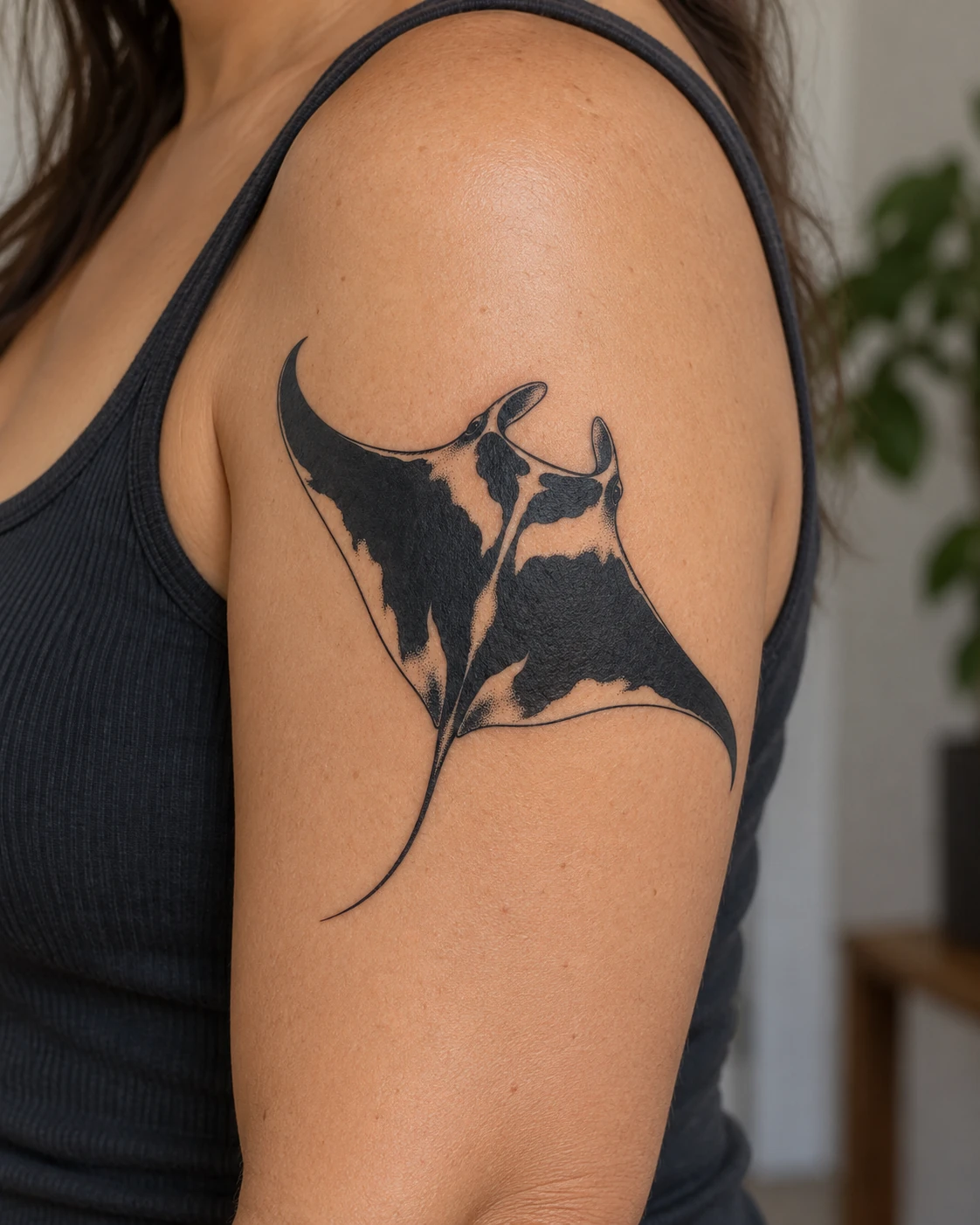
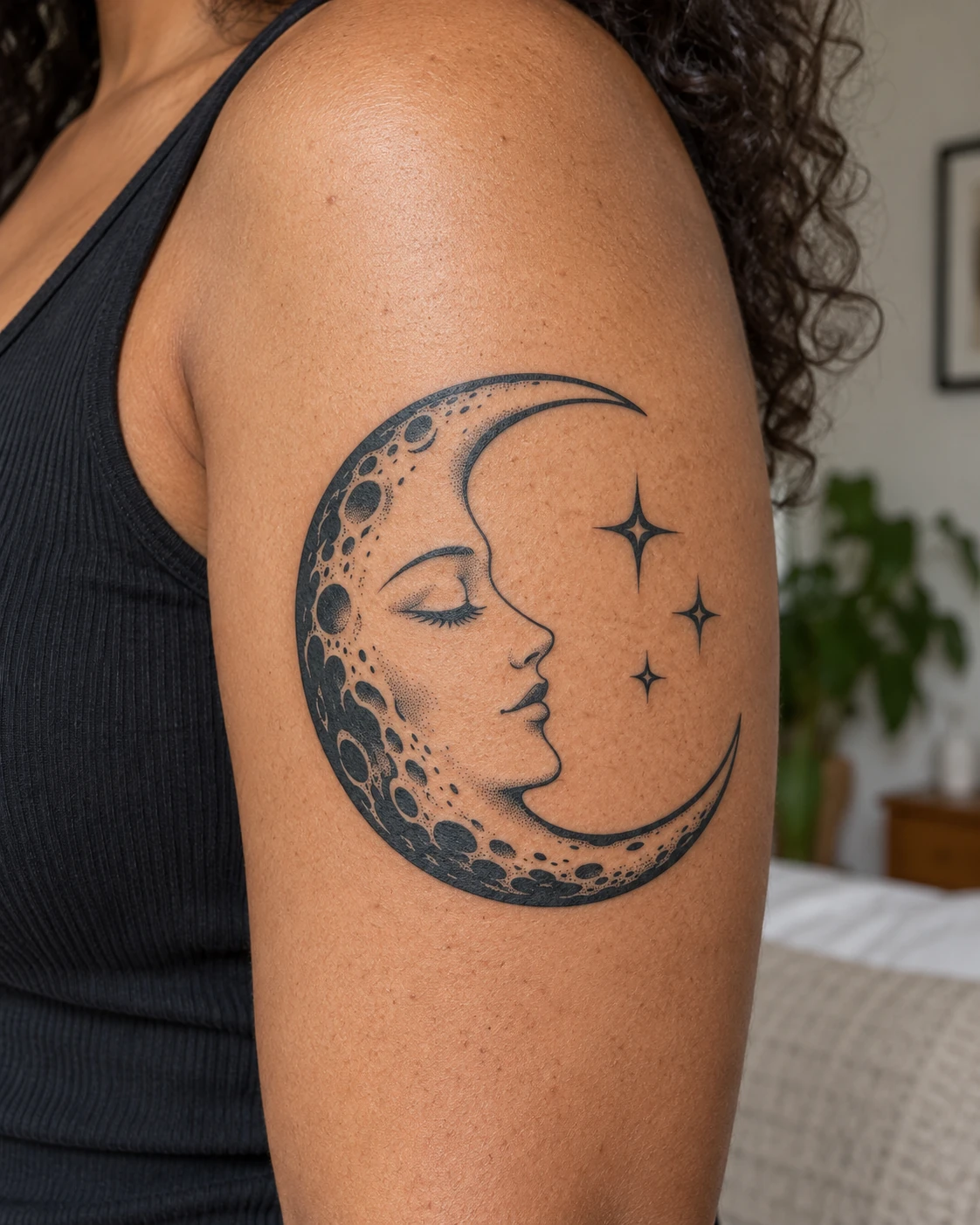
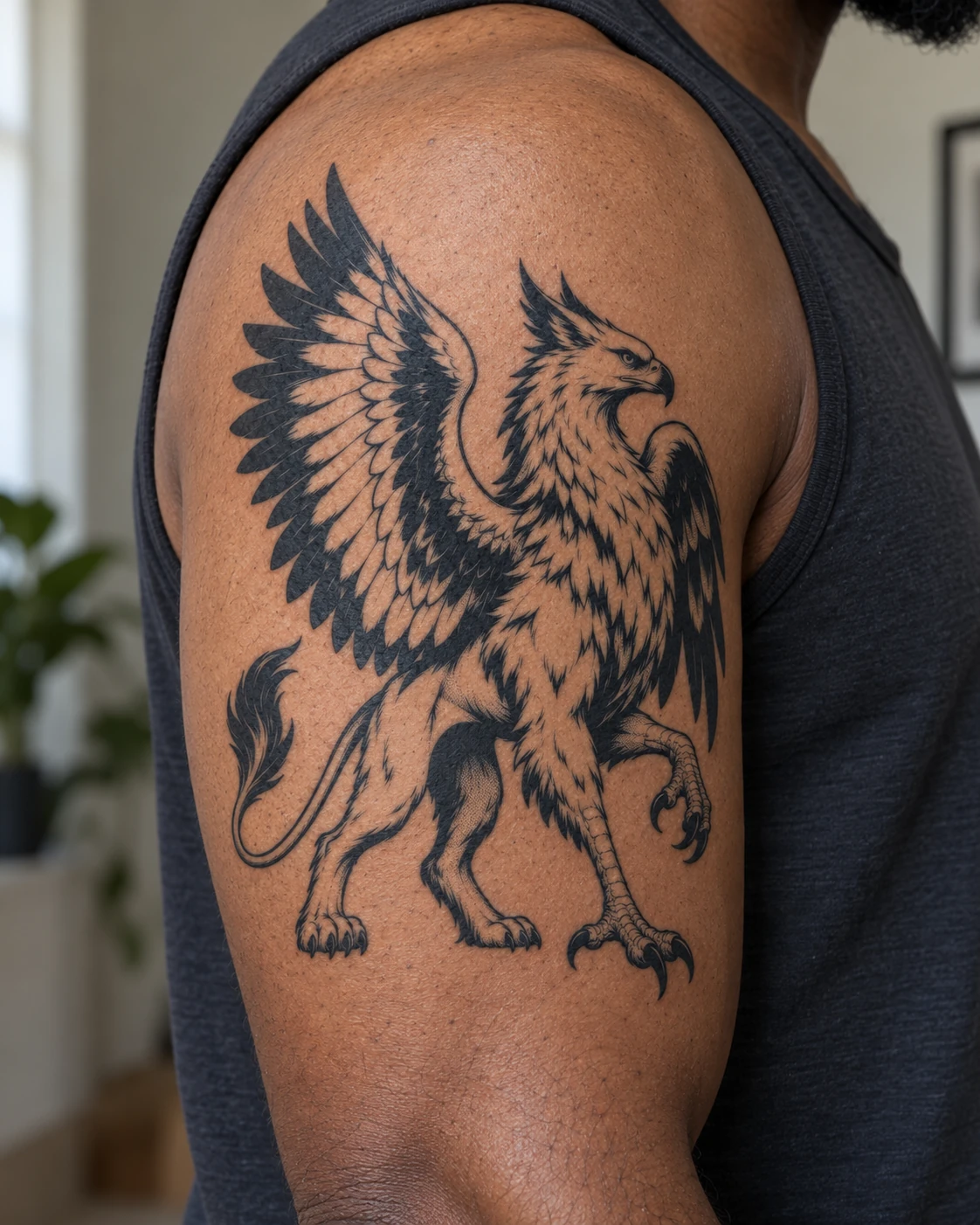
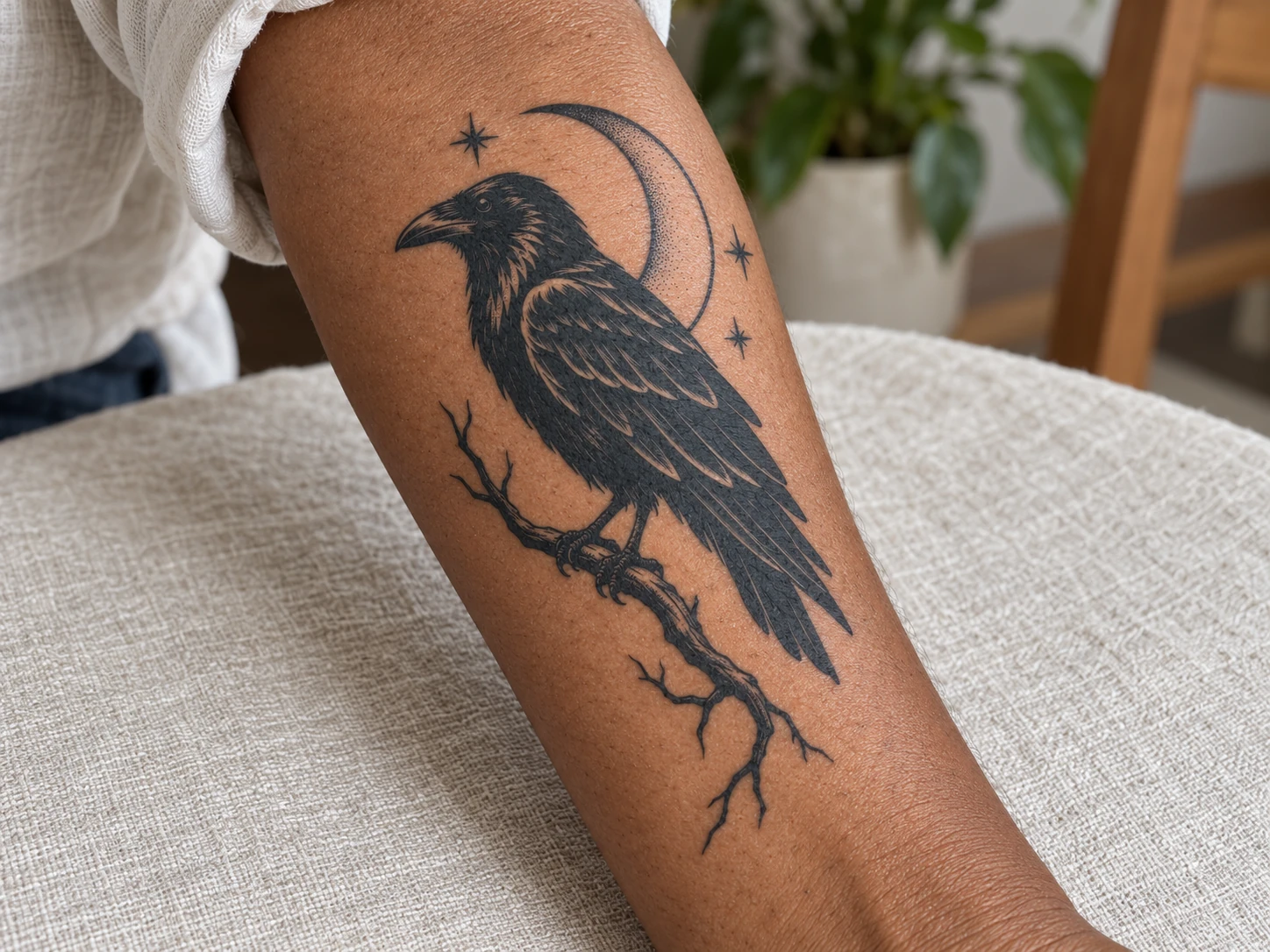
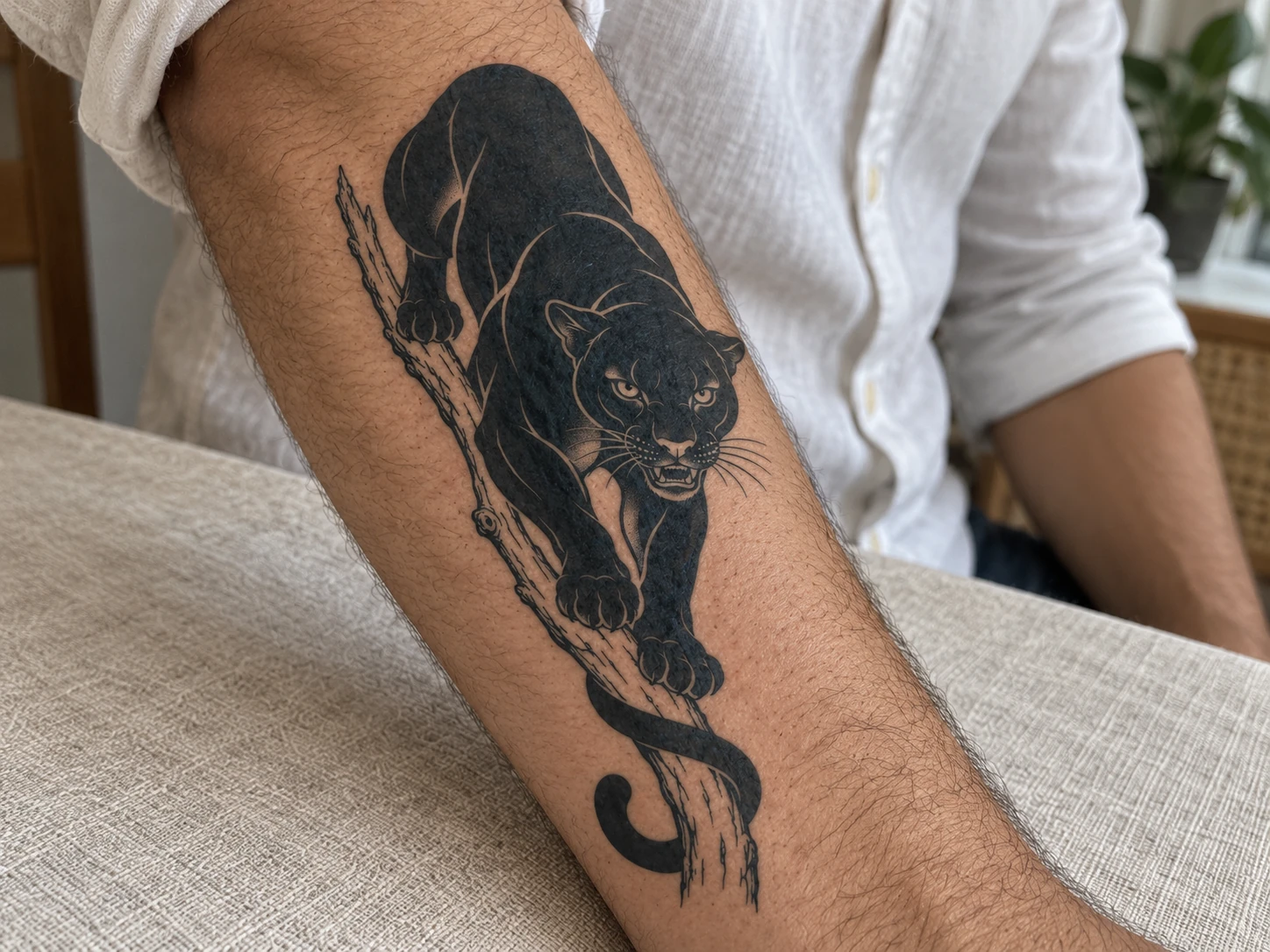
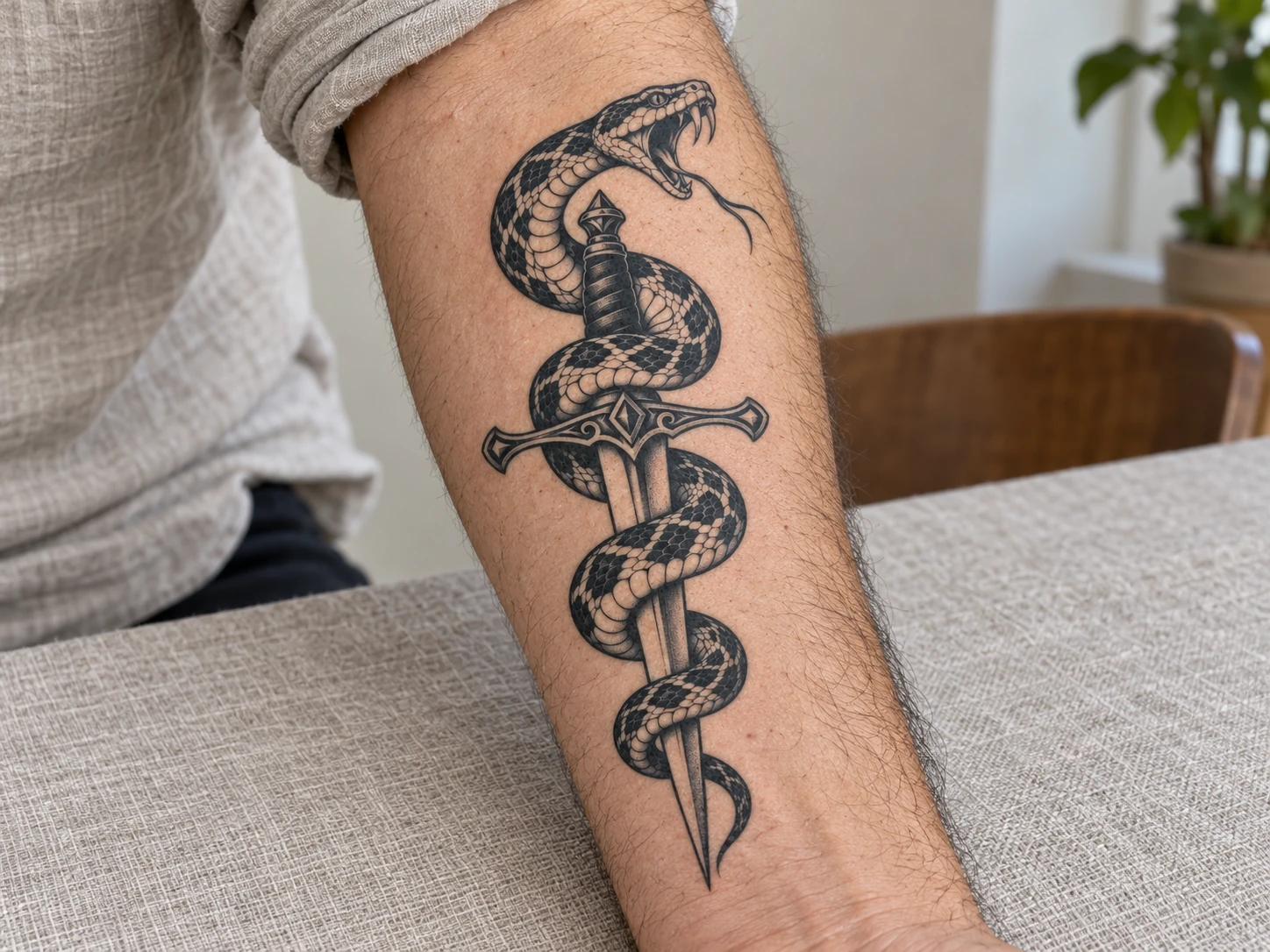
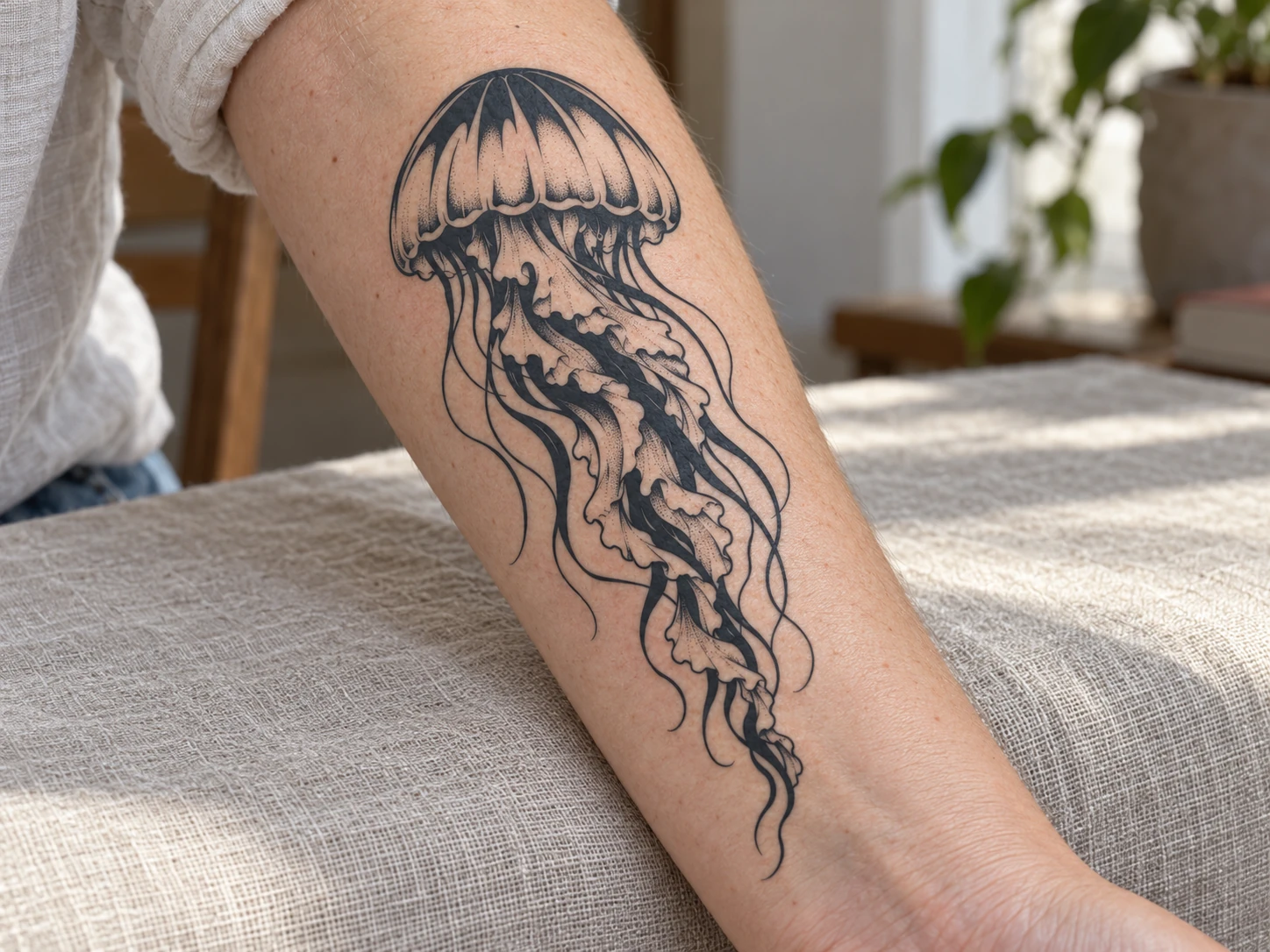
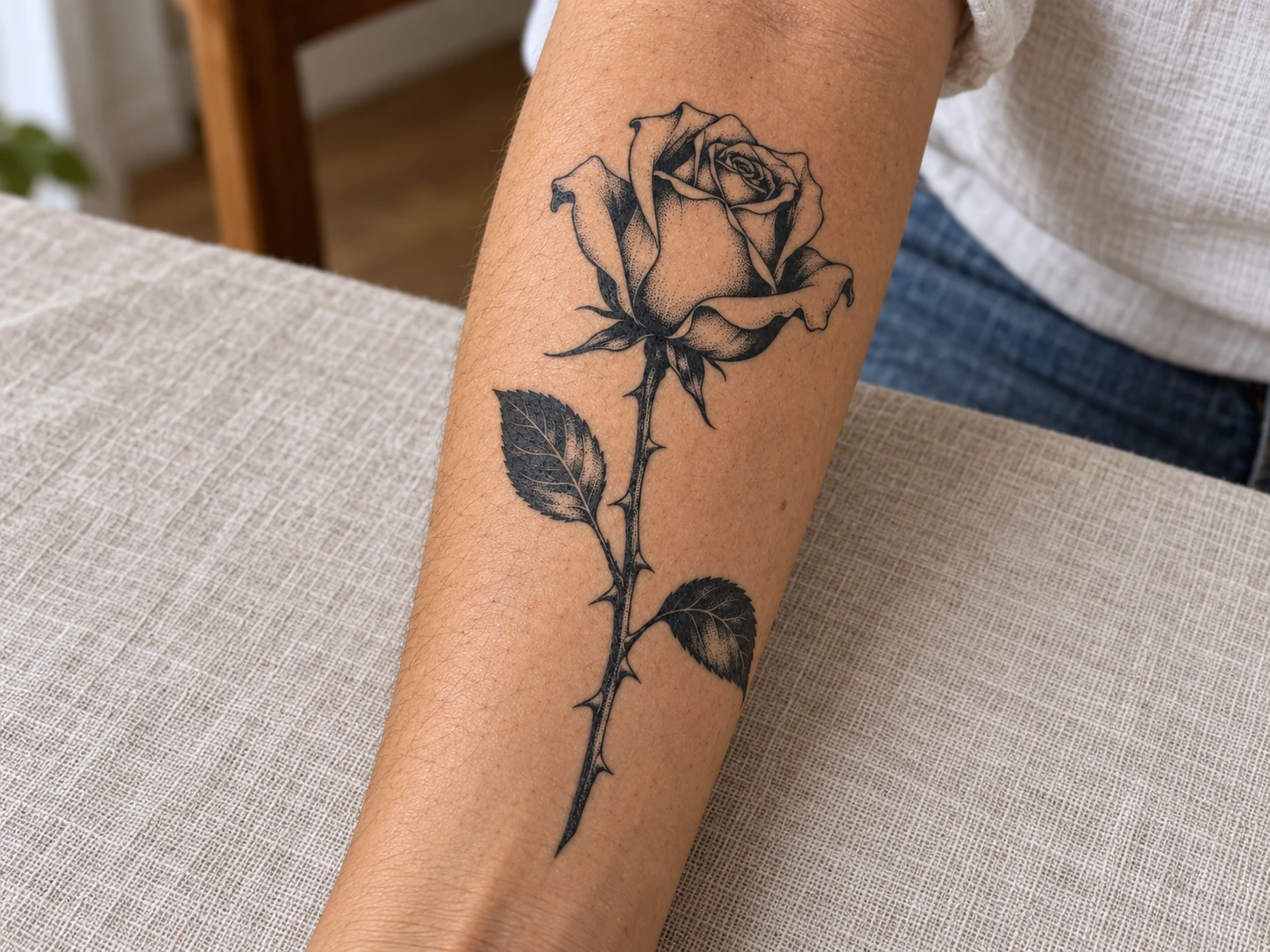
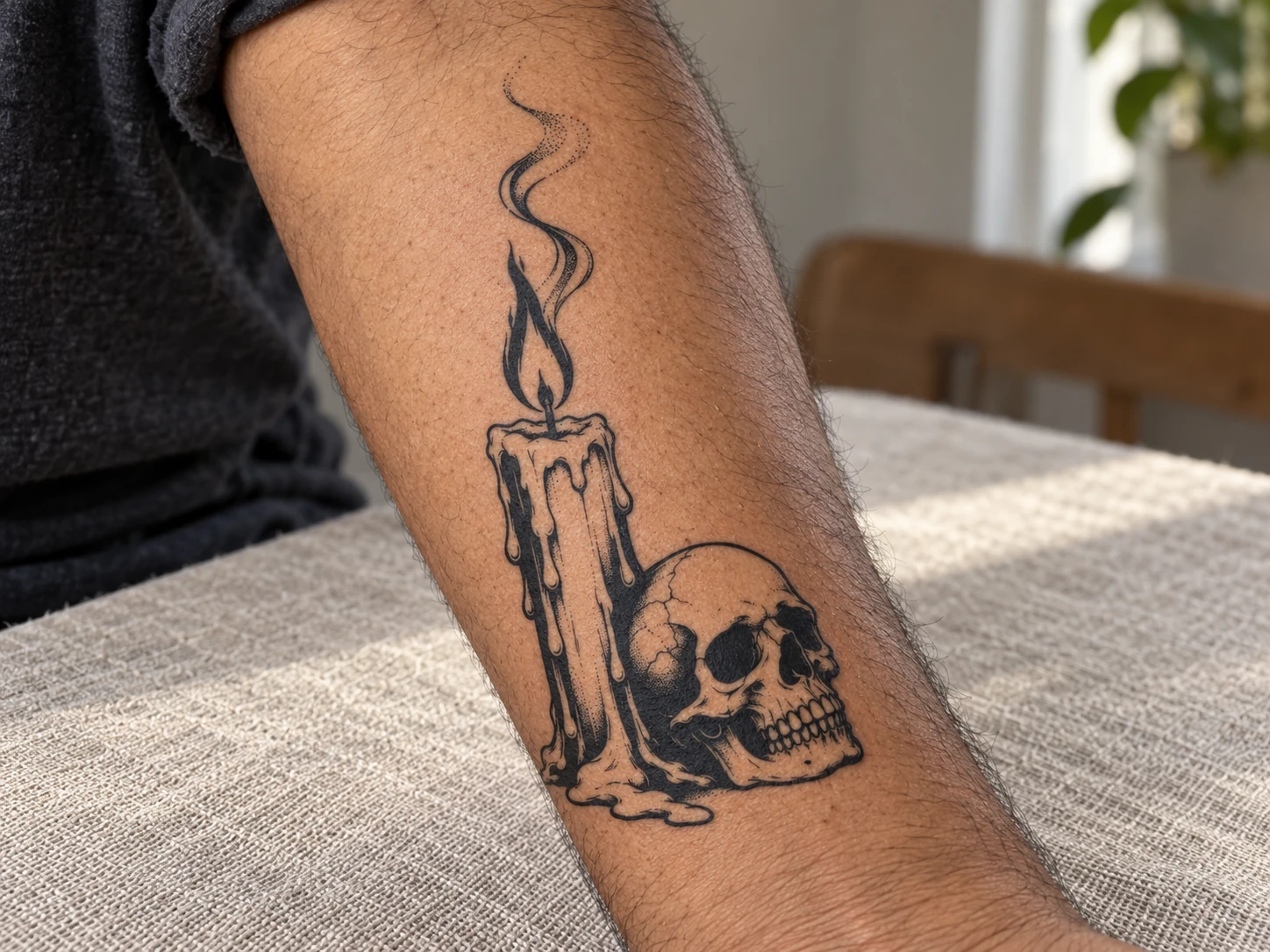
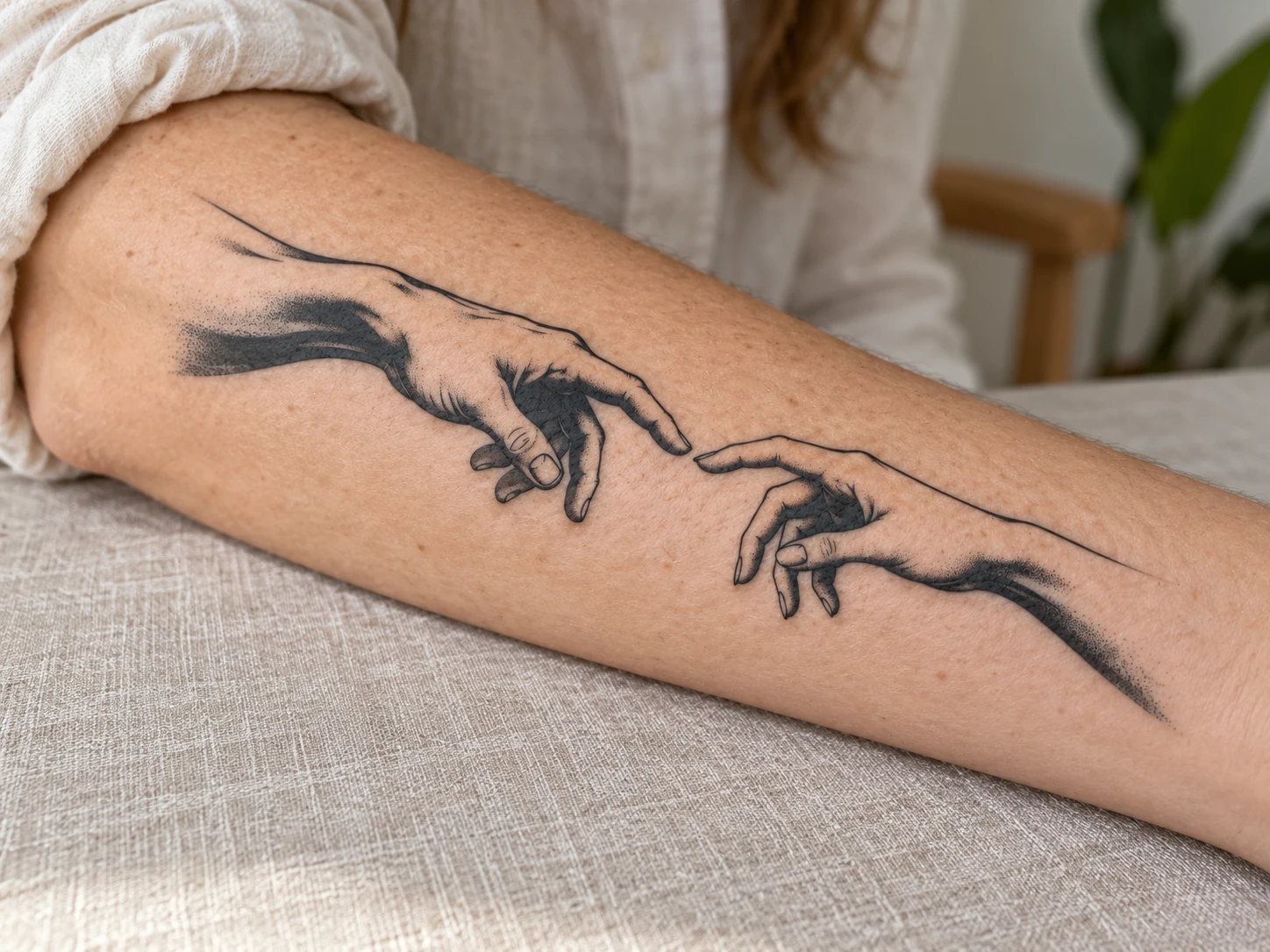
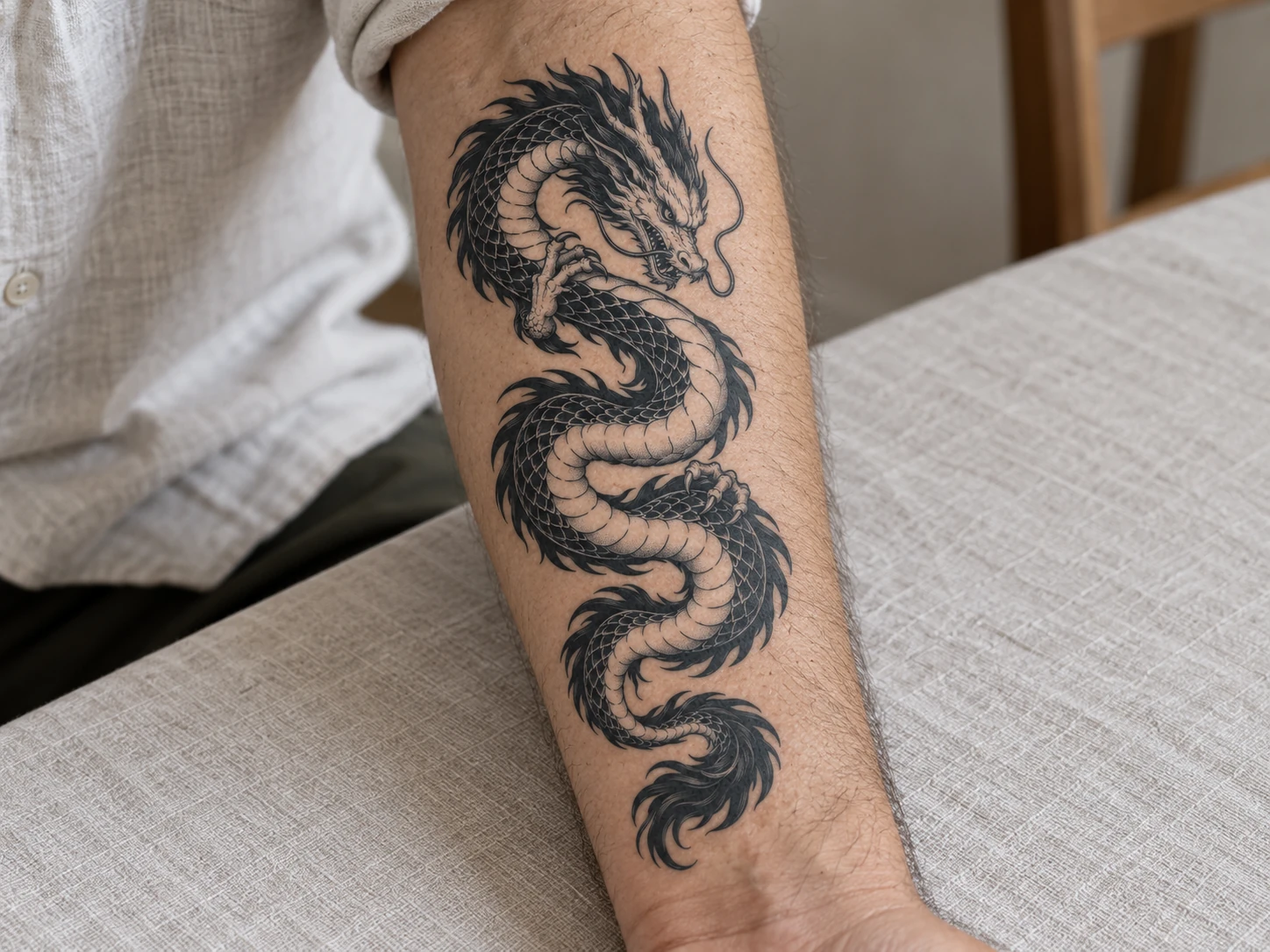
Animals, flowers, skulls and other real subjects drawn in solid black and open skin. Our version keeps the black solid, adds short stippled transitions only where a shadow turns, and avoids hatching.
Blackwork tattoos use black ink alone: solid black shapes set against open skin, with no grey shading. The designs below are illustrative blackwork, where bold black draws a full picture.
All designs and on-skin previews are AI-generated concepts, not photos of healed tattoos.
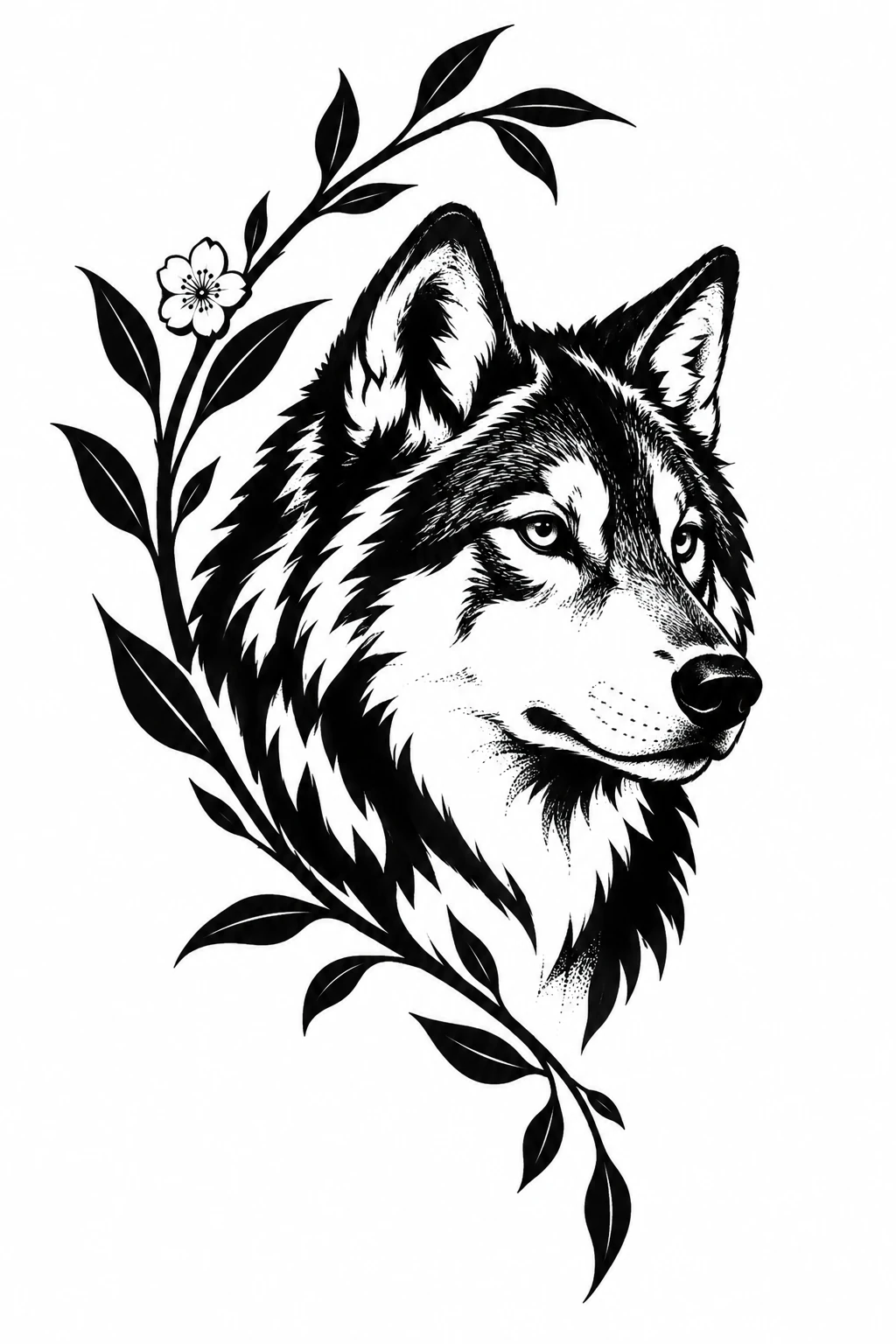
A blackwork tattoo is made only in black ink. Instead of grey shading, it relies on solid black shapes, open skin and firm contours, which is why it reads clearly even from a distance. The name covers a whole family of approaches, from bold tribal bands to detailed illustration.
Large areas are packed with fully saturated black. These shapes carry the weight of the design and set its contrast.
Bare skin works as the light. A good blackwork design plans these gaps as carefully as the black itself.
Firm outlines separate one shape from the next. In illustrative blackwork, some contours merge into the black while others stay open.
Blackwork never dilutes the ink into grey. Any in-between tone comes from dots or lines, which is the main difference from black and grey.
Blackwork is an umbrella term. These are the approaches you will see most often in artist portfolios. The designs on this page, and the Illustrative Blackwork style in our generator, belong to the first.
Animals, flowers, skulls and other real subjects drawn in solid black and open skin. Our version keeps the black solid, adds short stippled transitions only where a shadow turns, and avoids hatching.
The far end of blackwork: large areas, sometimes a whole sleeve, filled in solid black with little or no open skin. All blackout is blackwork, but most blackwork is not blackout. Some people choose it to cover older tattoos. TatSketch does not generate blackout designs.
Bold black bands and patterns rooted in Polynesian and other Indigenous tattooing traditions. Neo-tribal borrows these shapes for modern abstract designs. Many patterns carry cultural meaning, so look for an artist who knows the tradition. TatSketch does not generate tribal designs.
Lace-like linework, filigree and jewelry-like patterns that decorate the body, often symmetrical and often mixing solid black with fine lines and dots.
Tone built from individual dots instead of solid fill. Our dotwork guide compares the two side by side.
Precise lines, shapes and symmetry, often finished with solid black planes or dot shading. Browse our geometric designs.
Inspired by old engravings and woodcut prints, this approach shades with fine parallel lines and cross-hatching. It sits close to illustrative blackwork, but our style keeps the black solid instead of hatching it.
Both use only black ink, so they are easy to confuse. Black and grey dilutes the ink into a range of greys for soft shading; blackwork keeps the black at full strength and uses open skin for the light.
Each pair below starts from the same written description, generated once in Black & Grey Illustrative and once in Illustrative Blackwork.
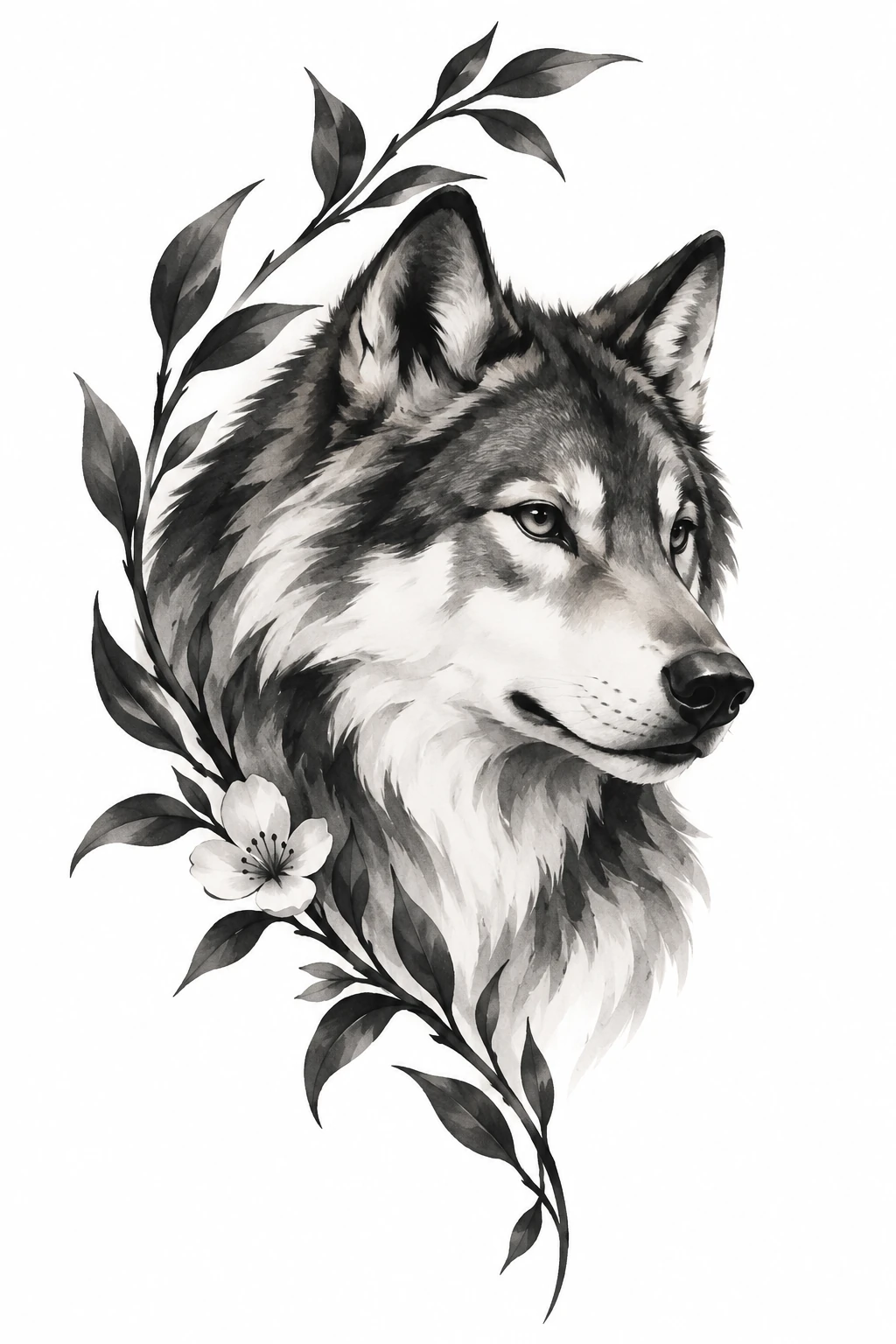
Black and grey models the fur in soft grey gradients around a pale chest; blackwork cuts it into jagged solid-black tufts against open skin and turns every leaf fully black.
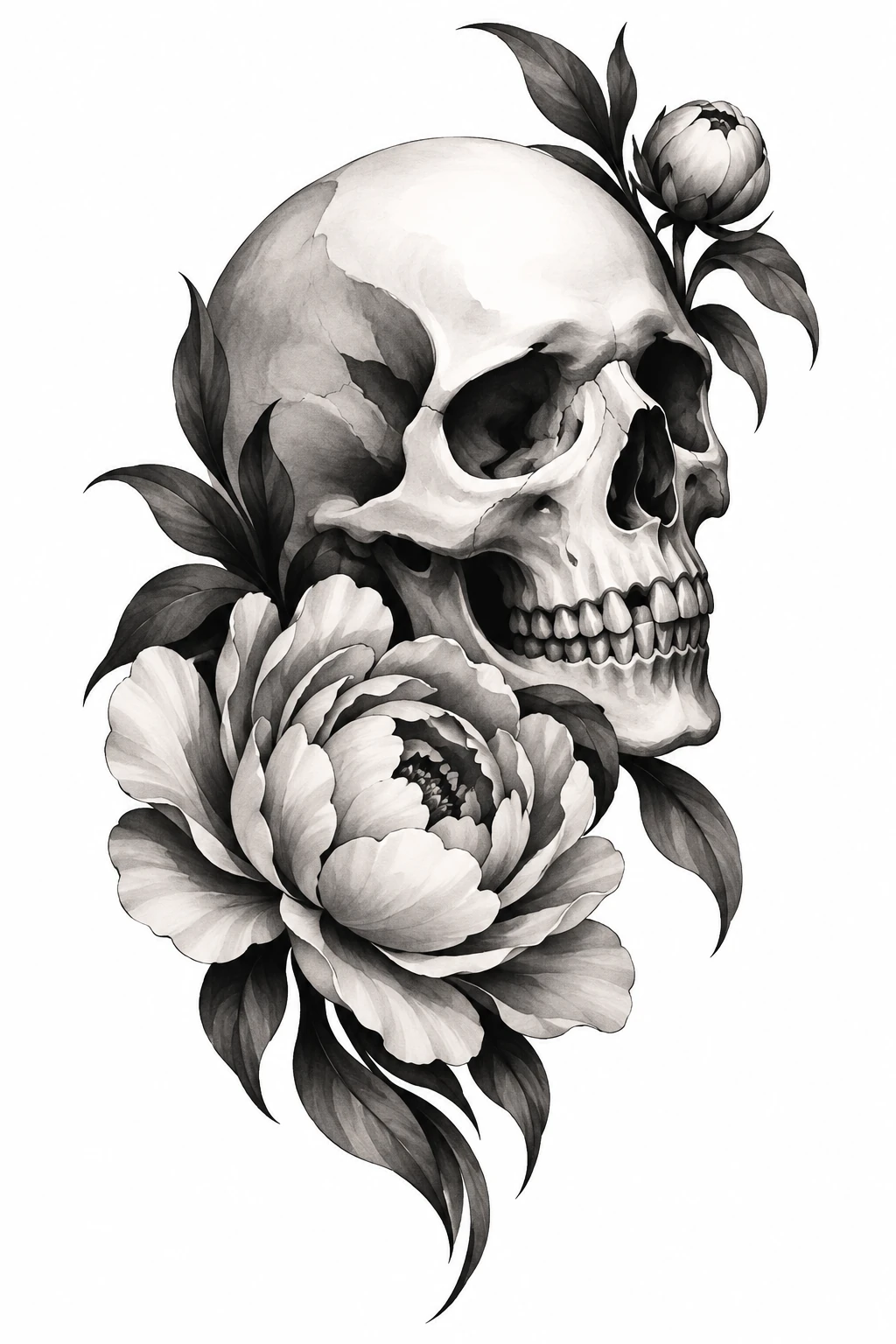
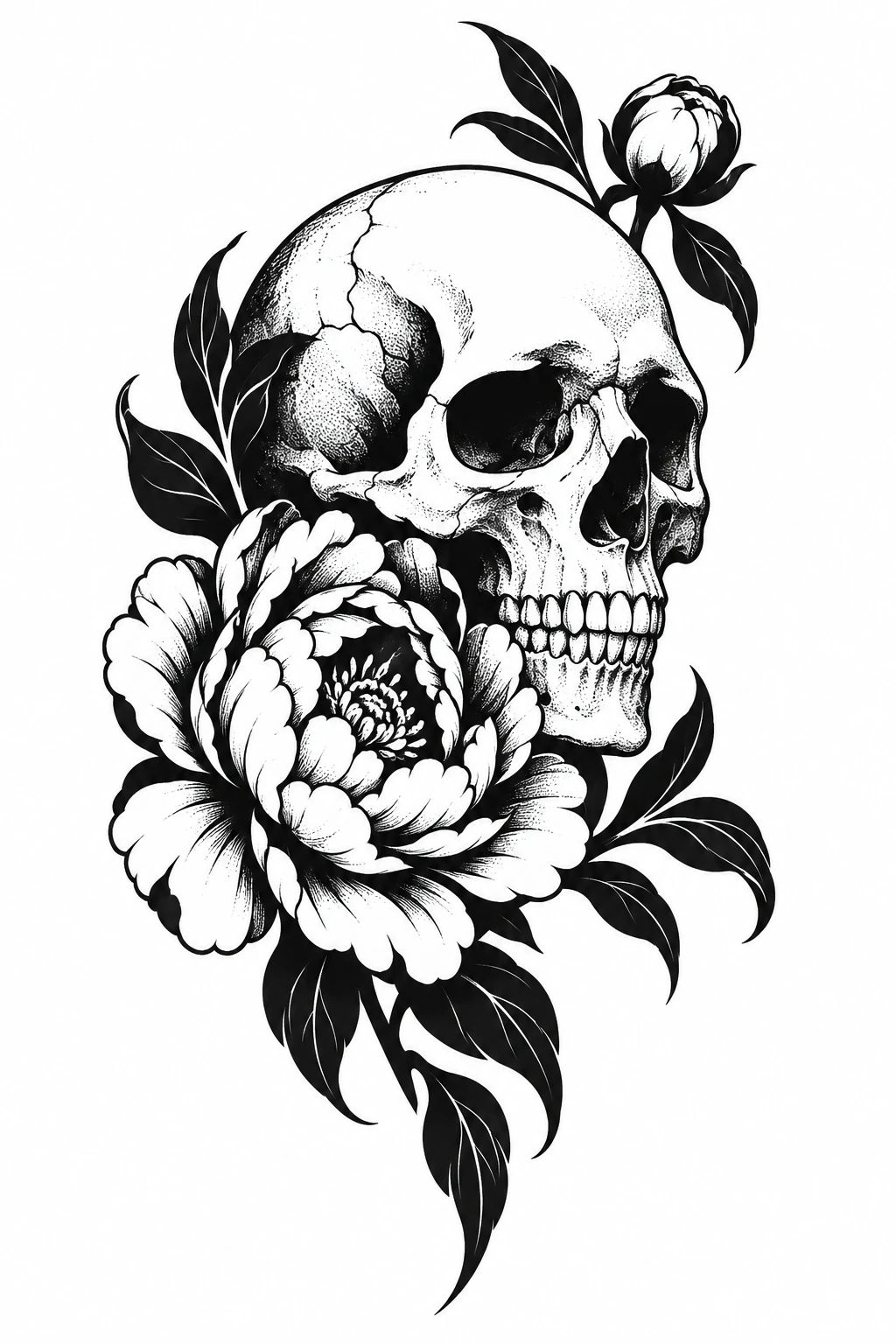
Grey washes round out the bone and the peony petals; blackwork carves the eye sockets and cheek in solid black and leaves the petals open, with dots only where they fold.
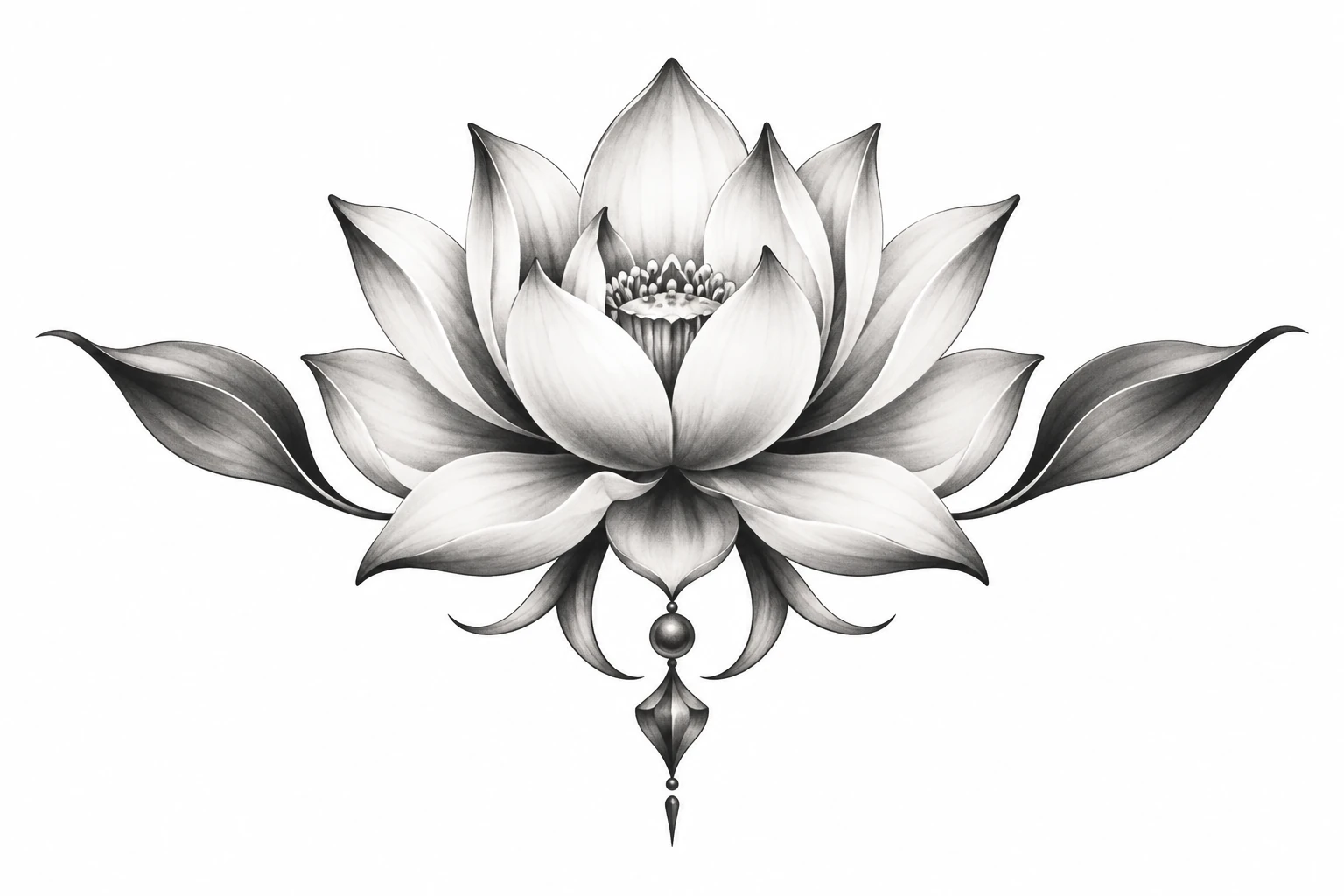
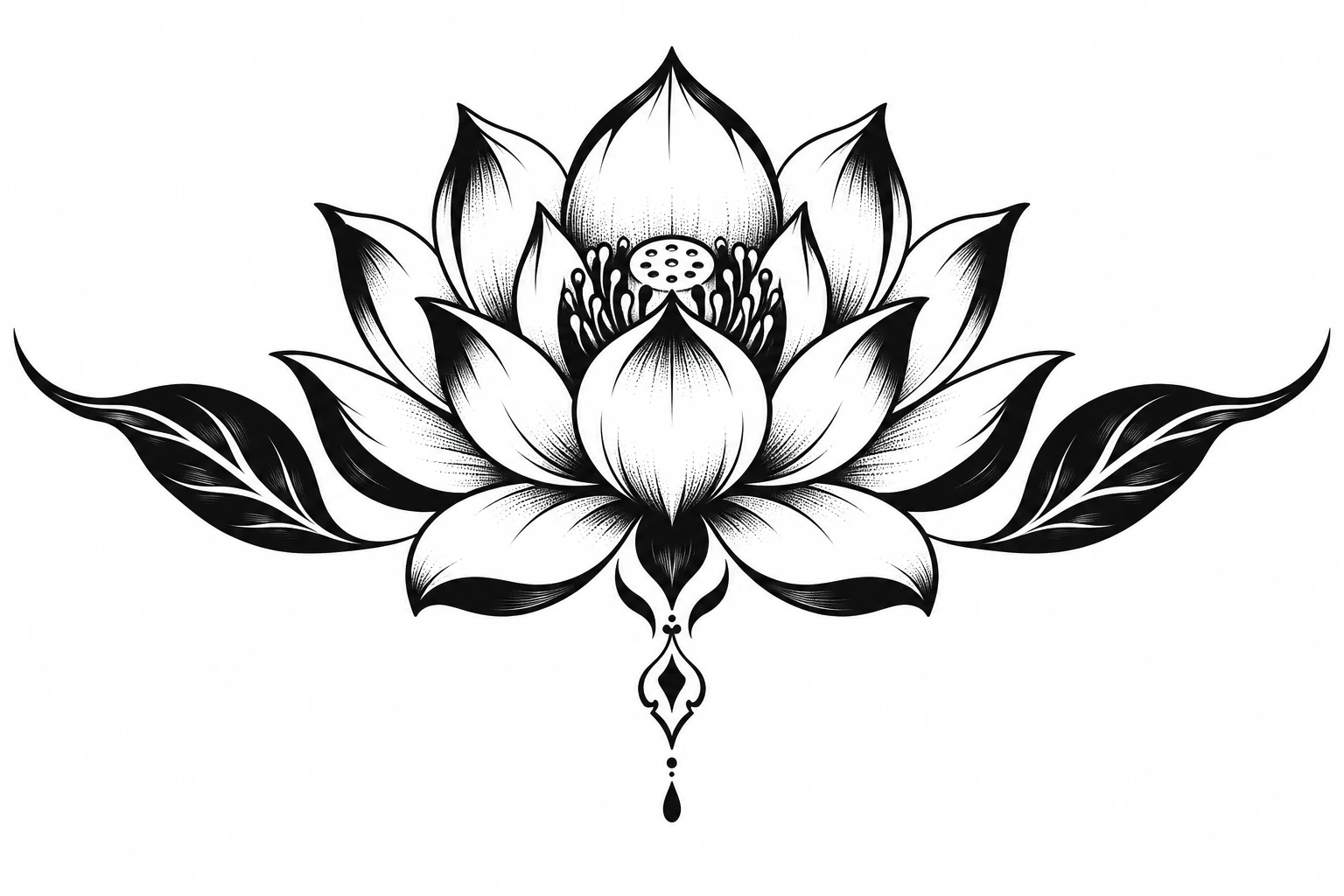
Black and grey shades each petal from white to soft grey; blackwork keeps the petals open, fills the outer leaves with solid black and adds short dotted shading at each petal's base.
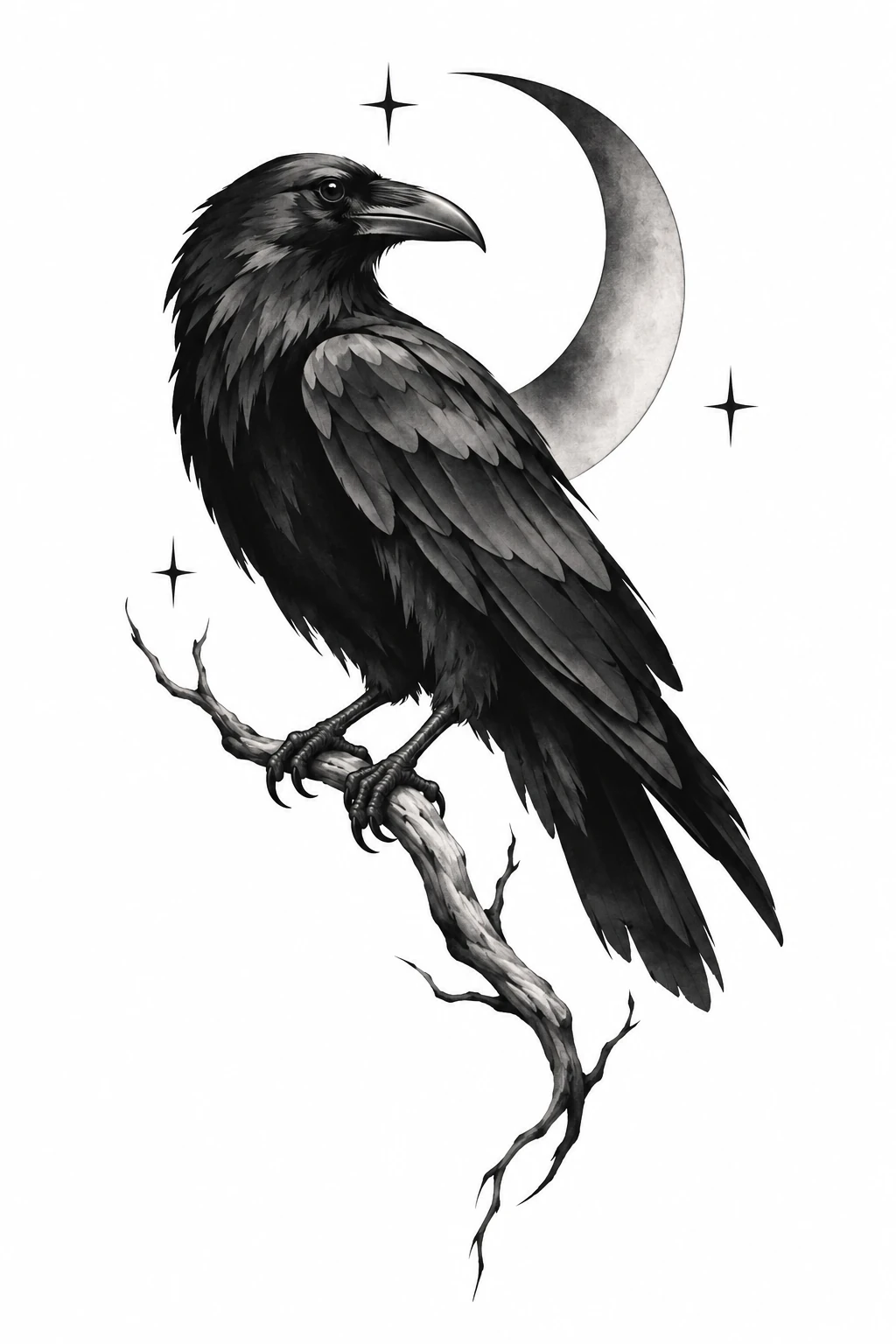
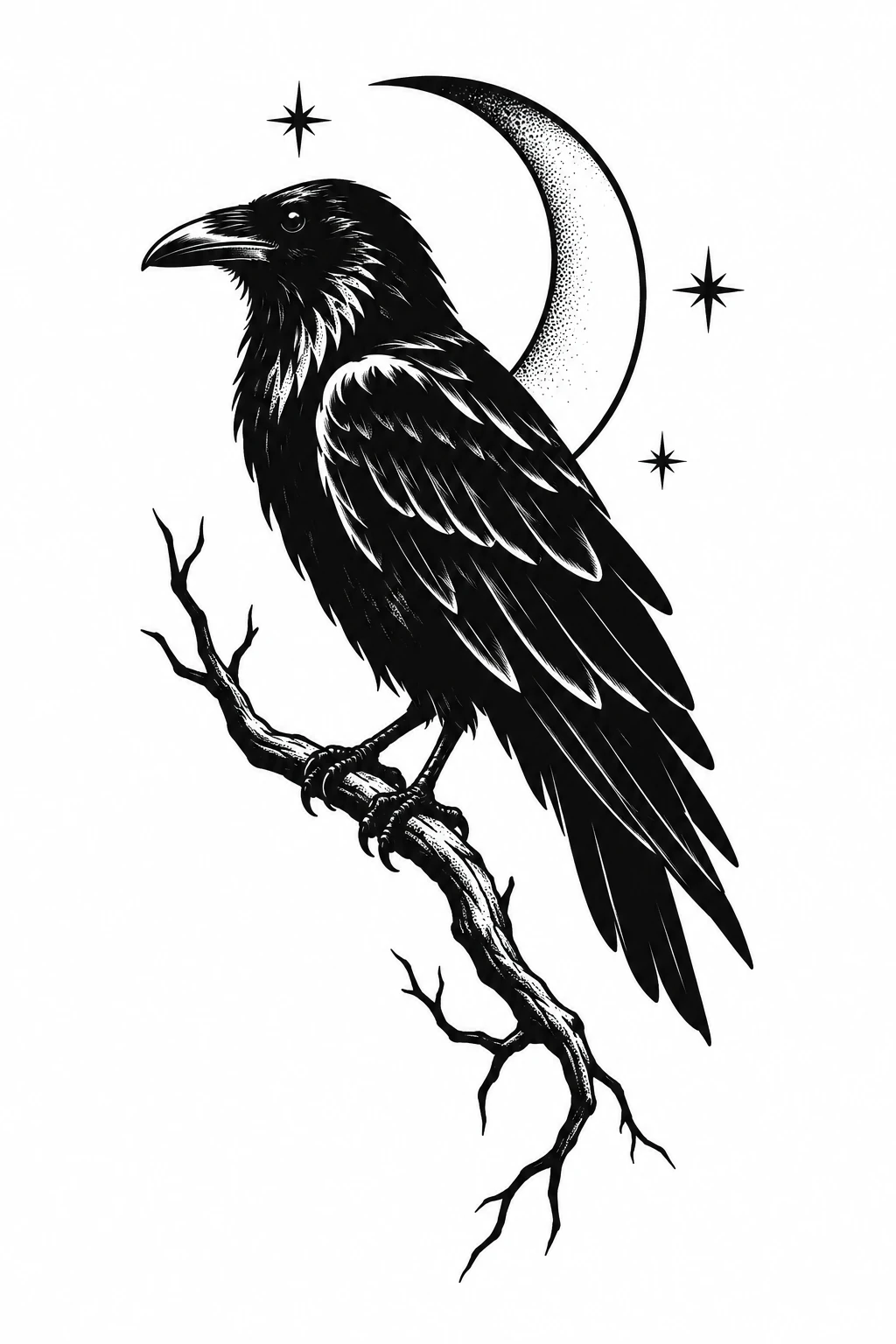
Both ravens are dark, but black and grey shows the feather layers through grey tones and a shaded moon; blackwork packs the body in solid black with thin open lines for the feathers.
| Black and grey | Blackwork | |
|---|---|---|
| Ink | Black ink diluted with water into several grey tones | Undiluted black ink only |
| Shading | Smooth grey wash transitions | Solid black and open skin, with dots or lines where a transition is needed |
| Look | Soft depth and volume, like a pencil or charcoal drawing | Graphic and high contrast; reads clearly from a distance |
| Best for | Portraits, figures and atmospheric scenes | Bold symbols, strong silhouettes and graphic compositions |
| Artist | Look for a portfolio of smooth, even grey shading | Look for a portfolio of solid, evenly packed black |
Blackwork depends on a few clear decisions. Make these three before you describe your idea.
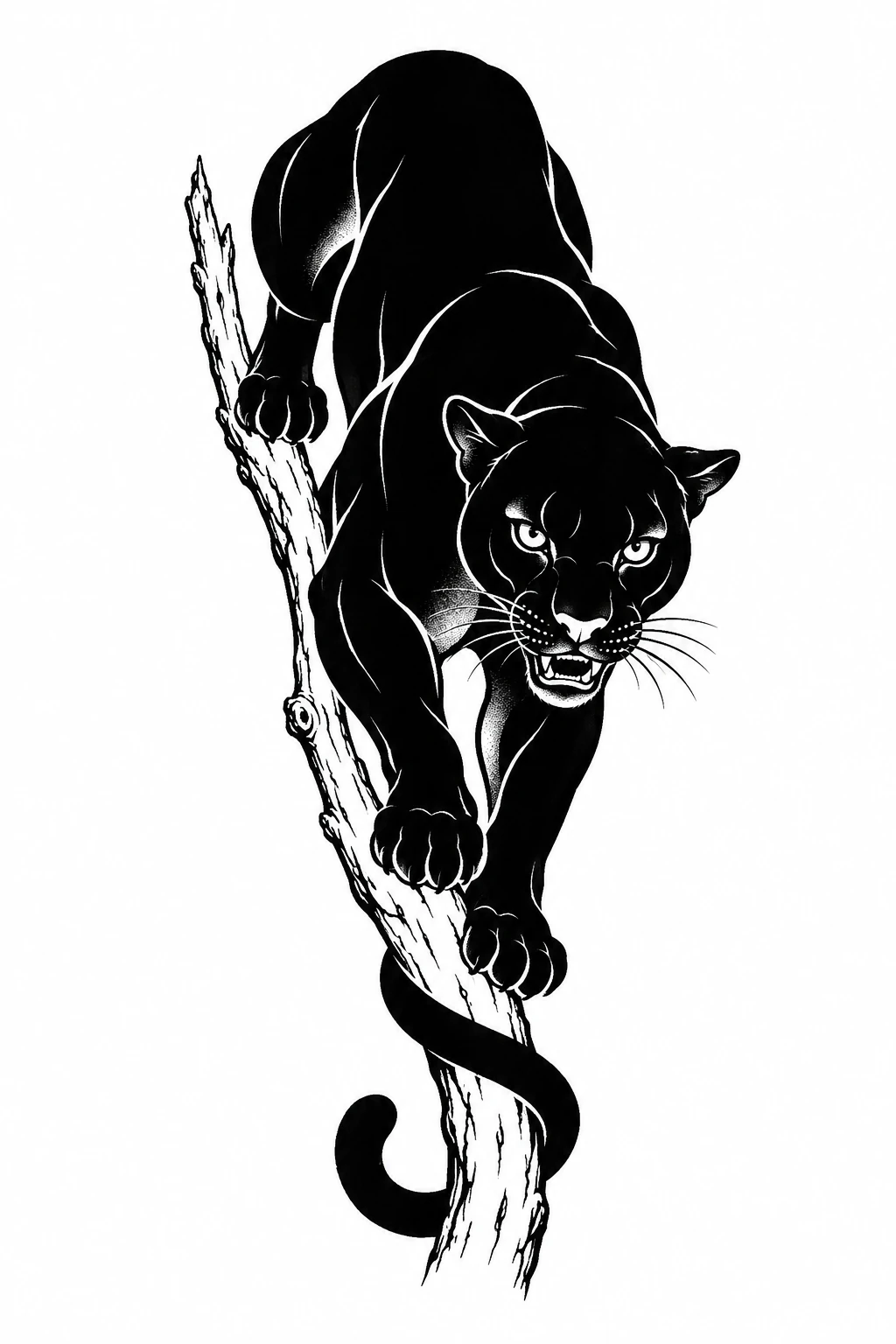
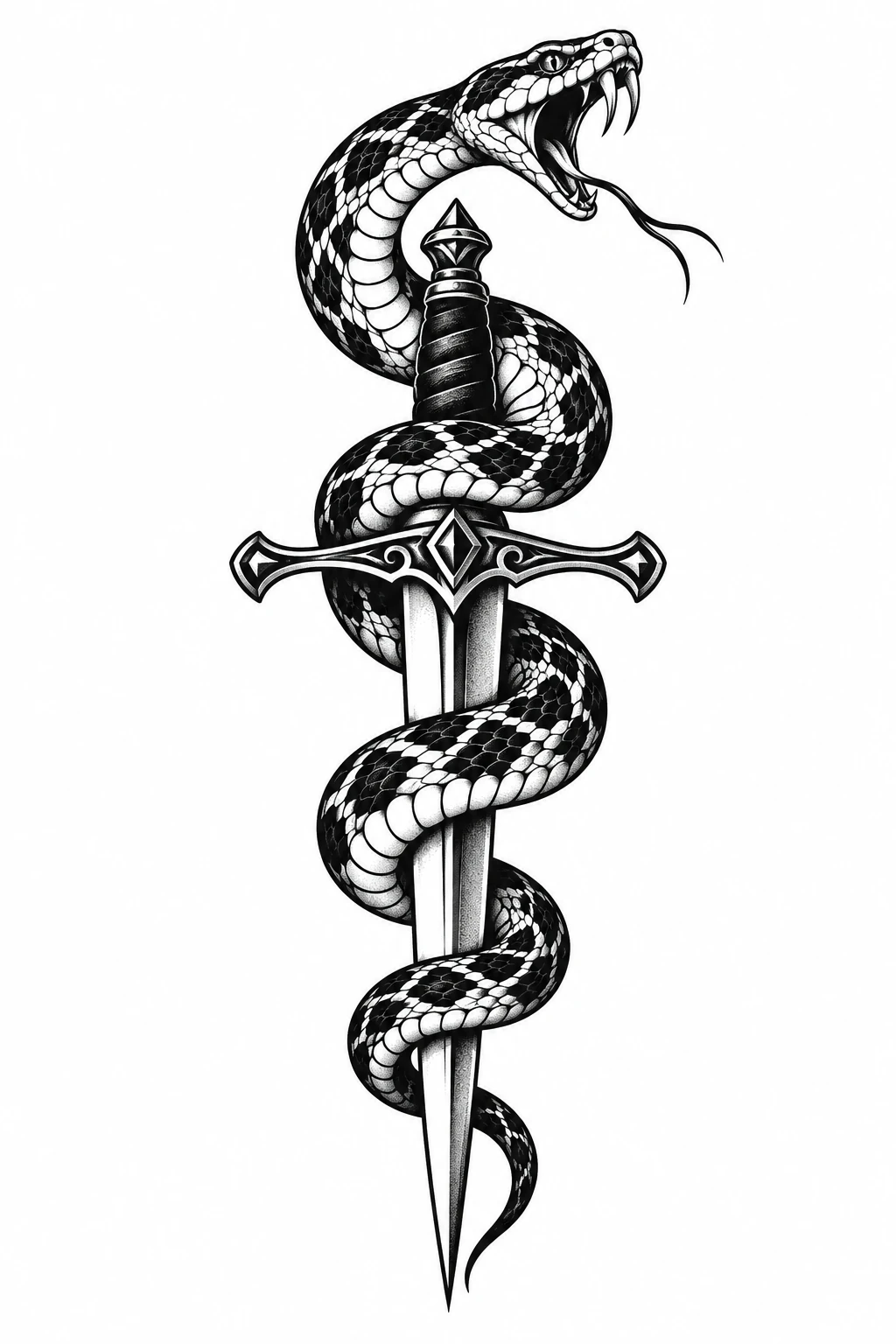
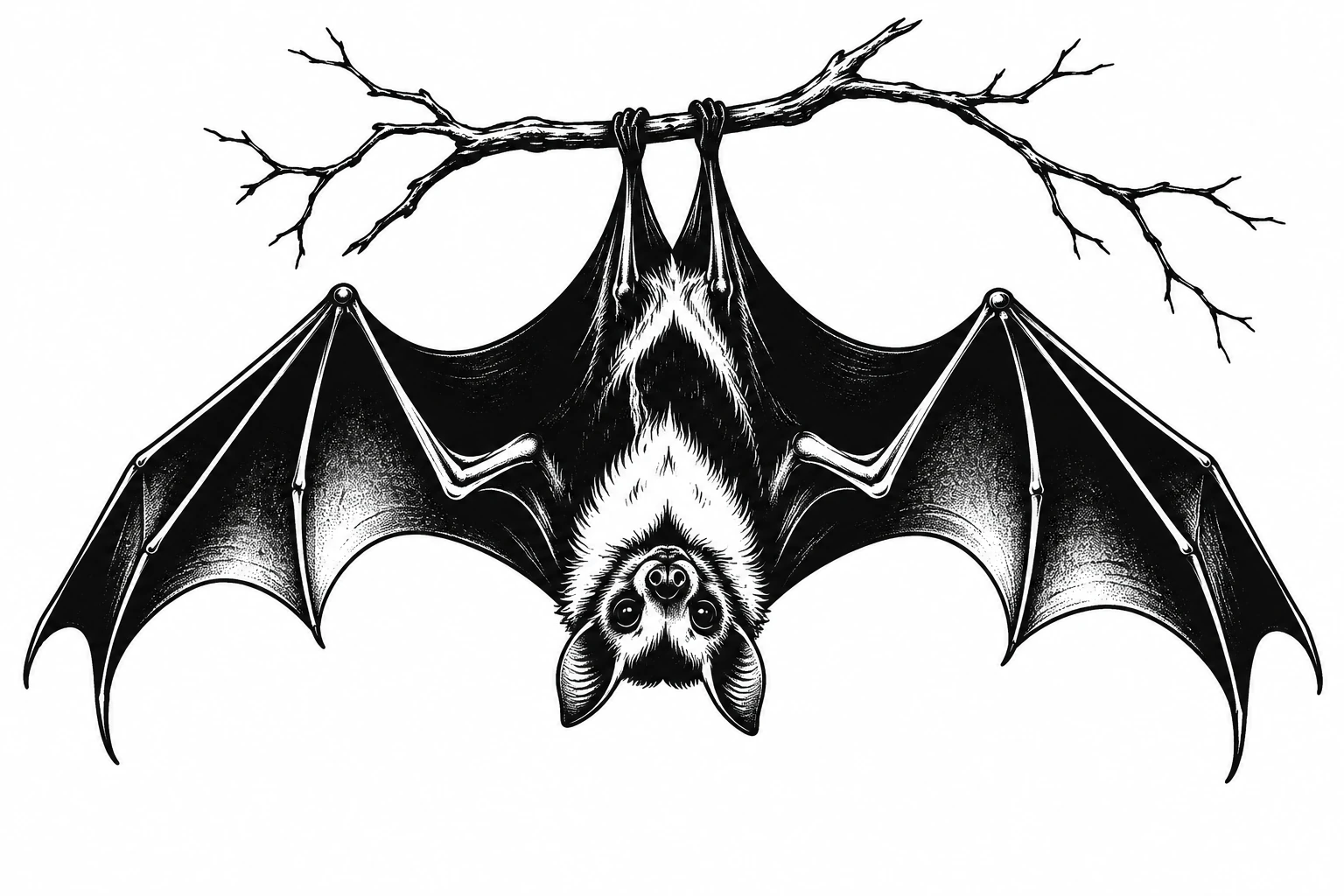
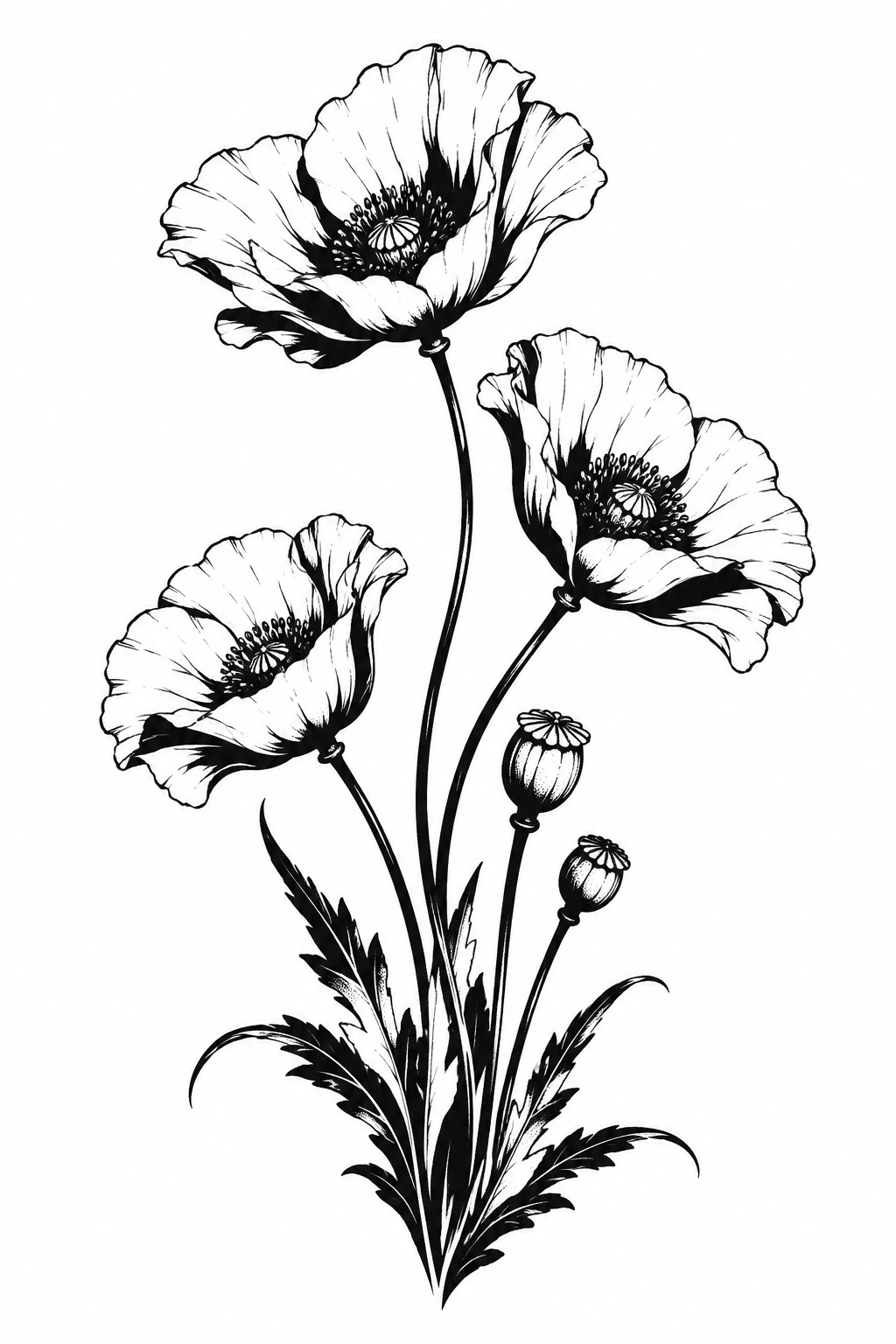
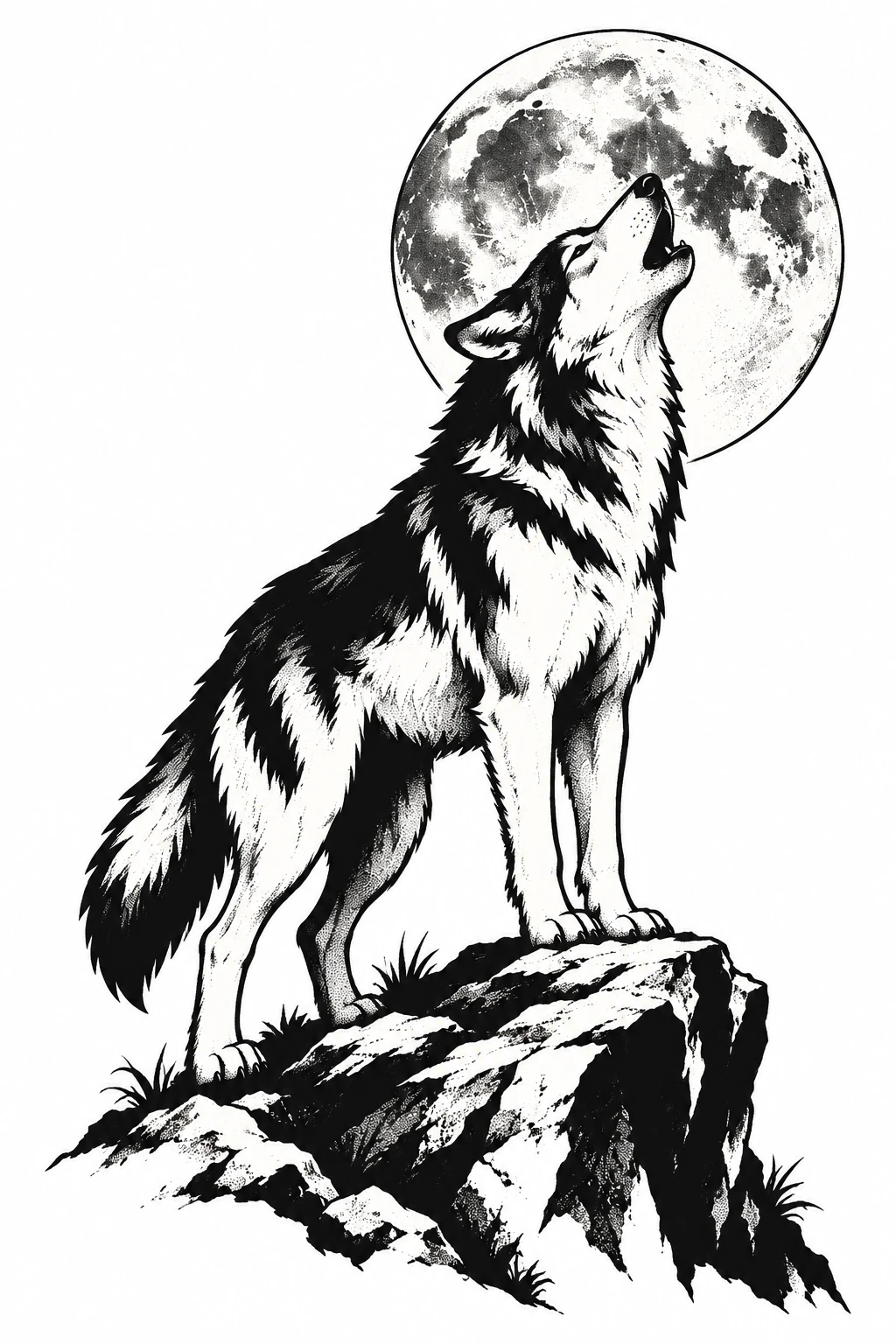
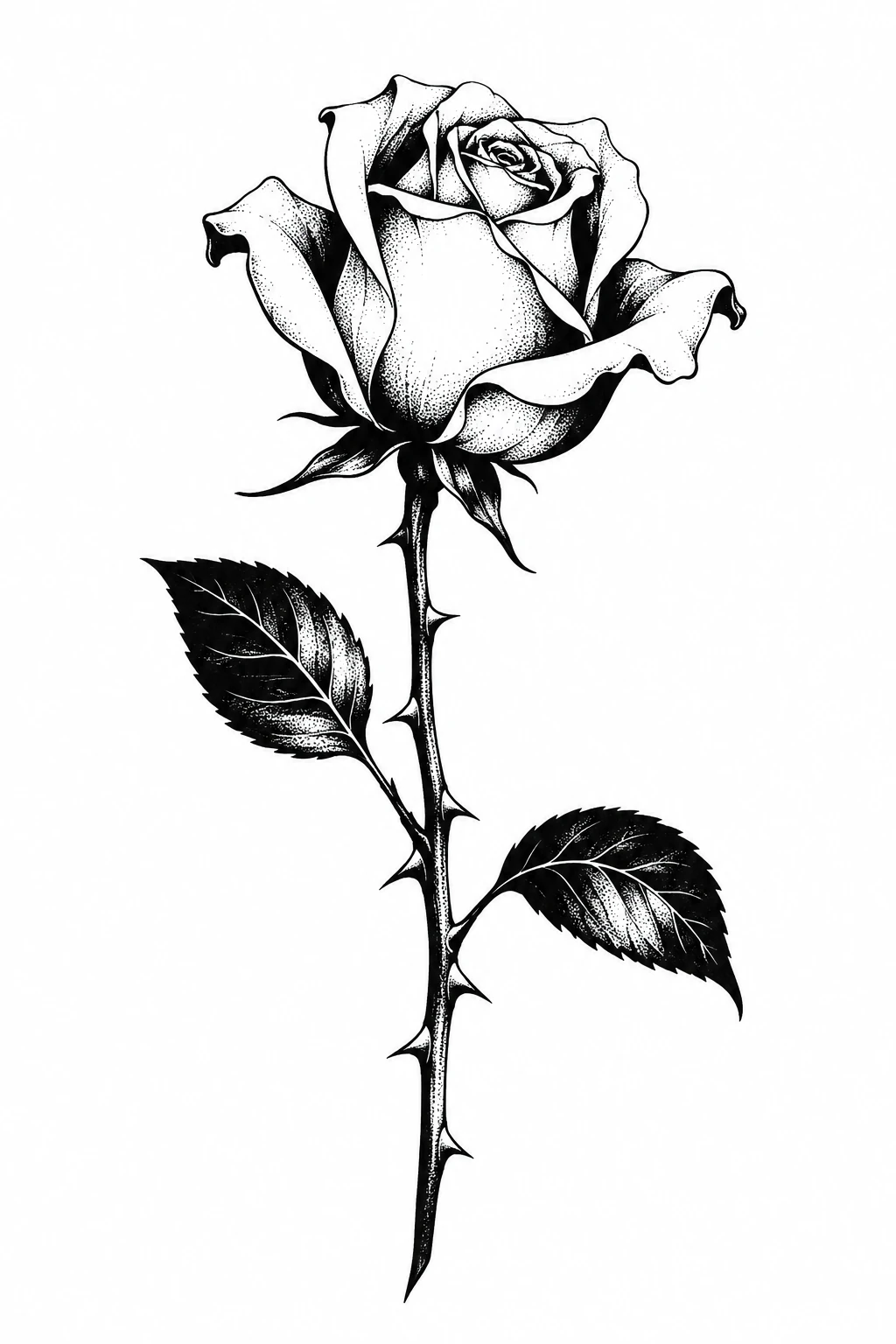
Solid black needs clear gaps between shapes. If a design is too small, those gaps close up and the shapes merge. Choose the body area first, then a design whose outline suits it.
Room for a bold animal head or a compact symbol.
Shape: Rounded or upright shapes that wrap the arm.
A tattoo artist can resize the design and widen the gaps for your placement, or link several designs into a sleeve. Large areas of solid fill usually take more than one session.
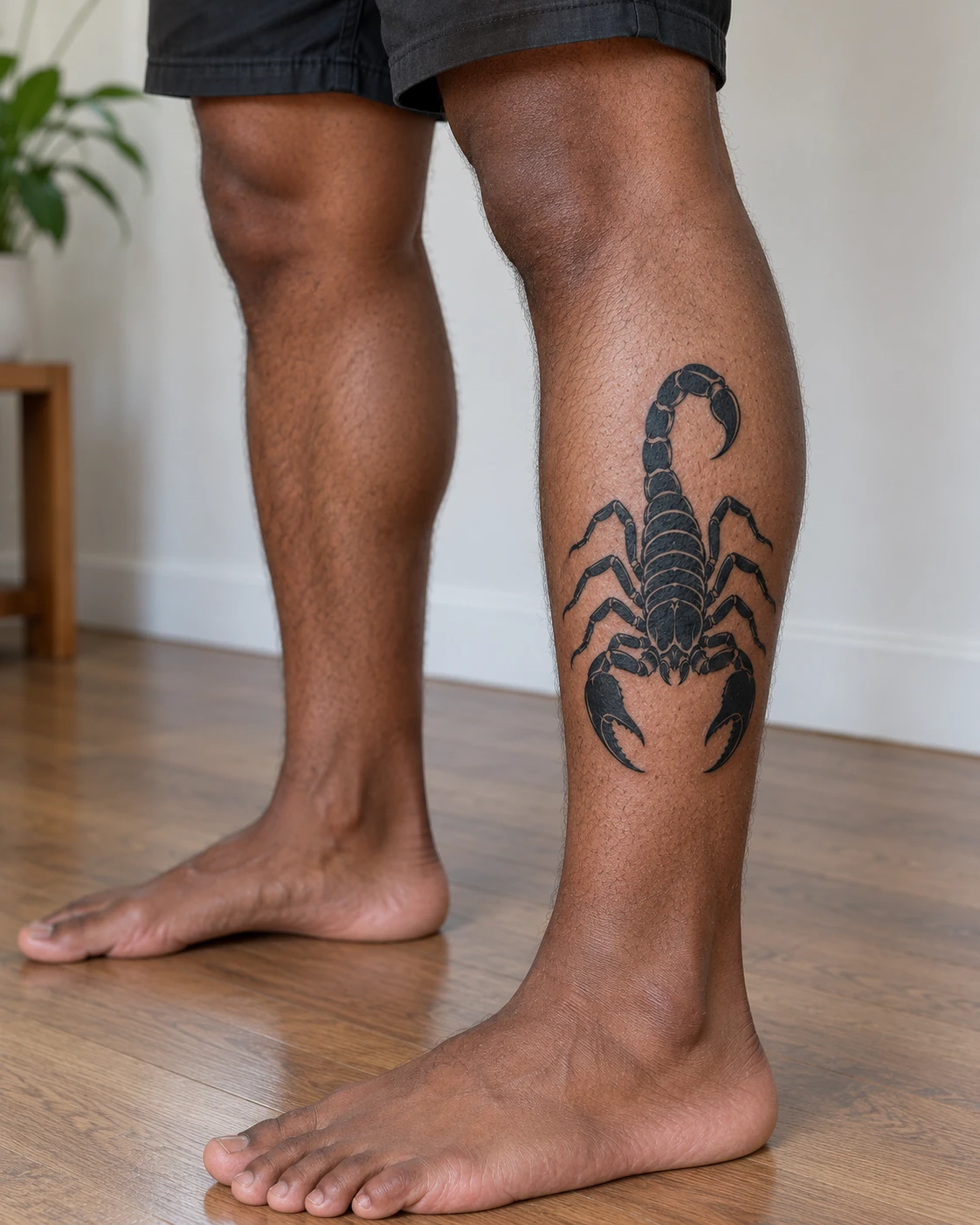
A visible, fairly flat surface for tall designs.
Shape: Long vertical compositions such as a coiled snake, a jellyfish or a dragon.
A tattoo artist can resize the design and widen the gaps for your placement, or link several designs into a sleeve. Large areas of solid fill usually take more than one session.
The widest area, suited to spread wings and horizontal scenes.
Shape: Wide compositions such as a hanging bat or a sea serpent.
A tattoo artist can resize the design and widen the gaps for your placement, or link several designs into a sleeve. Large areas of solid fill usually take more than one session.
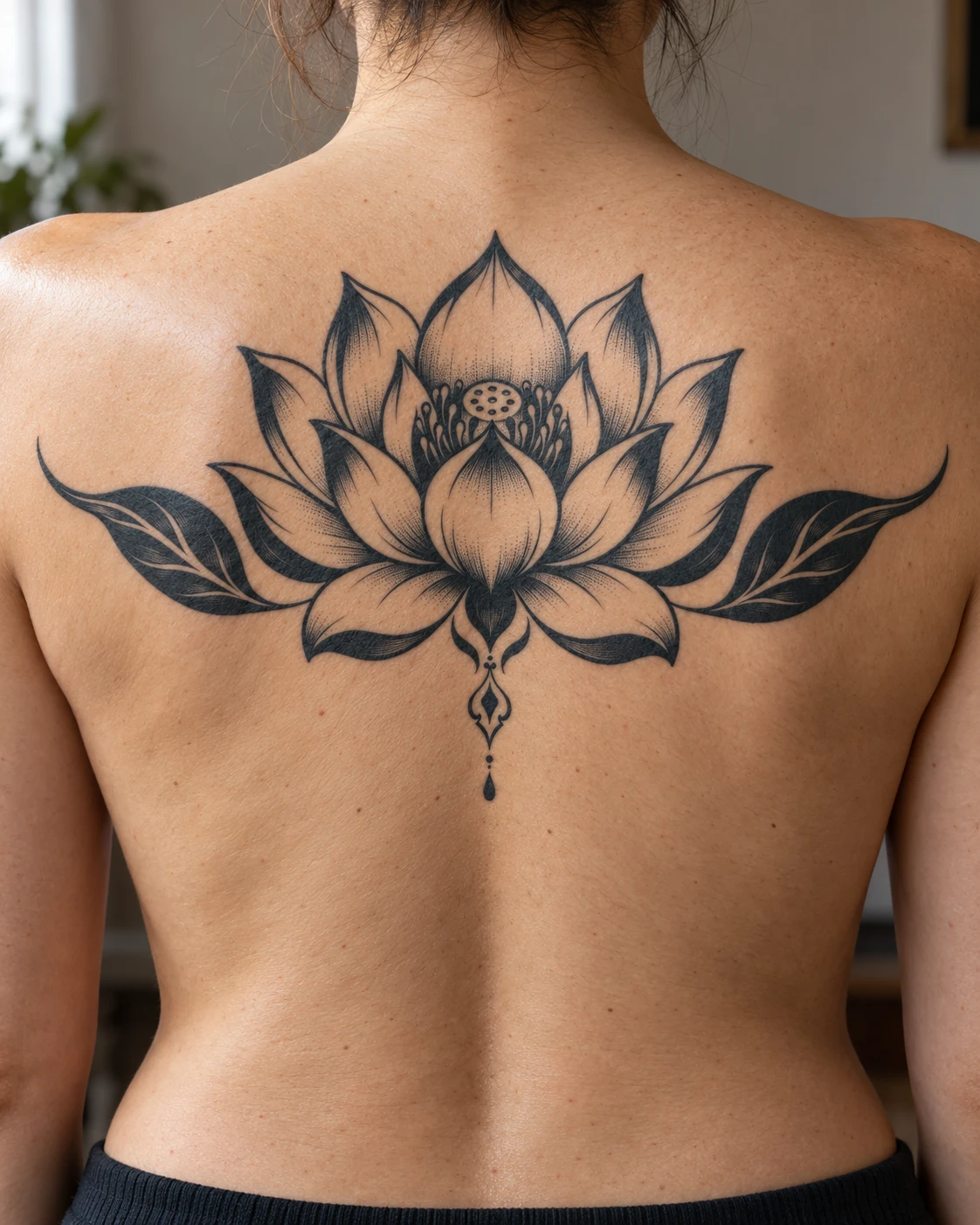
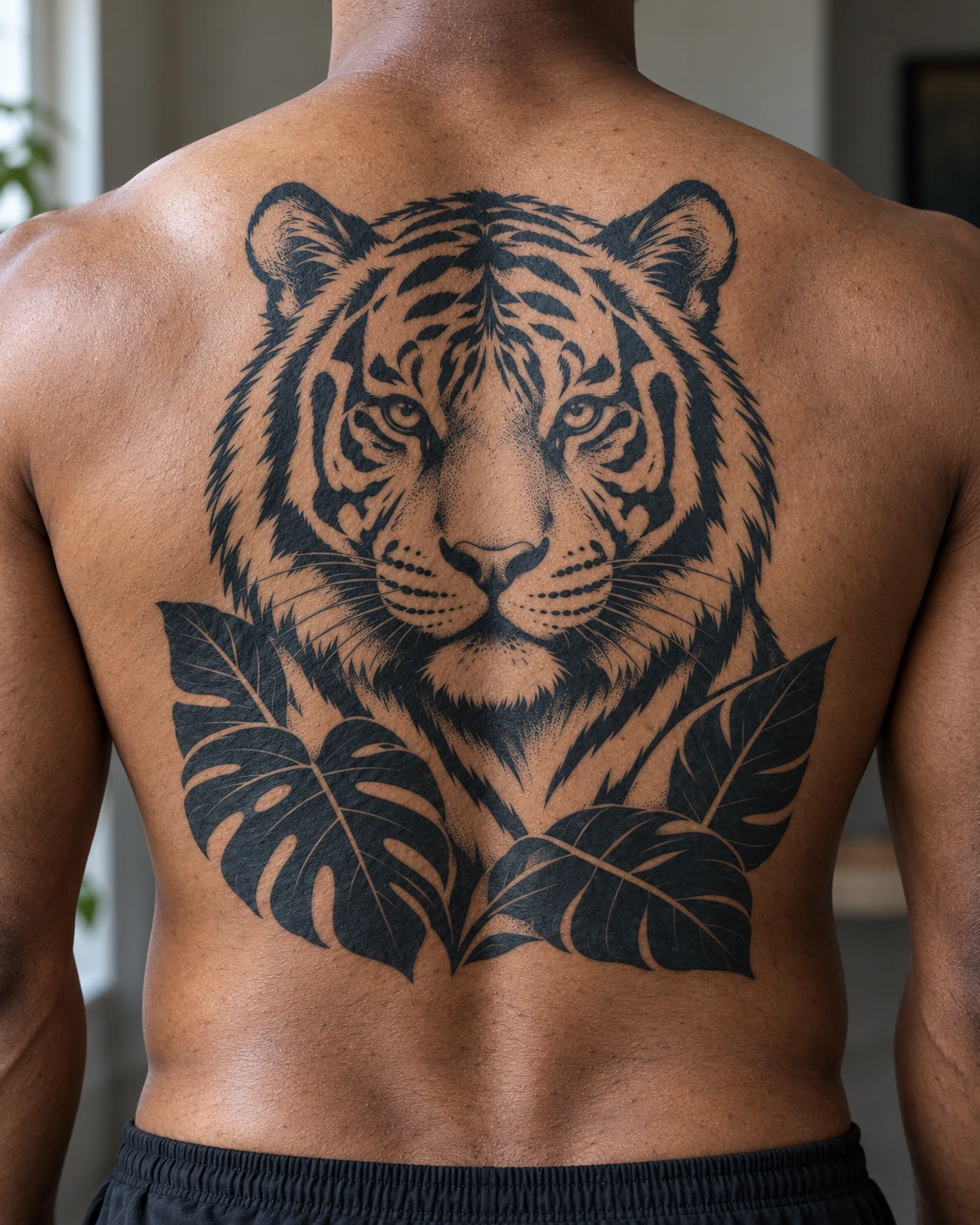
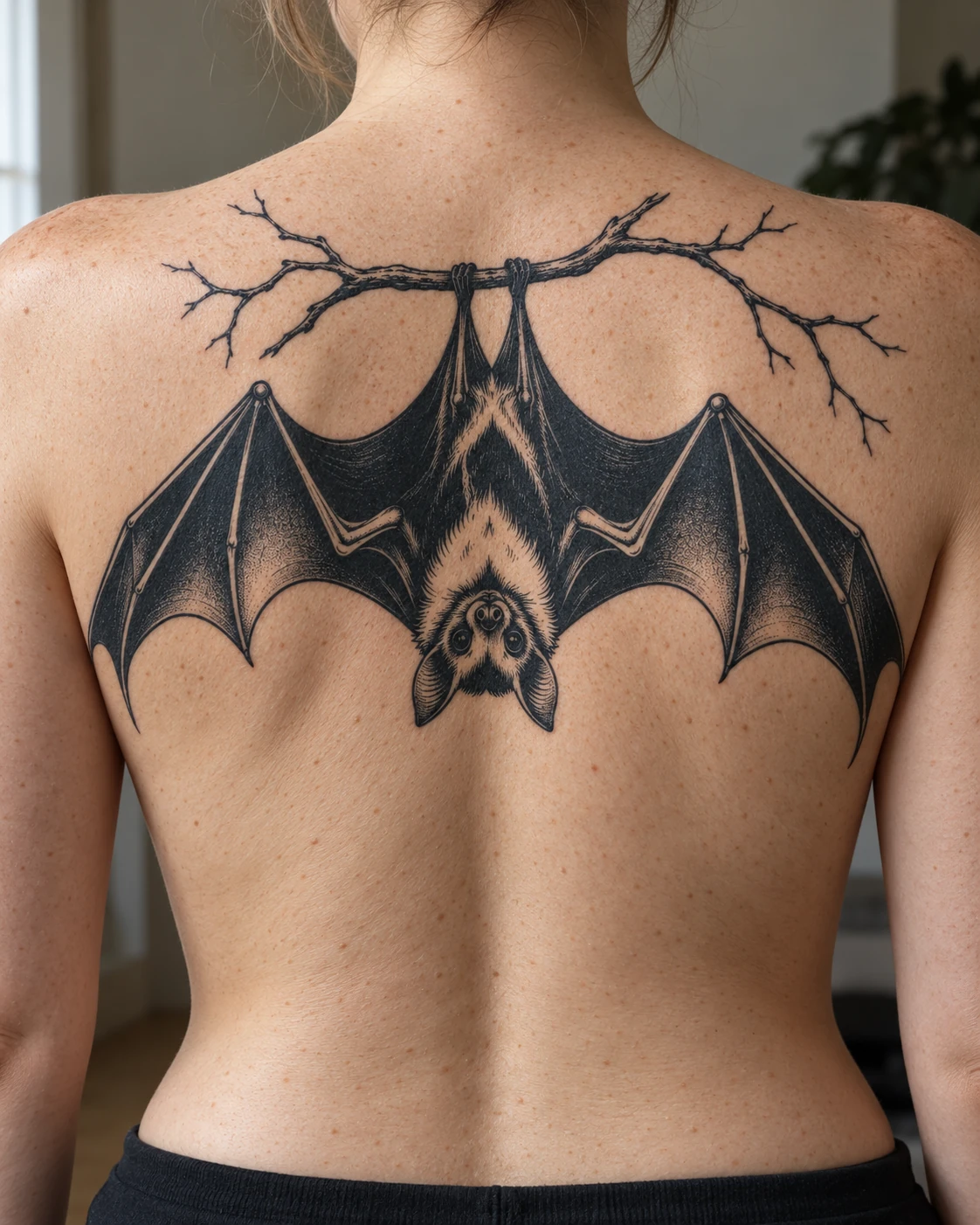
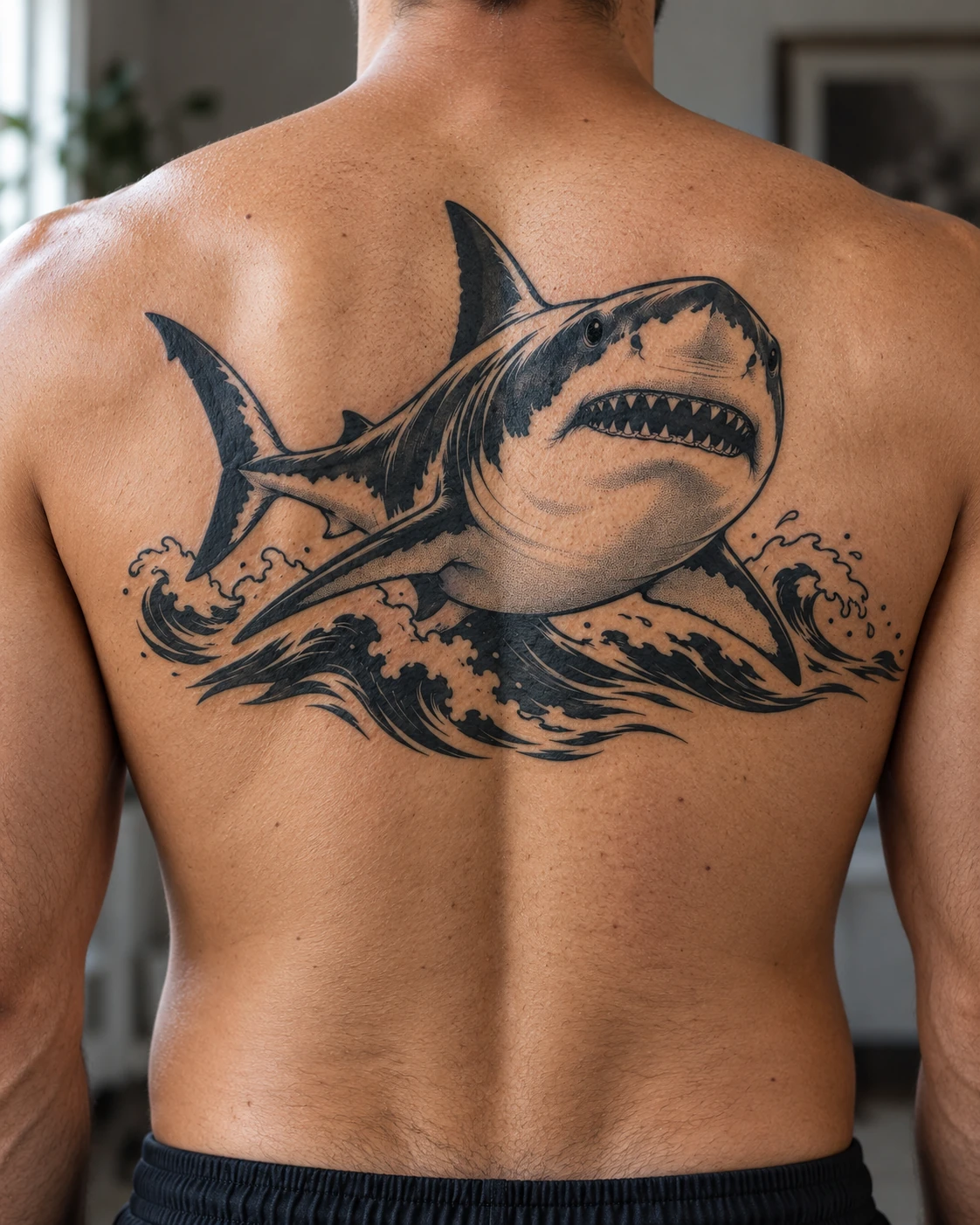
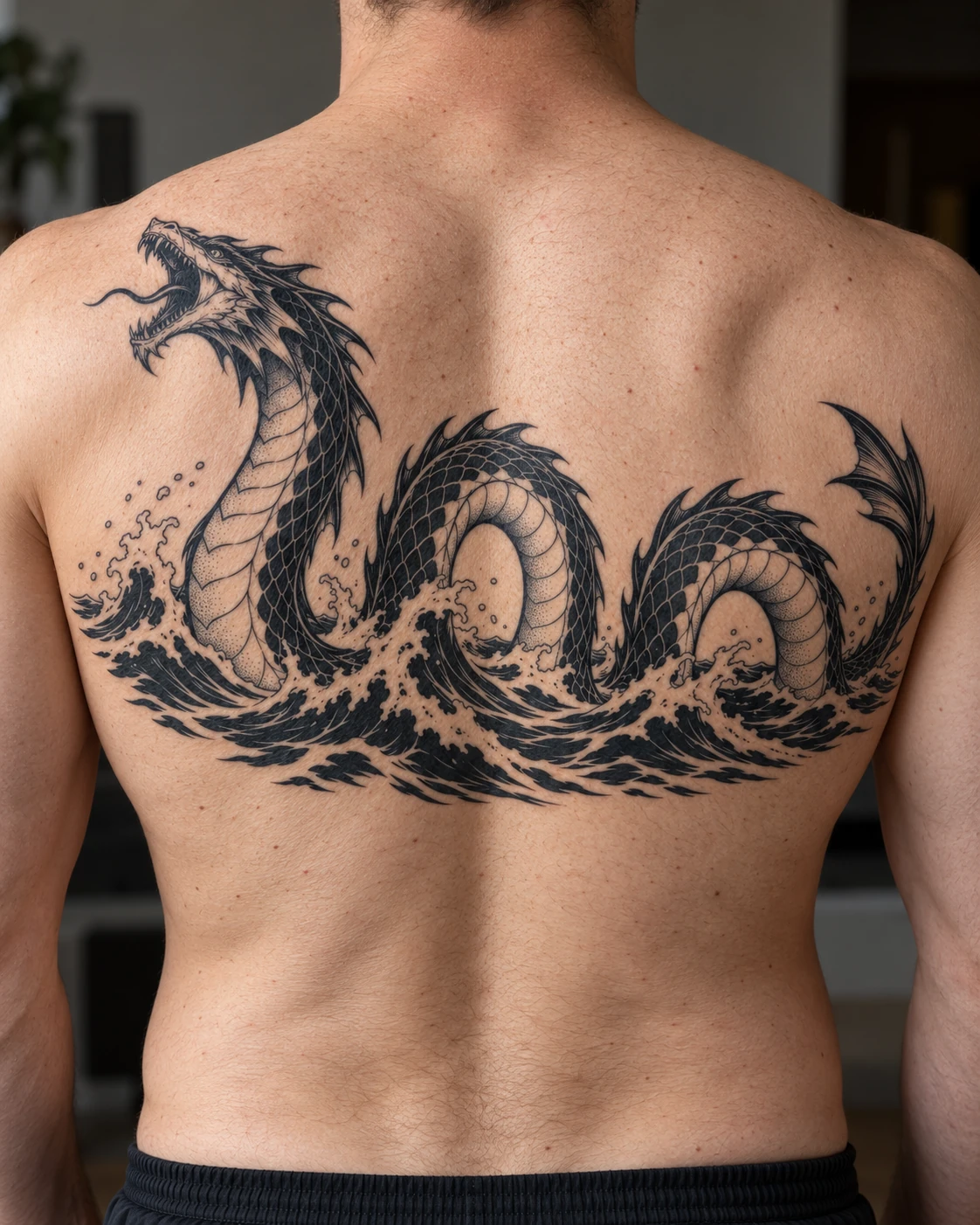
A large area for heavier, detailed pieces.
Shape: Compact or square designs such as an octopus or a skull.
A tattoo artist can resize the design and widen the gaps for your placement, or link several designs into a sleeve. Large areas of solid fill usually take more than one session.
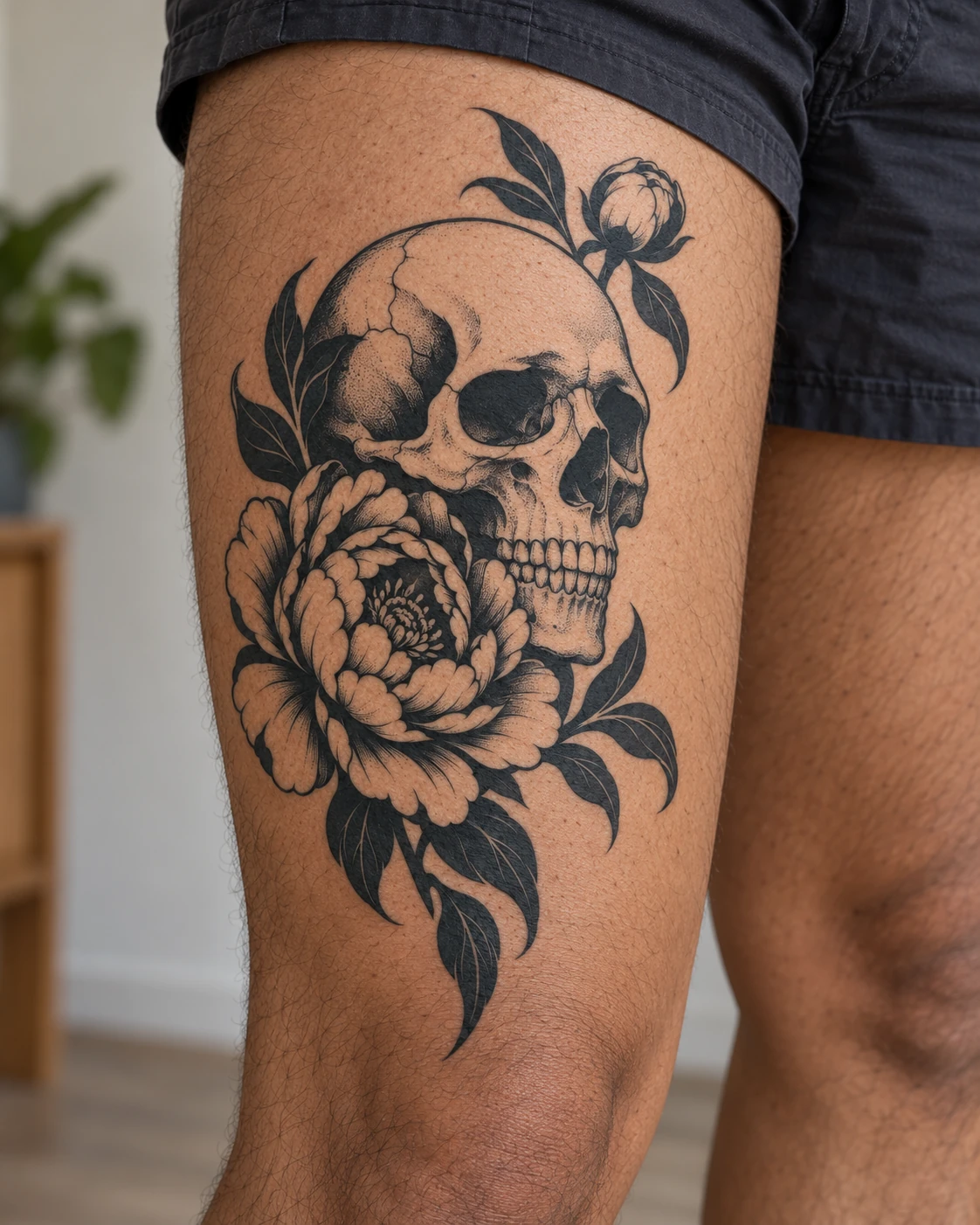
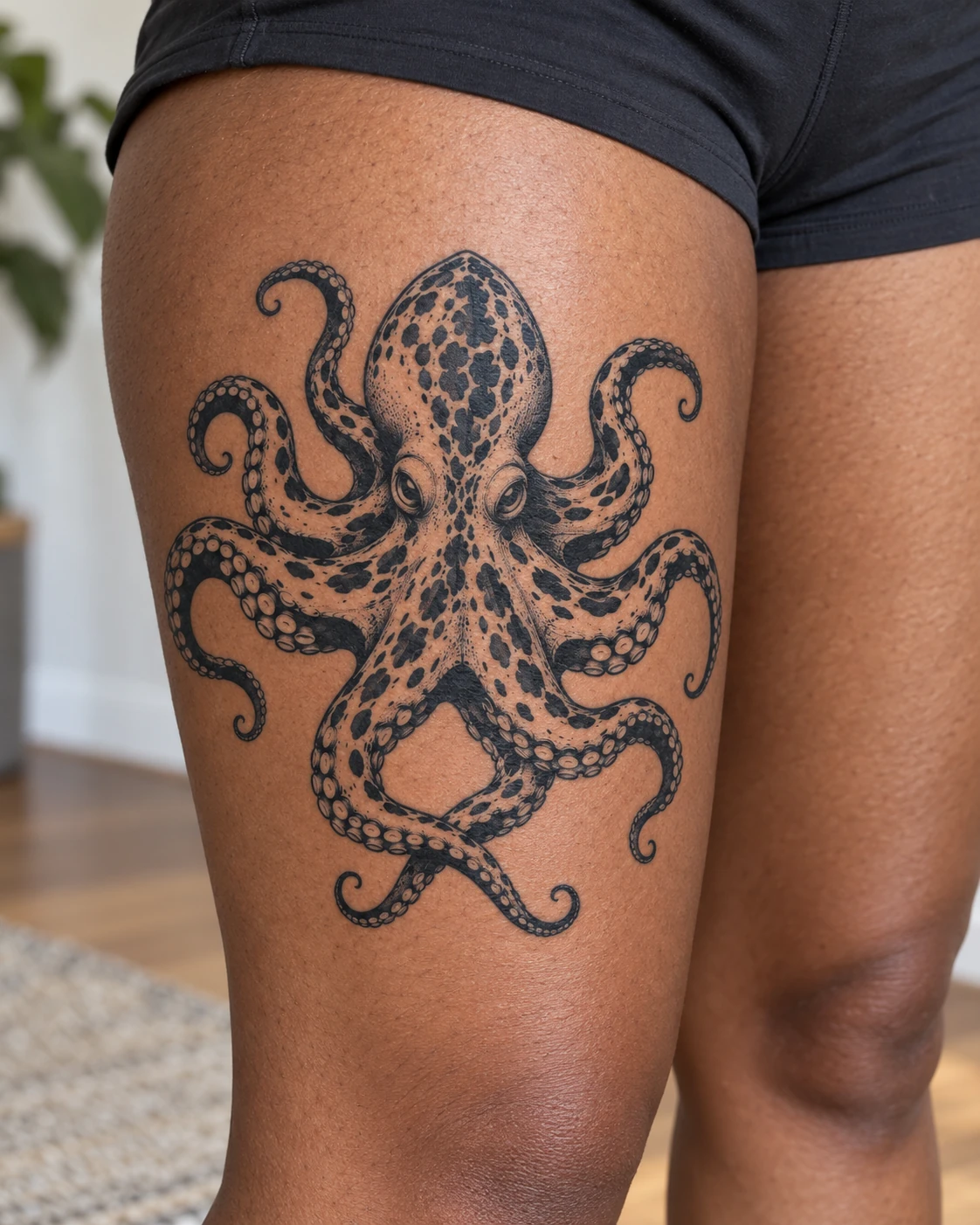
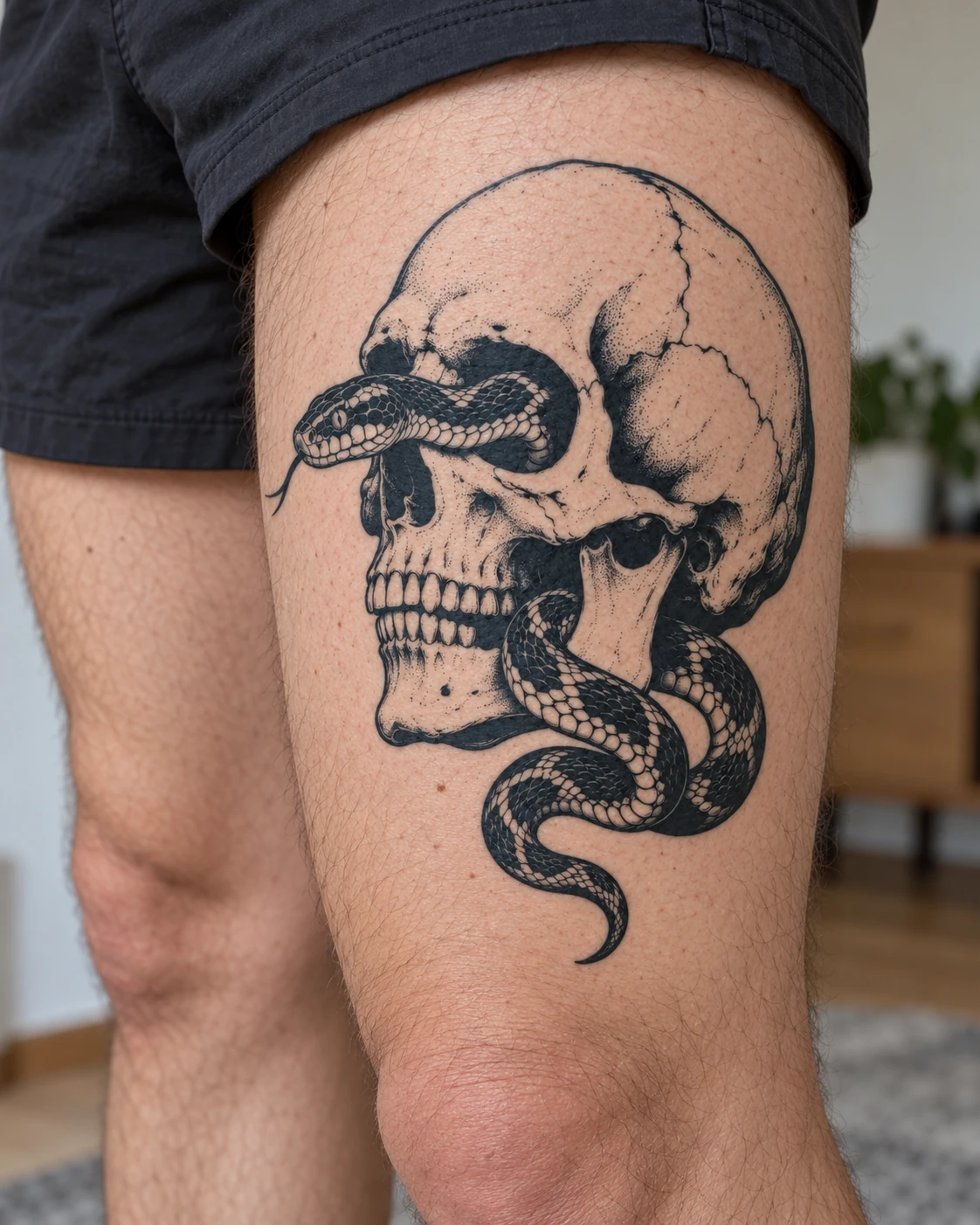
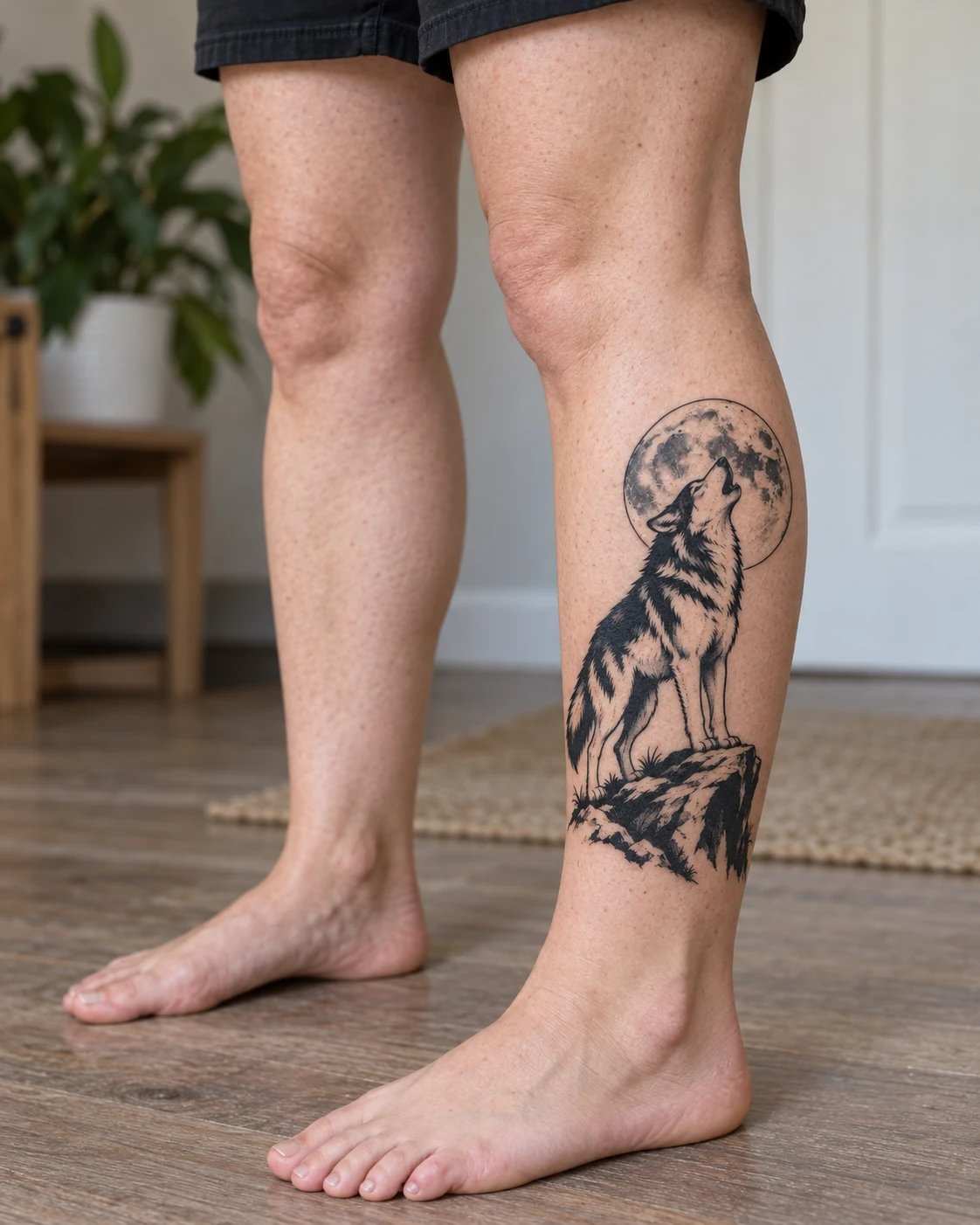
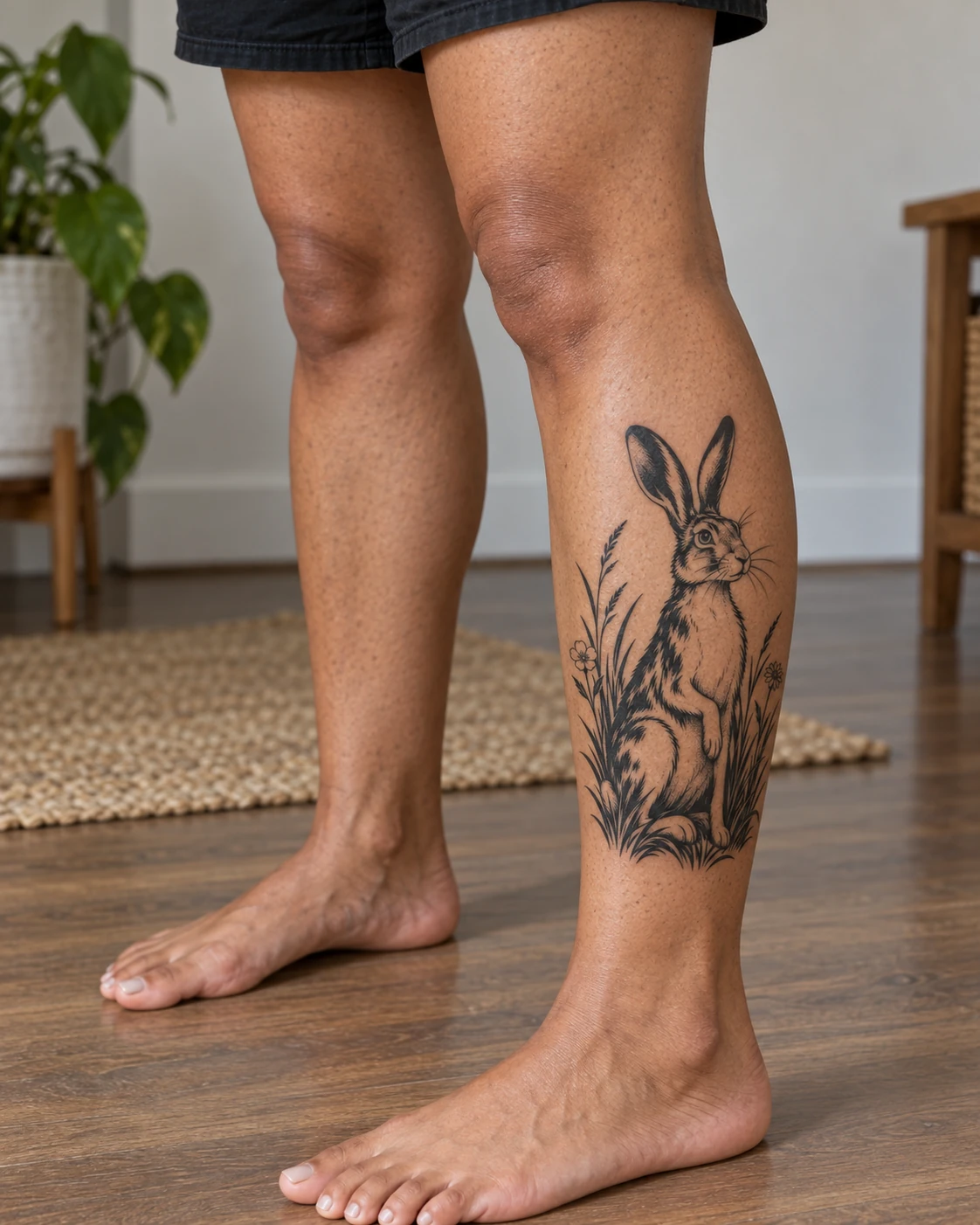
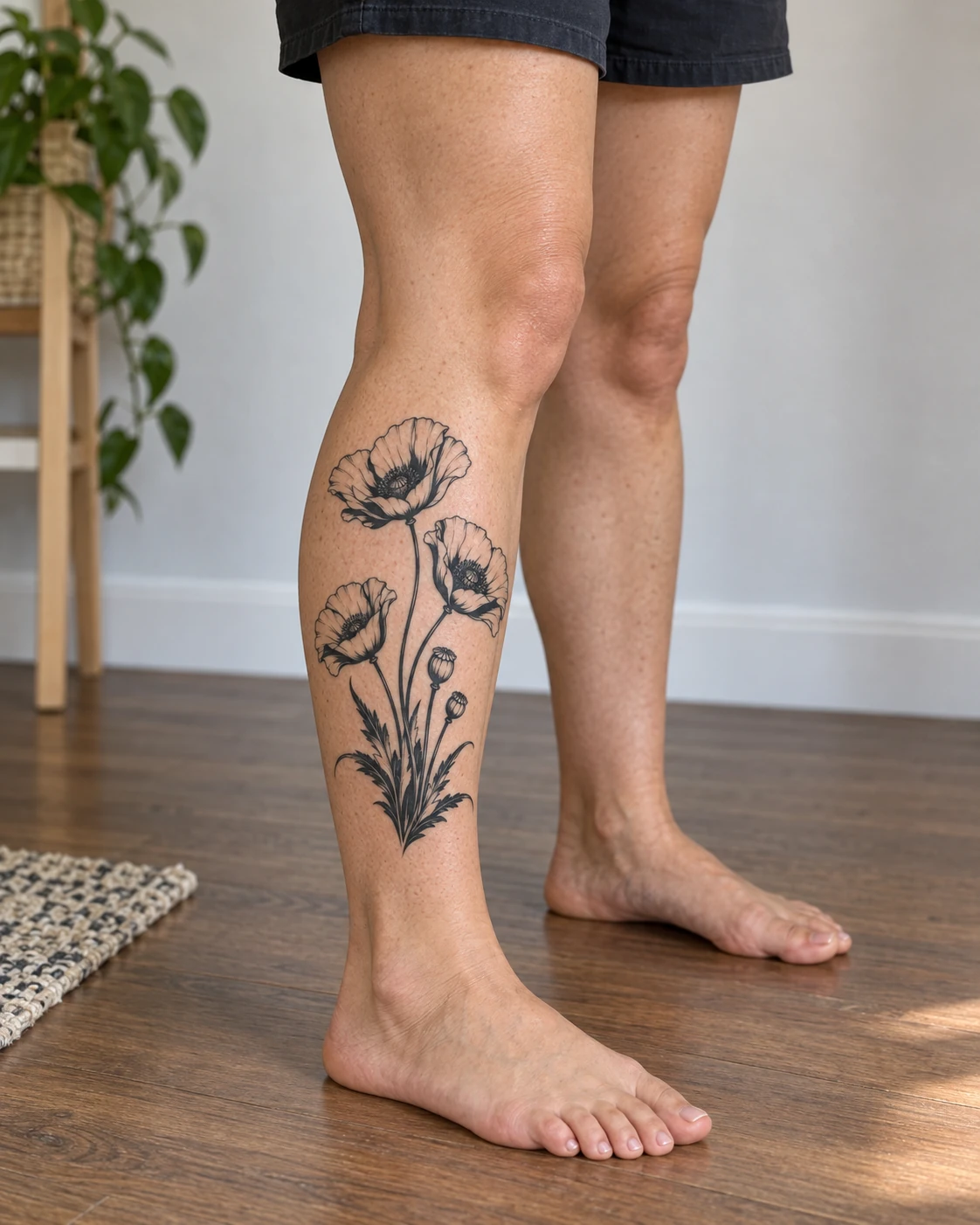
A long, narrow area that suits upright designs.
Shape: Tall compositions such as poppies, a hare or a howling wolf.
A tattoo artist can resize the design and widen the gaps for your placement, or link several designs into a sleeve. Large areas of solid fill usually take more than one session.
Every tattoo softens over time. Blackwork tends to stay readable because of its solid black, but the fine details inside it need room.
Large, well-packed black areas usually stay readable for many years.
Thin gaps and fine lines inside the black slowly narrow, so very small designs lose detail first.
Large black areas often look rough while healing; follow your artist's aftercare.
Patchy or faded spots can be refreshed once the tattoo has fully healed.
No. Blackout is one type of blackwork, where large areas are filled in solid black with little or no open skin. Most blackwork, including the designs on this page, balances black with open skin.
Not because of the ink itself. Large areas of solid fill take repeated passes and long sessions, which many people find more tiring than outlining. Placement and session length matter more than the style, and there is no reliable ranking of pain by style.
Often, yes. Bold, dark designs can hide older work, and blackout is sometimes used when nothing else will. A tattoo artist needs to see the old tattoo first. Keep in mind that covering solid black later is much harder than covering color.
Yes. Solid black shows clearly on every skin tone, which is why blackwork is often recommended for darker skin. Choose an artist with healed work on skin like yours, since overworking the skin to force contrast can lead to scarring.
Use it as the starting point. TatSketch designs are concept images, not ready-to-use stencils, so the usual next step is to take the design to your tattoo artist. They redraw the linework at the right size for your placement, then transfer that stencil to your skin.
No. Every design and on-skin preview on this page is an AI-generated concept. Bring a design you like to a tattoo artist, who can adapt it to your body.
Describe your subject, choose the Illustrative Blackwork style and generate a design in solid black and open skin.